


 11 Photos
Iron & Salt
From Sea Salt to Salsa: Seven East End Makers You Need To Know
From Sea Salt to Salsa: Seven East End Makers You Need To Know
From Sea Salt to Salsa: Seven East End Makers You Need To Know
From Sea Salt to Salsa: Seven East End Makers You Need To Know
Janice Payne's butter coffee cake.
Janice Payne's butter coffee cake.
Janice Payne's butter coffee cake.
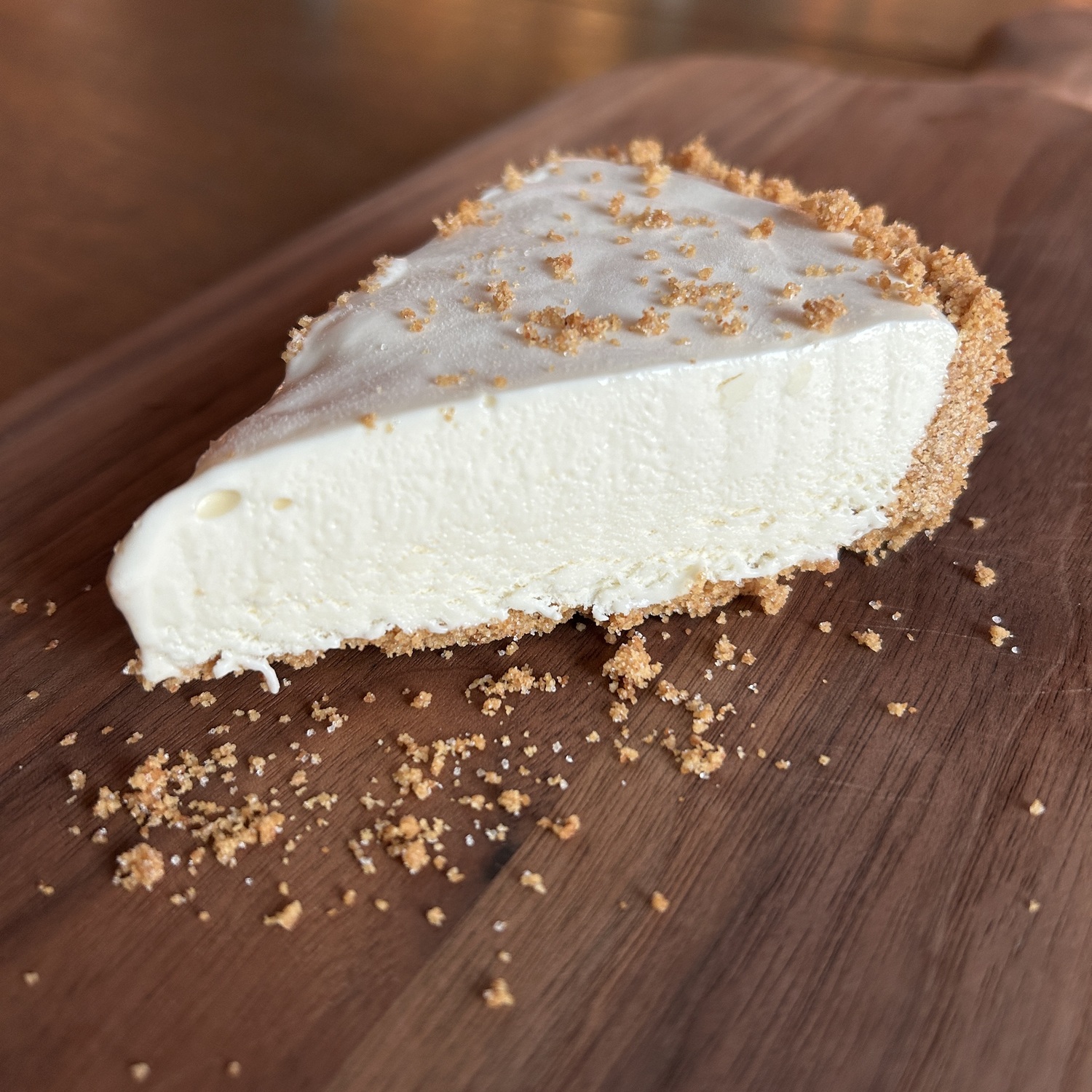
A slice of Iron & Salt's key lime pie.
From Sea Salt to Salsa: Seven East End Makers You Need To Know
From Sea Salt to Salsa: Seven East End Makers You Need To Know
Walk into just about any farm stand or specialty grocery market on the East End and you’ll see it — the entrepreneurial spirit is alive and well. Shelves are lined with items crafted in small batches by local chefs, cooks, and bakers, often working out of certified home kitchens or shared commercial spaces.
Getting space on those shelves isn’t easy. It requires knocking on doors, offering samples, and hoping for a call back. Many of these makers also work the circuit of farmers markets. Here are a few we’ve come across:
Stone’s Throw Farm
Katja Goldman is the hands behind the honey lemon mini corn muffins made with cornmeal from corn grown at Stone’s Throw Farm — named for its proximity to the ocean — in Sagaponack. Even the honey in the muffins comes from the farm’s own bees.
“We grow flint corn for polenta and cornmeal at our farm,” Goldman says. The muffins are a “way of introducing people to our product,” which is available at the farm on Sagg Main Street and at the Sag Harbor Farmers Market on Saturdays.
With no grist mill on-site, Goldman sends the harvested corn to Rhode Island to be ground into meal, then uses it in a certified home kitchen to bake the muffins. Stone’s Throw is a 24-acre farm worked in sections, allowing land to rest while other plots produce.
The farm runs a community-supported agriculture program (CSA), where subscribers receive a weekly basket of what’s been harvested. During CSA pickup hours, the public is welcome in the barn — and now, a self-serve cart at the farm’s entrance is open Friday through Sunday.
Shelly Sells Sea Salt
Like many passion projects, Michele Martuscello’s started with gifts — homemade sea salt for friends and family. That gift has now evolved into Shelly Sells Sea Salt, harvested from the Atlantic Ocean and sold at retail shops like Local Provisions in Westhampton Beach and Eastport General Store. Online sales are strong, with customers nationwide.
One day, walking along the beach, Martuscello wondered aloud: Can I pull salt from the sea? A quick internet search got her started. The process has improved — but still comes with challenges like humidity, pollen, and churned-up debris in the water.
It’s also labor-intensive. A 5-gallon bucket of seawater yields just 1 pound of salt — and carrying those buckets across the sand is no small feat. Martuscello stays in shape to do it, often with help from her mother, who has supported the business from day one.
Over time, she’s developed a deep knowledge of weather and tides to help determine the best times to collect. Her line now includes citrus- and chili-infused salts — and even a sea salt hair texturizer launched in 2016.
Farmstand Fido
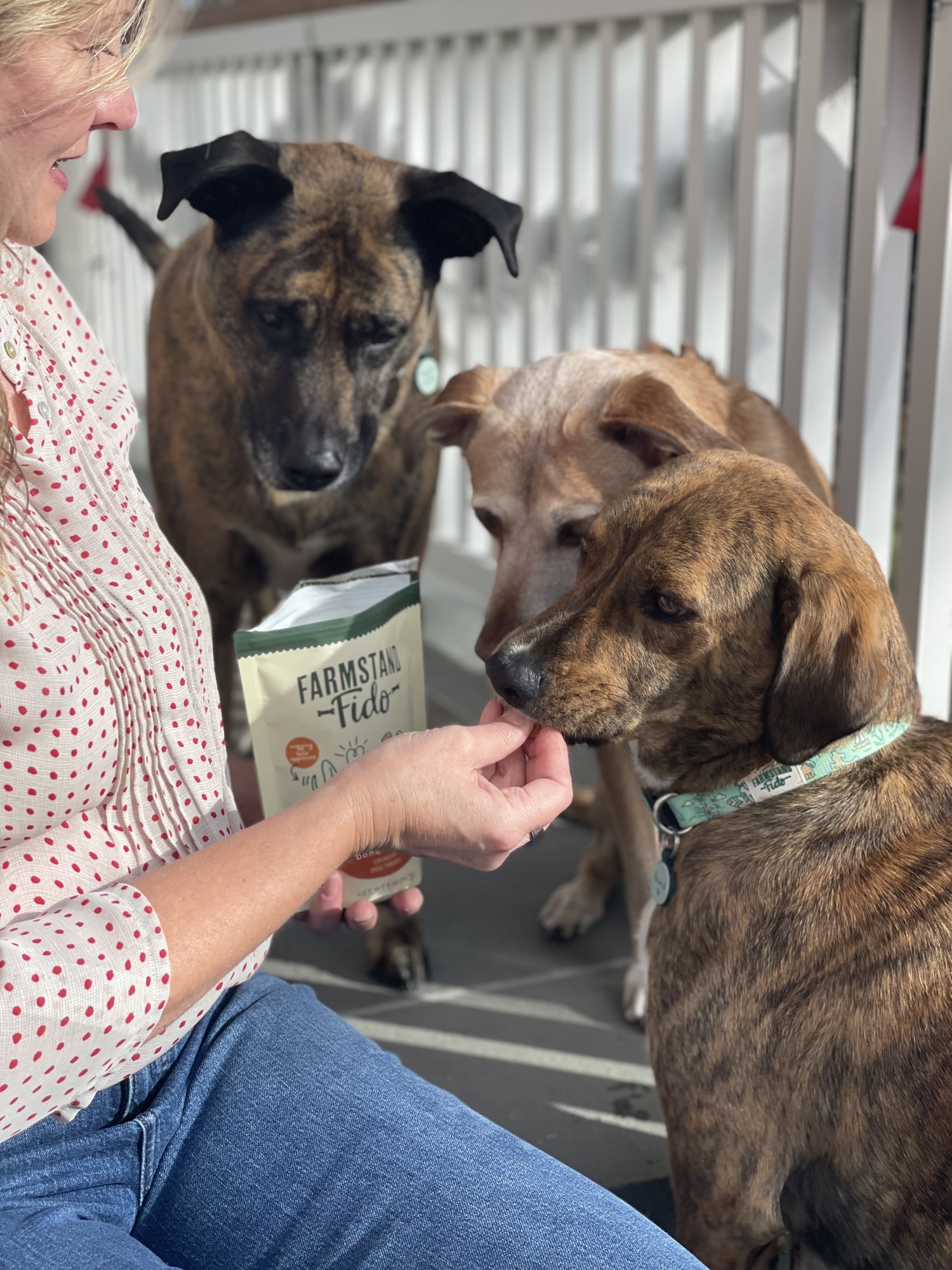
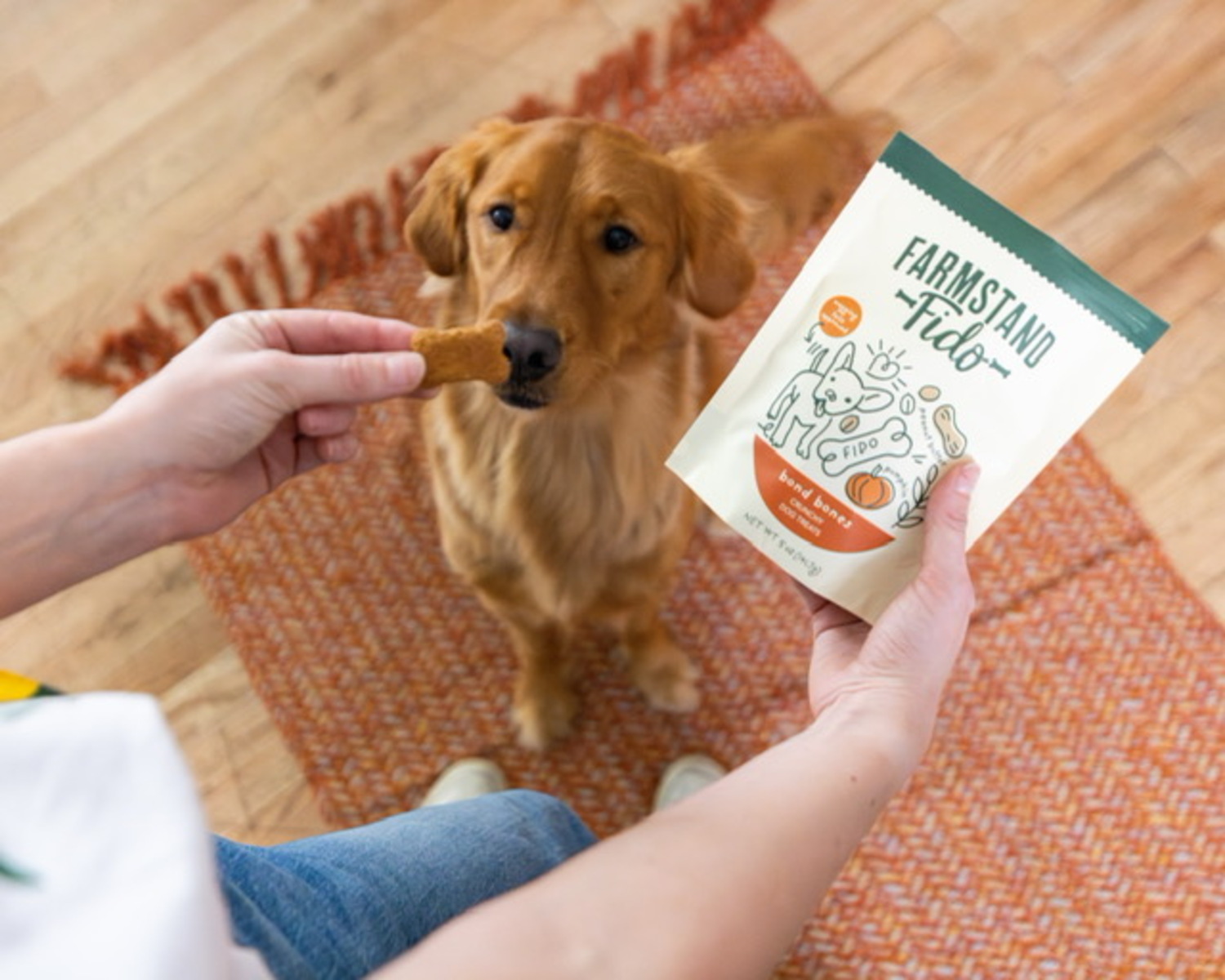
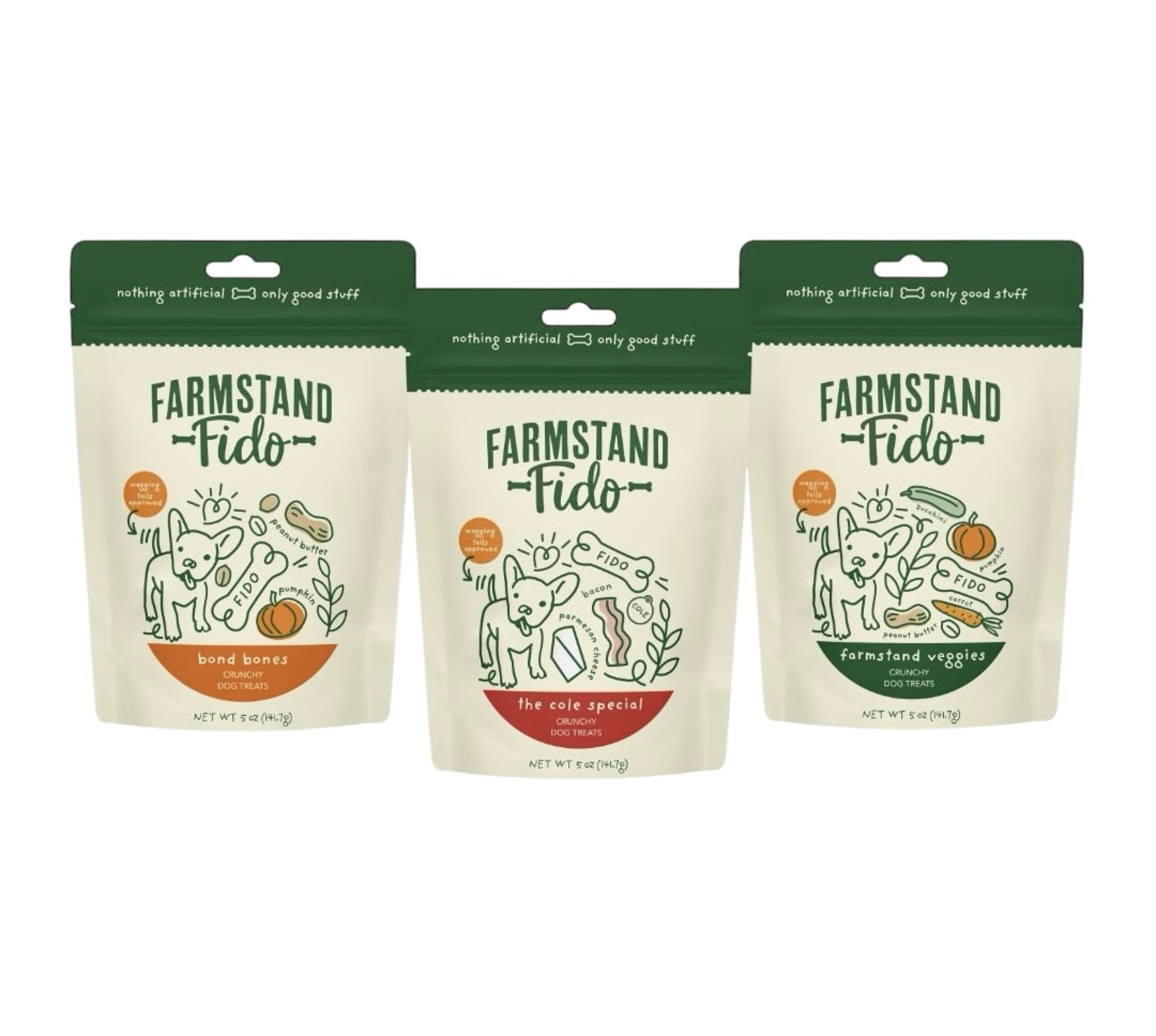
Any dog owner can relate — you open a bag of treats and are met with a foul smell. That’s what got to Eva Van de Bovenkamp, who launched Farmstand Fido, a line of dog treats made with human-grade ingredients.
“Opening the bags of treats, the smell was always awful … like plastic,” she recalls. “There are things in there that you don’t even know what they could possibly be. So I just started baking my own.”
Friends — and more importantly, their dogs — approved. She launched the business with treats made in small batches using kitchen staples, no chemical preservatives. Cornell’s food lab is currently testing shelf life, which has already passed the 10-month mark. Apple cider vinegar is added as a natural preservative.
To ensure her products were safe and healthy, Van de Bovenkamp took courses in dog nutrition and food safety. Then she started experimenting. The goal was healthy treats — until her son said, “You know what, Mom? My dog loves bacon and Parmesan.” That flavor combo is now the bestseller.
She also sources carrot pulp — a byproduct from a local juice company — reducing food waste. In addition to treats, Farmstand Fido offers branded accessories, sells at farmers markets, and offers a monthly subscription box.
Lamora Salsa
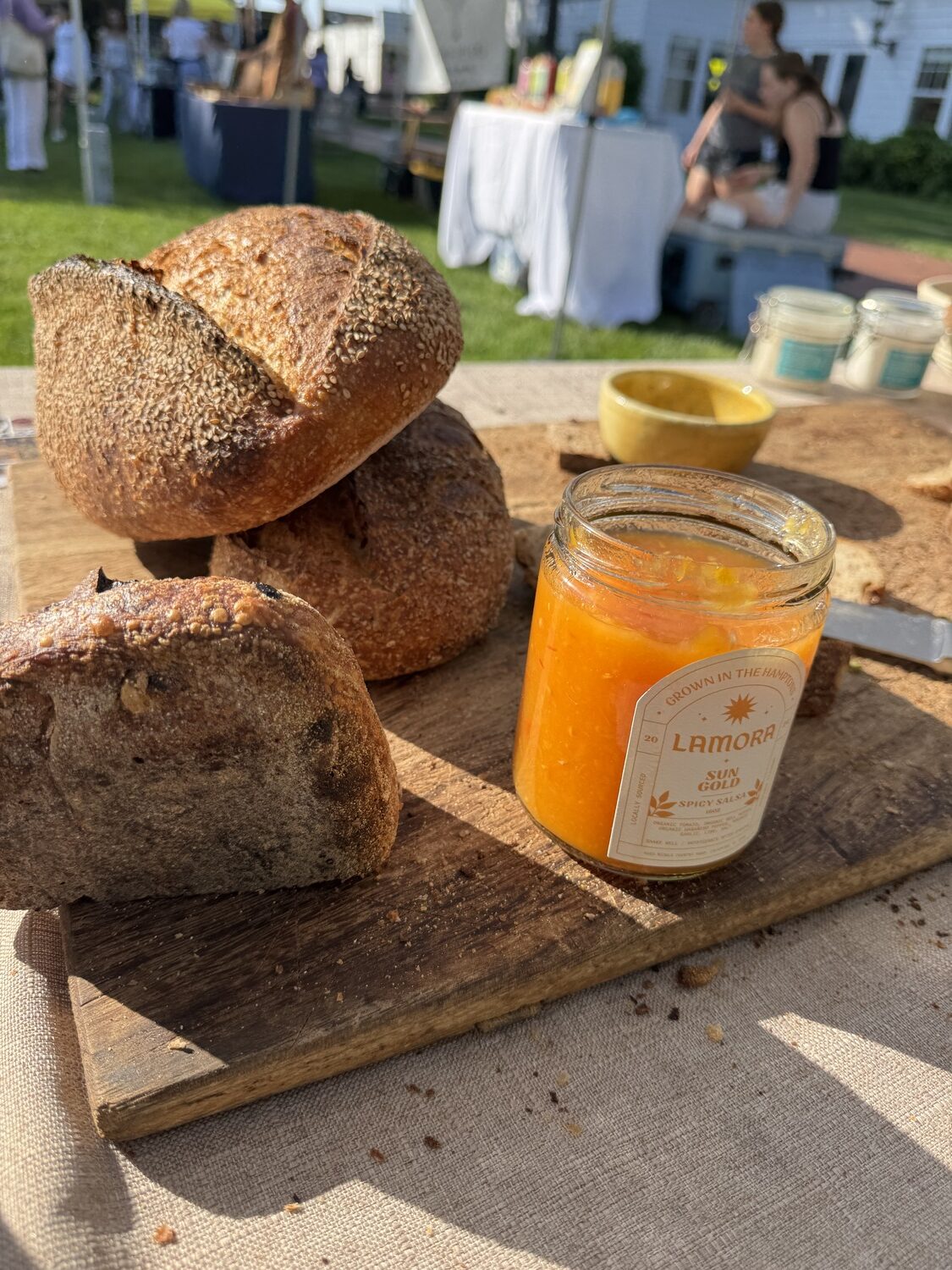
Stephen Zamora and Bailey LaMarca launched Lamora Salsa just last year — the name a combination of their last names, representing their partnership in life and business. A New Mexico native, Zamora first planned to sell flour tortillas — but making and packaging them wasn’t sustainable.
After a dinner party featuring his homemade roja and verde salsas, the couple shifted focus.
“I have a lot of experience with salsa — Mom used to make it weekly when I was a kid — so I knew it would be an easy transition,” Zamora says.
They’re committed to sourcing local produce, including “seconds” — slightly bruised or blemished items that might otherwise be thrown out. Last year’s salsas required refrigeration, limiting where they could sell and complicating things at hot farmers markets.
A winter course at Cornell Cooperative Extension solved that — teaching them how to jar a shelf-stable product that meets FDA regulations. Today, Lamora Salsa is made at Stony Brook University’s incubator kitchen in Calverton.
Find it at Farm and Forage and Barryville General in Southampton, or at the Sag Harbor Farmers Market.
Say Chef
David Andrew has spent most of his life in kitchens — including owning a restaurant with his father. But when COVID shut down the industry, he found himself with time — and turned it into something new.
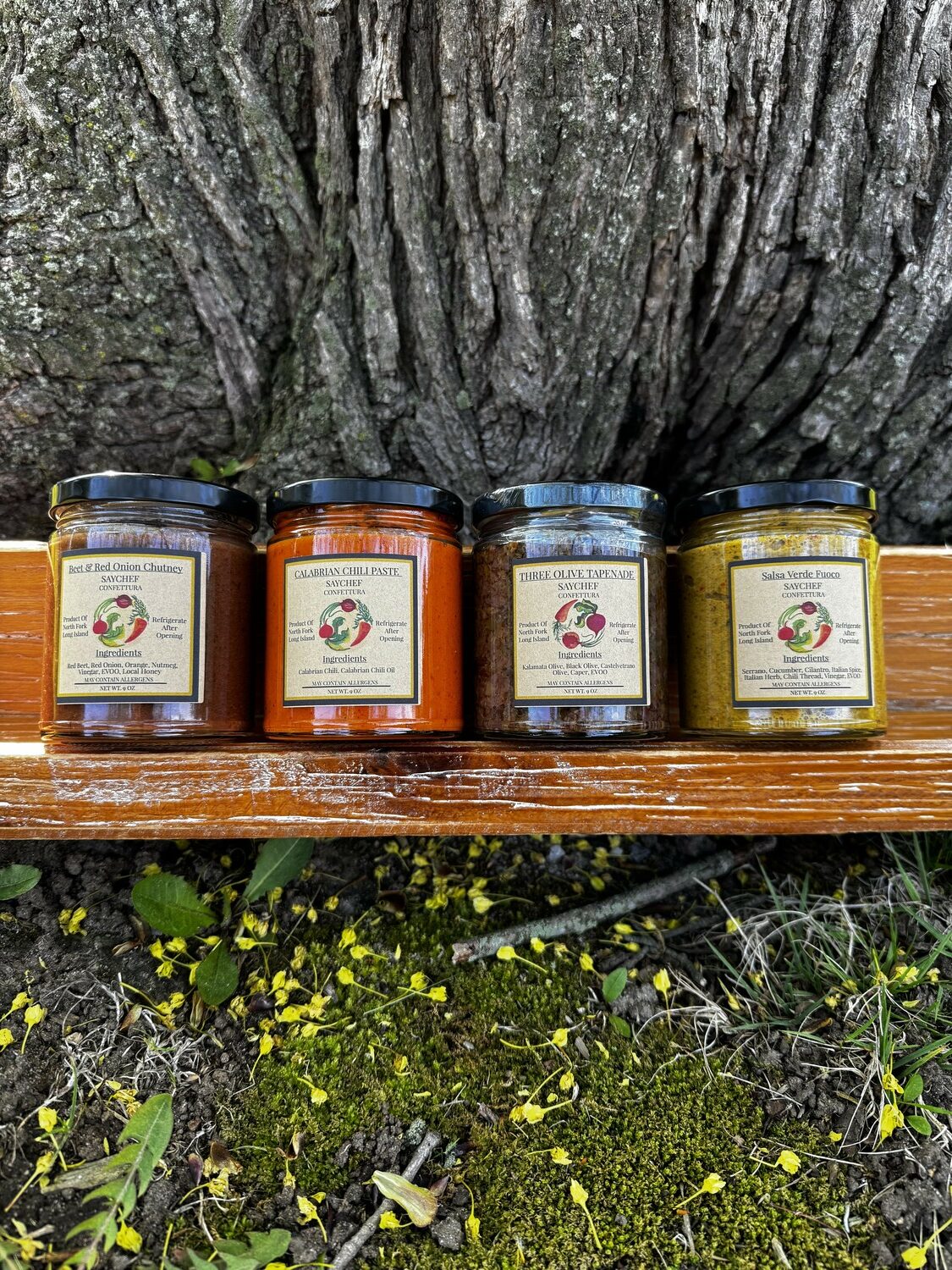
He began learning about jarring and preserving, starting with a marinara sauce he sold at his local farmers market. That was the beginning of Say Chef, a line that now includes beet and red onion chutney, Calabrian chili paste, three olive tapenade, salsa verde fuoco, and — a consistent favorite — romesco sauce.
Andrew did his research. “I went to my local farmers market and saw what people were selling. Then I figured out what I needed — permits, insurance — to join in.”
Say Chef products are made at a commercial kitchen in Jamesport, and larger orders are filled with help from a rented facility. His jars are now a fixture at markets in Montauk, Sag Harbor, and Westhampton Beach — and even some in Brooklyn.
The romesco — a fire-roasted red pepper and plum tomato sauce topped with olive oil — is a reliable hit.
Iron & Salt
Two years ago, Michael Ferran — former owner of Barrister’s restaurant — started baking focaccia as a kind of retirement experiment. When two retail shops picked it up — Farm & Forage in Southampton and Halsey Farmstand in Water Mill — it became a quiet phenomenon.
Then came cookies. Ferran perfected a brown butter toffee chocolate chip cookie so popular that Schmidt’s in Quogue now limits purchases to one bag per customer.
Next, he returned to a classic: key lime pie.
Longtime Barrister’s patrons might remember it — but the new version has become a viral favorite. Even influencer Bethenny Frankel praised it on Instagram, wearing Fantasia pajamas and calling the pie a “42 out of 10.”
“It seemed like a very appropriate summertime, hot weather product,” Ferran says. It was already in his wheelhouse — and the demand hasn’t slowed.
He can’t bake pies fast enough, even though they freeze well and the stores can stock overflow. A T-shirt Ferran had made says it all:
Sleep – Wake – Bake – Repeat.
Janice’s Baked Goods
Janice Payne spent nearly four decades driving a school bus on the East End. During summers, she worked at the Hardscrabble Farm Stand in East Hampton — and that’s where her baking journey began.
She noticed co-workers making extra money by selling baked goods. “I asked if I could try,” she says. Her first item: key lime pie — chosen specifically to avoid stepping on anyone else’s toes.
Eventually, the pie was phased out, but she expanded the lineup to include cookies, banana bread, peach cobbler, and more. When Hardscrabble changed hands, she moved her goods to Halsey Farm Store in Water Mill, where she’s been for the past four years.
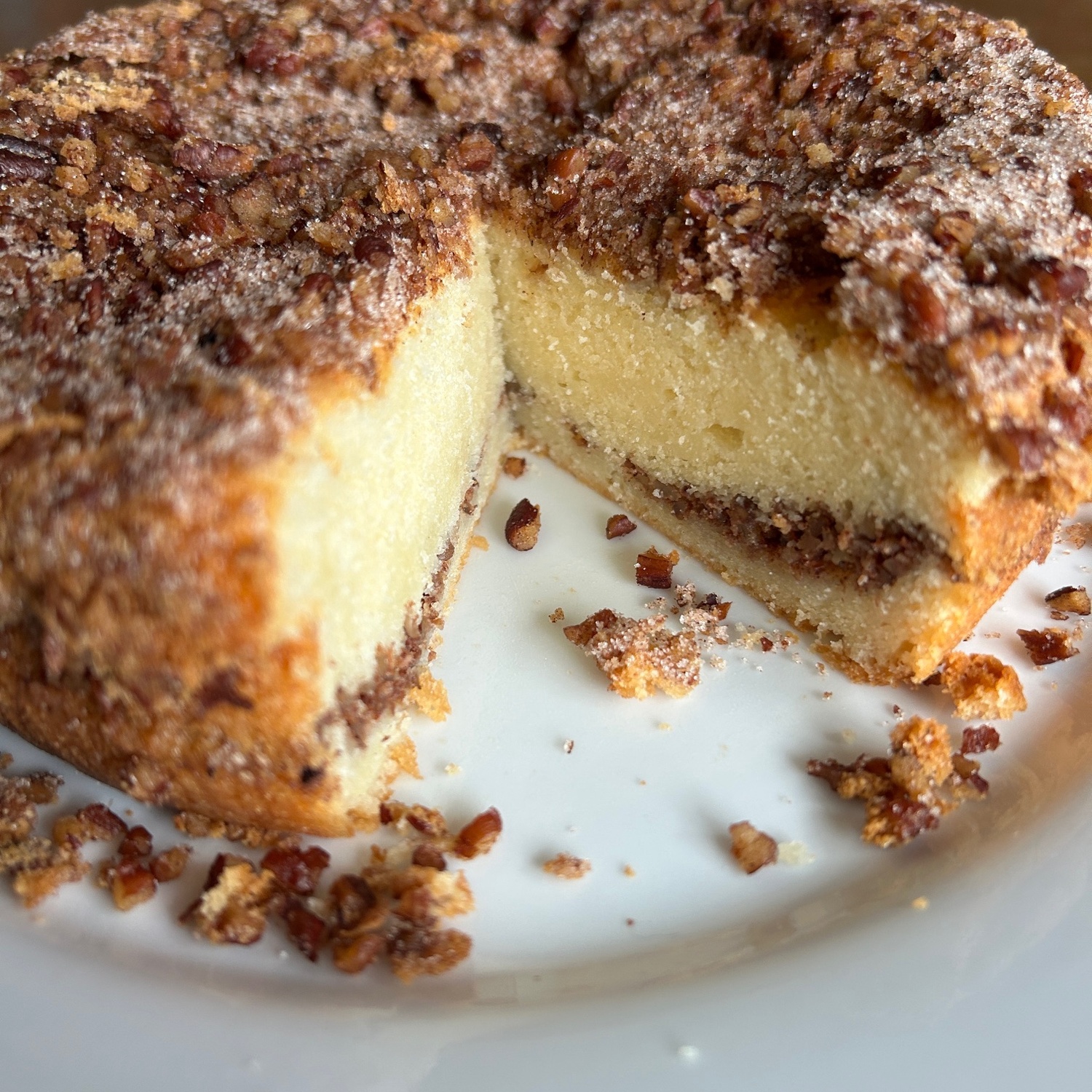
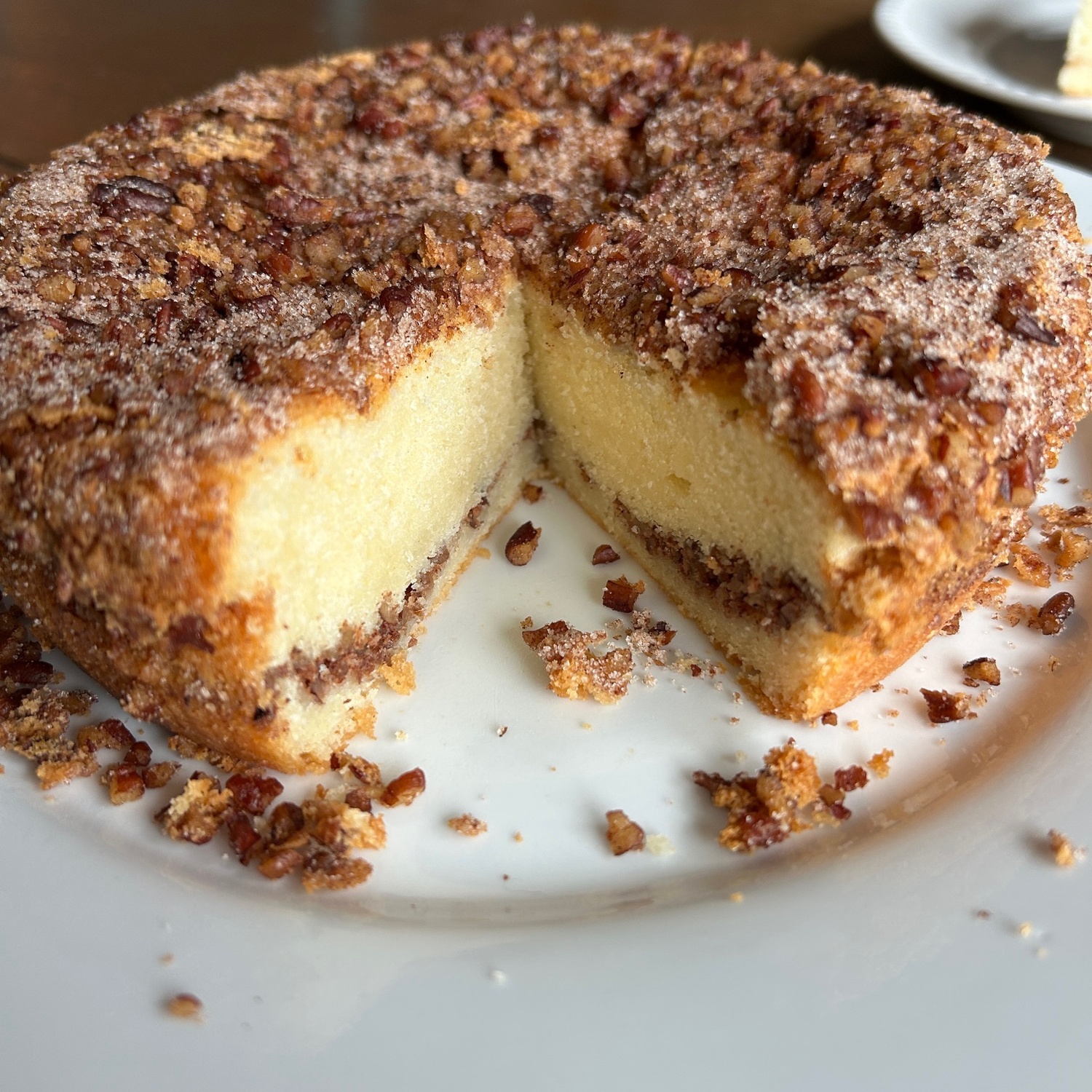
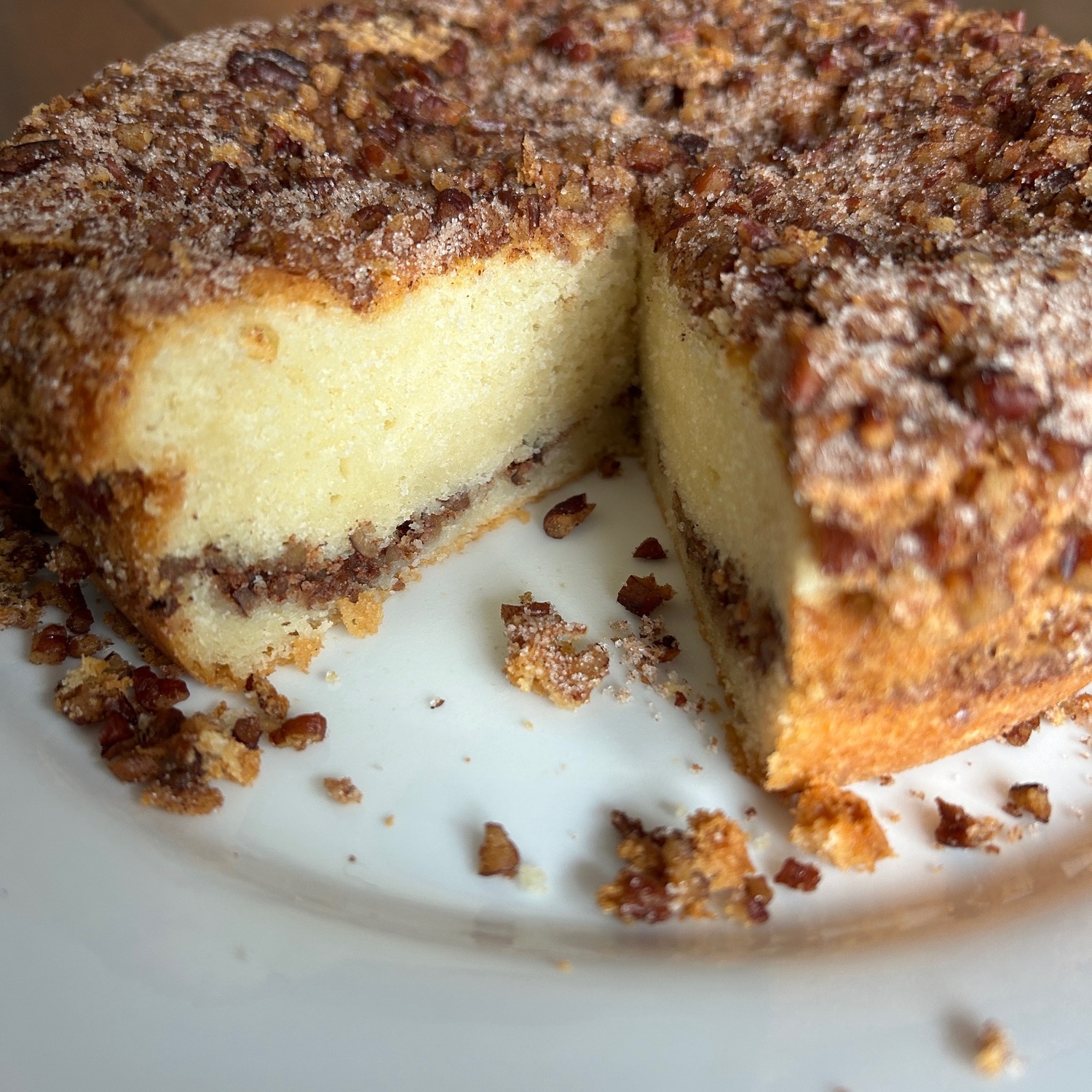
Her standout? The all-butter coffee cake.
It features a cinnamon sugar swirl and is topped with chopped pecans — hand-ground by her husband in their certified home kitchen. “It took a while to find a recipe and make it right,” she says. “I knew what I wanted — something that was all butter.”
The only downside? Her husband rarely gets one. “He’s always bugging me,” she laughs. “‘When are you going to make me a coffee cake?’”
Her answer: “In the winter.”


 Kim Covell on Oct 9, 2025