


 4 Photos
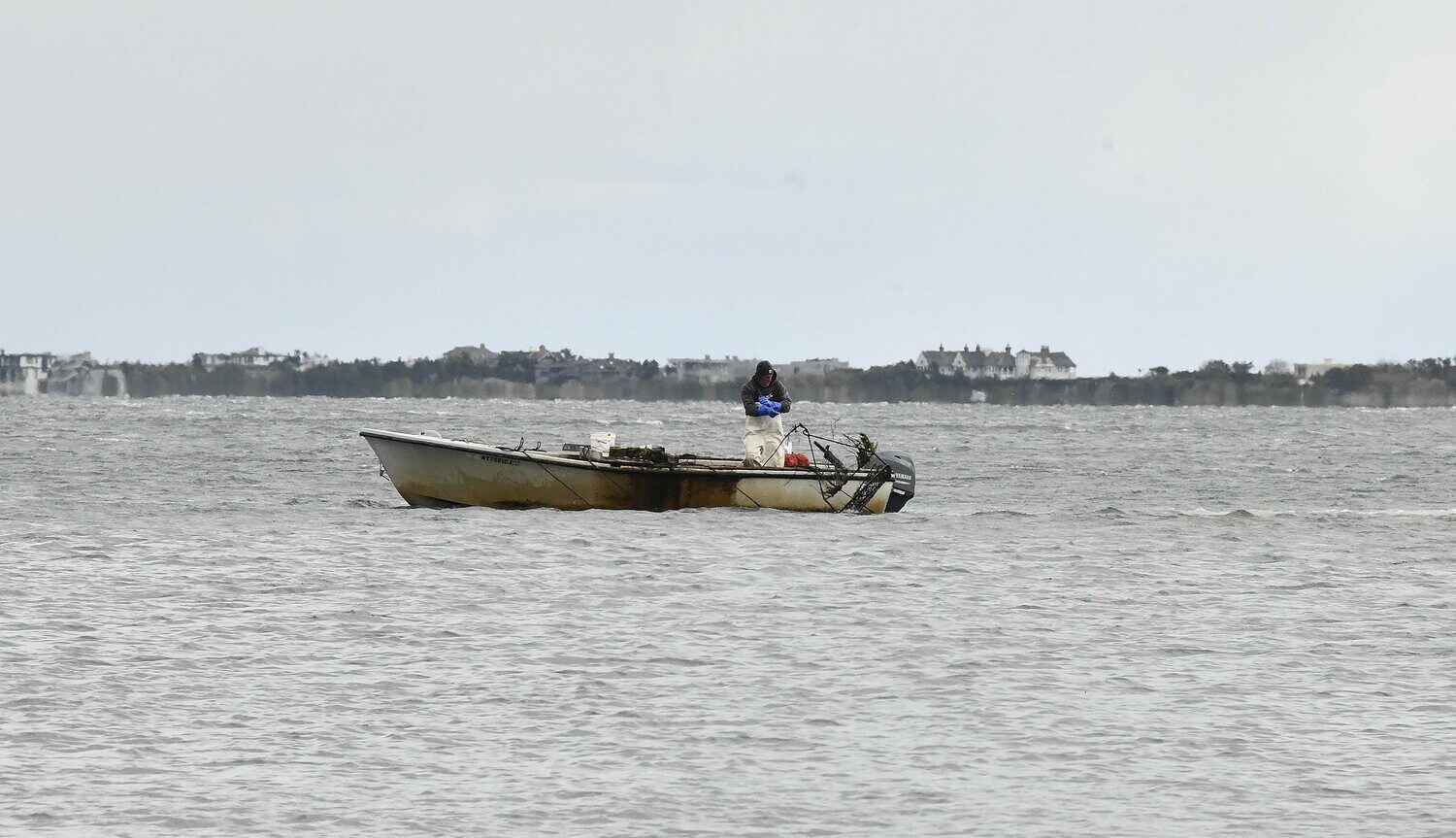
A scalloper in Shinnecock Bay on Tuesday afternoon. DANA SHAW
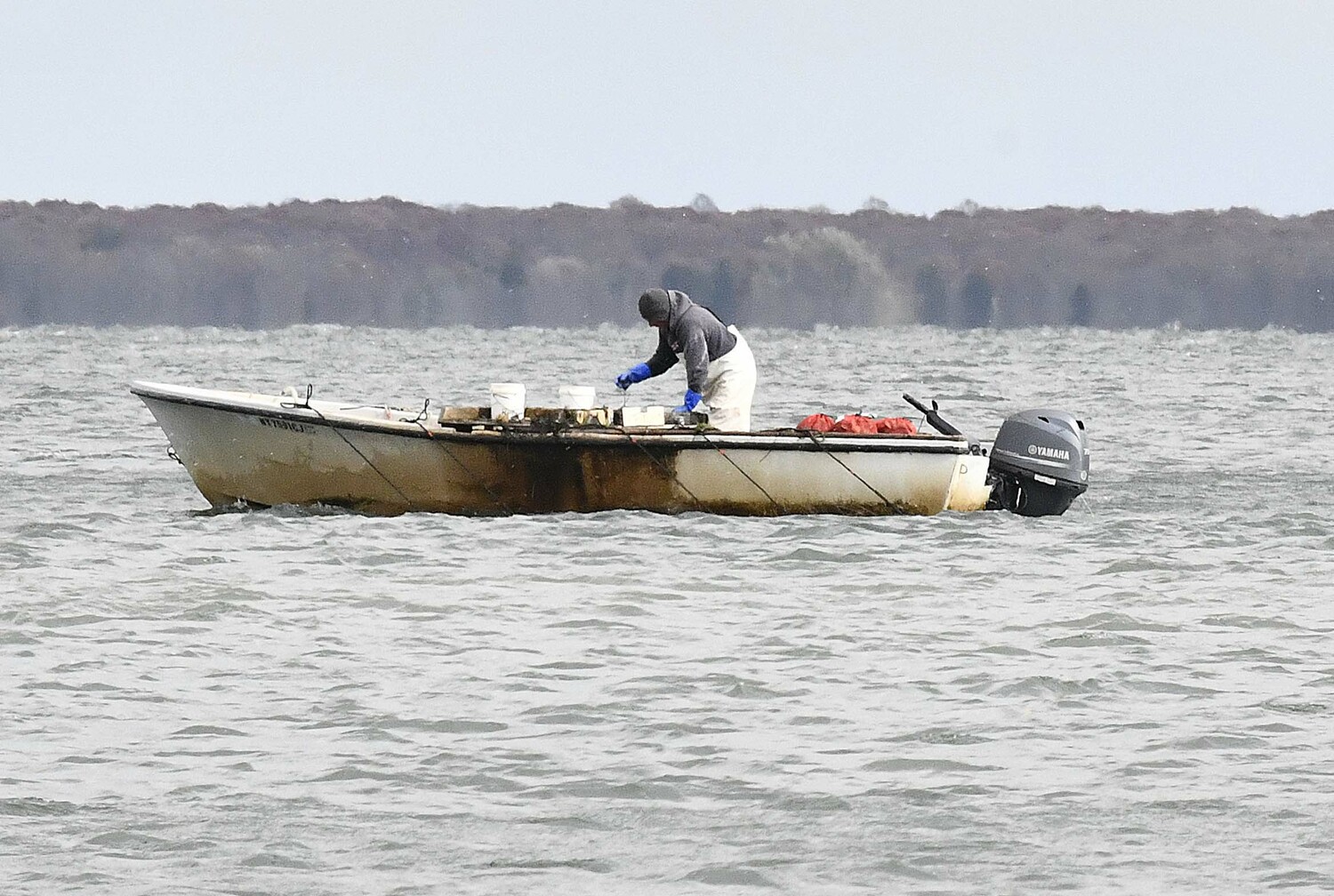
A scalloper in Shinnecock Bay on Tuesday afternoon. DANA SHAW
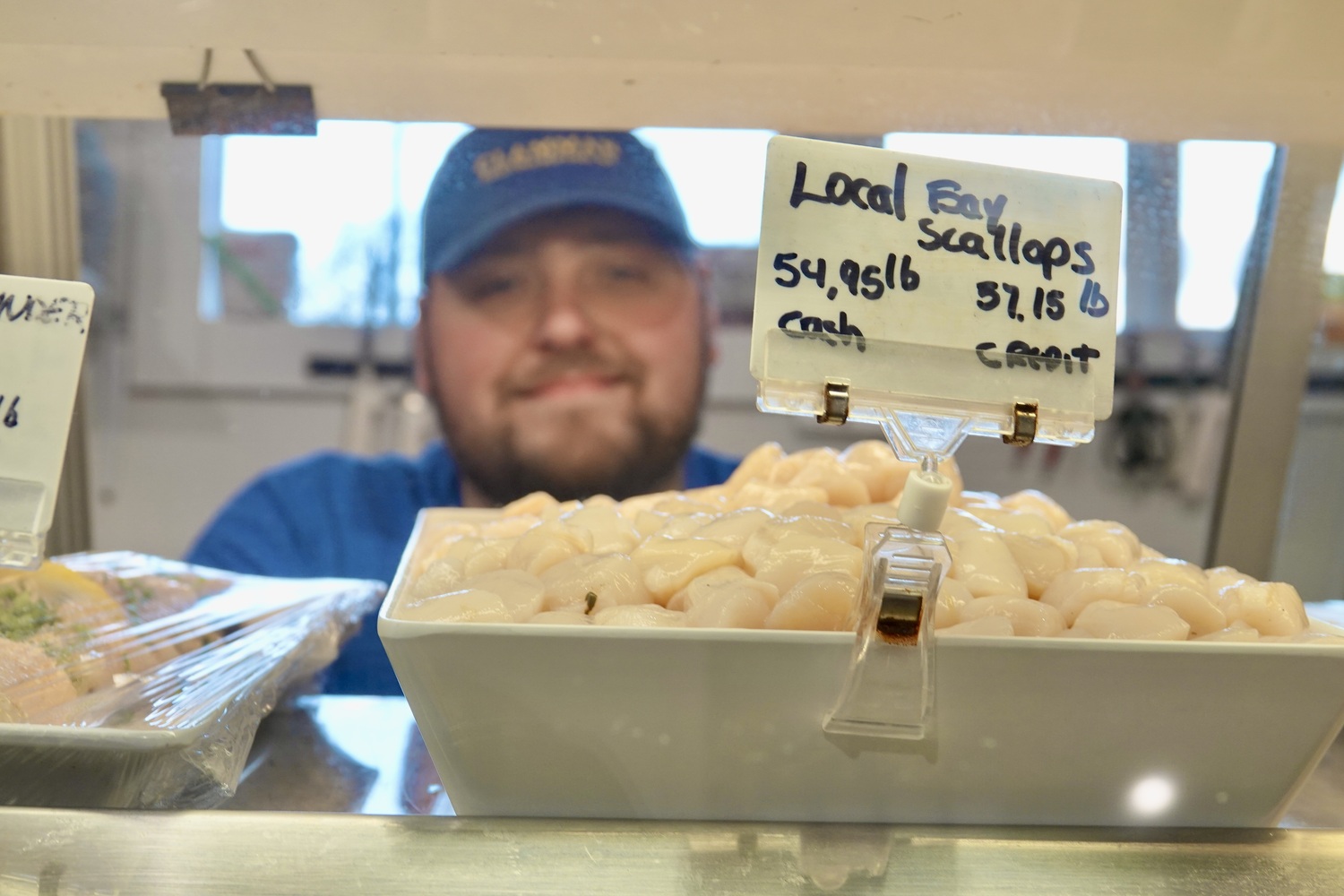
Local bay scallops hit the display cases at fish markets across the East End this past week at $55 a pound, reflecting the relative scarcity of the prized morsels after a seventh summer in which most of the adult bay scallops in local waters died over the summer. MICHAEL WRIGHT
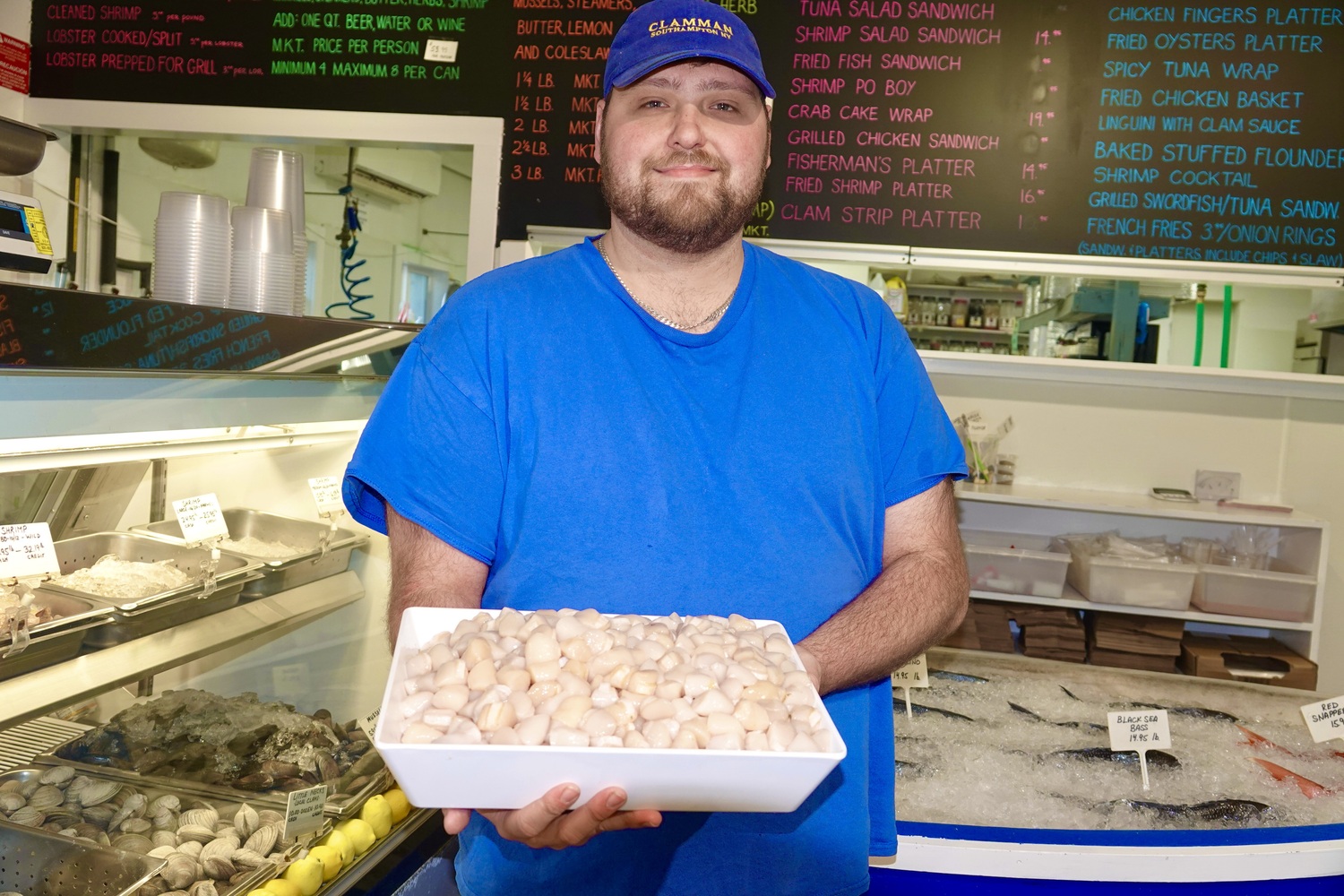
Chris Dubritz said that The Clamman in Southampton Village has been getting bay scallops fresh from local baymen every couple days for the past week. MICHAEL WRIGHT
The bay scallop harvest on the South Fork opened in Southampton and East Hampton waters this month to expectedly dark prospects in the wake of a seventh straight summer in which the vast majority of adult scallops died in most local bays.
East Hampton Town baymen say that they have found only the barest few scallops, and many said they have not bothered to even go in search after Monday’s opening day in East Hampton waters.
Southampton Town baymen, who started fishing town waters on November 3, have found only marginally more uplifting results, in a stash of the famously delicious but notoriously unstable bivalves that survived the summer on the edge of a navigation channel in eastern Shinnecock Bay off the shoreline of Hampton Bays.
“It’s not super duper good, but it’s good enough to make a day’s pay,” Hampton Bays bayman Edward Warner Jr. said this week. “I didn’t go the first couple of days, but I’ve been going, and it’s fairly good. I think there will be some through the winter.”
Warner, who is a Southampton Town Trustee, said that the area of the bay south of Cormorant Point has seen the return of dense eelgrass, the aquatic grass that once carpeted most of the region’s bay bottoms and was seen as critical habitat for scallops and many other marine species, and that has helped support the collection of scallops in the area this year.
The brightest ray of hope for the scallop fishery, and perhaps the stock as a whole itself, has been the waters of western Moriches Bay, which have again produced a relative bounty of bay scallops for Brookhaven Town baymen — who have been keeping many of the seafood cases at East End shops stocked with the glistening beige morsels.
Even with that resource, however, seafood shops reported only taking in a few bushels every couple of days and over-the-counter prices of $55 per pound, or higher.
“We have some but not very many,” said Chris Dubritz at The Clamman Seafood in Southampton Village. “They’re getting more and more expensive every year. But we have been getting them in every couple of days from the local baymen. Since the season opener it’s been consistent, at least so far.”
Elsewhere on the East End, though, the harvest has largely borne out the dire predictions of another sweeping die-off of what should have been harvestable scallops.
Matt Parsons, also a Southampton Town Trustee, said that he went scalloping in Cutchogue Harbor last weekend and caught just a handful of harvestable scallops.
Harrison Tobi, an aquaculture specialist for the Cornell Cooperative Extension, said his surveys last month of more than two dozen scallop survival test sites revealed only a handful of live adult scallops.
“We only had three live adults — so we thought it was going to be another really bad year,” Tobi said. “So it’s encouraging to hear that some are being caught.”
In summer 2019, baymen and shellfish specialists who had been watching with excitement as the bay scallop population had grown steadily for several years through the 2010s had been anticipating another robust scallop harvest. But biologists doing surveys of the bay bottoms in late summer and early fall that year said that instead of the huge numbers of adult scallops they expected to find, they found a barren wasteland, marked only with the signs of the devastation that had occurred over the summer: thousands of empty scallop shells.
Biologists have pinned the 2019 die-off, and the similar nearly complete die-offs of adult scallops each summer since, on a combination of rising water temperatures and a parasite that has long infested scallops leaving them weakened. The stresses of the early summer spawn appear to be the final straw for the weakened adult scallops — after which they die, even as they seed the following year’s brood.
Biologists from Cornell Cooperative Extension and Stony Brook University have hypothesized that genetic homogeneity of the scallops in the Peconic Estuary system has left them vulnerable to natural changes in their ecosystem. Experiments with bay scallops collected from Moriches and from other regions, like Martha’s Vineyard, have shown better resistance to the impacts of the ubiquitous parasite. Biologists have begun working to bolster the Peconic stock with brood, or spat, from those scallops in hopes of building a new, more resilient population of bay scallops in local waters.
Cornell Cooperative Extension produced more than 800,000 scallops in its hatcheries last spring. Half were released into Shinnecock, Peconic and Moriches bays, and half will be overwintered and released next spring.
“We’re just trying to increase the diversity overall,” Tobi said. “It’s a minute change, but it can make a difference. Right now, the parasite is the issue, but the more genetic diversity you lose, the more things can be that straw on the camel’s back.”


 Michael Wright on Nov 11, 2025