


 2 Photos
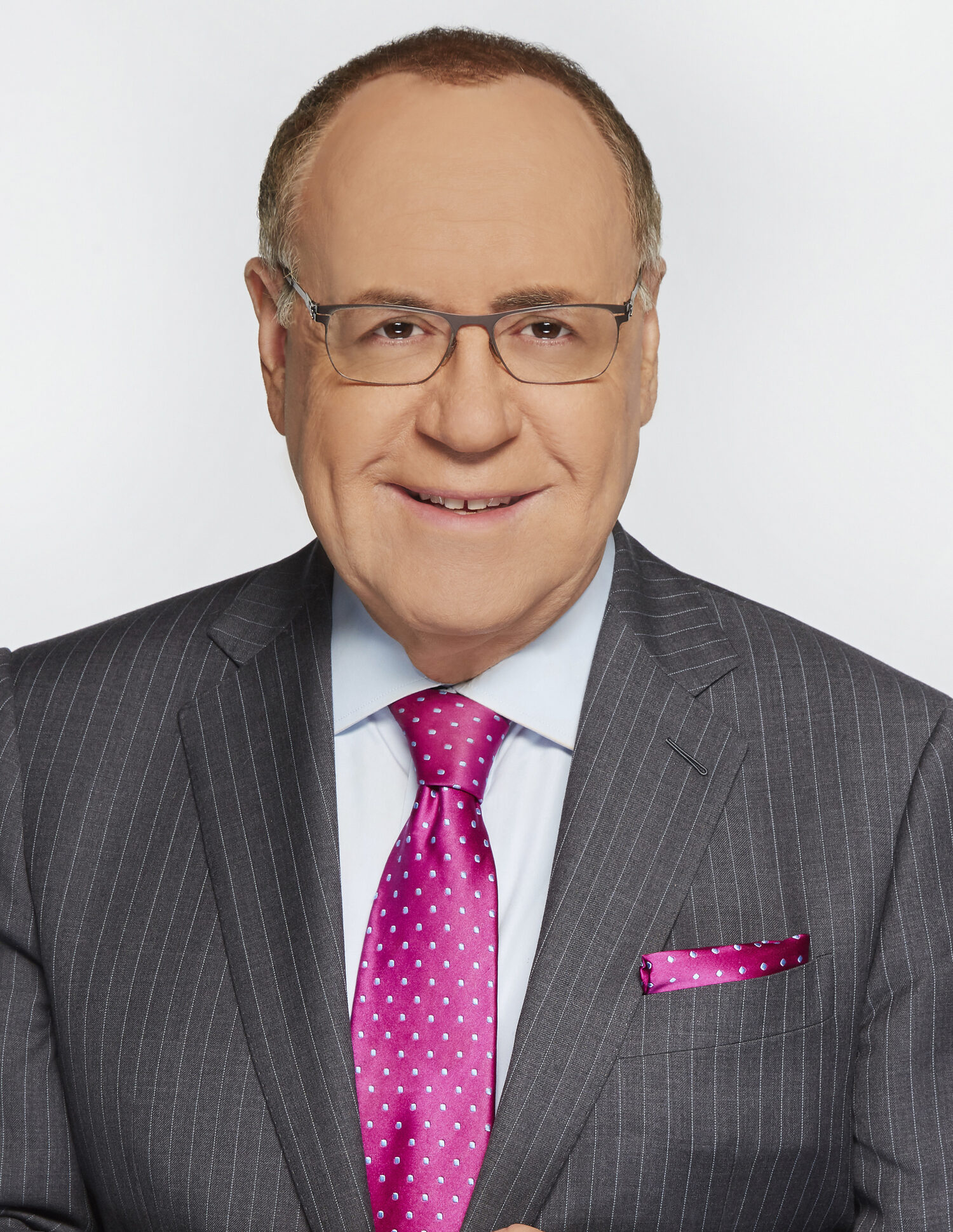
Dr. Marc Siegel
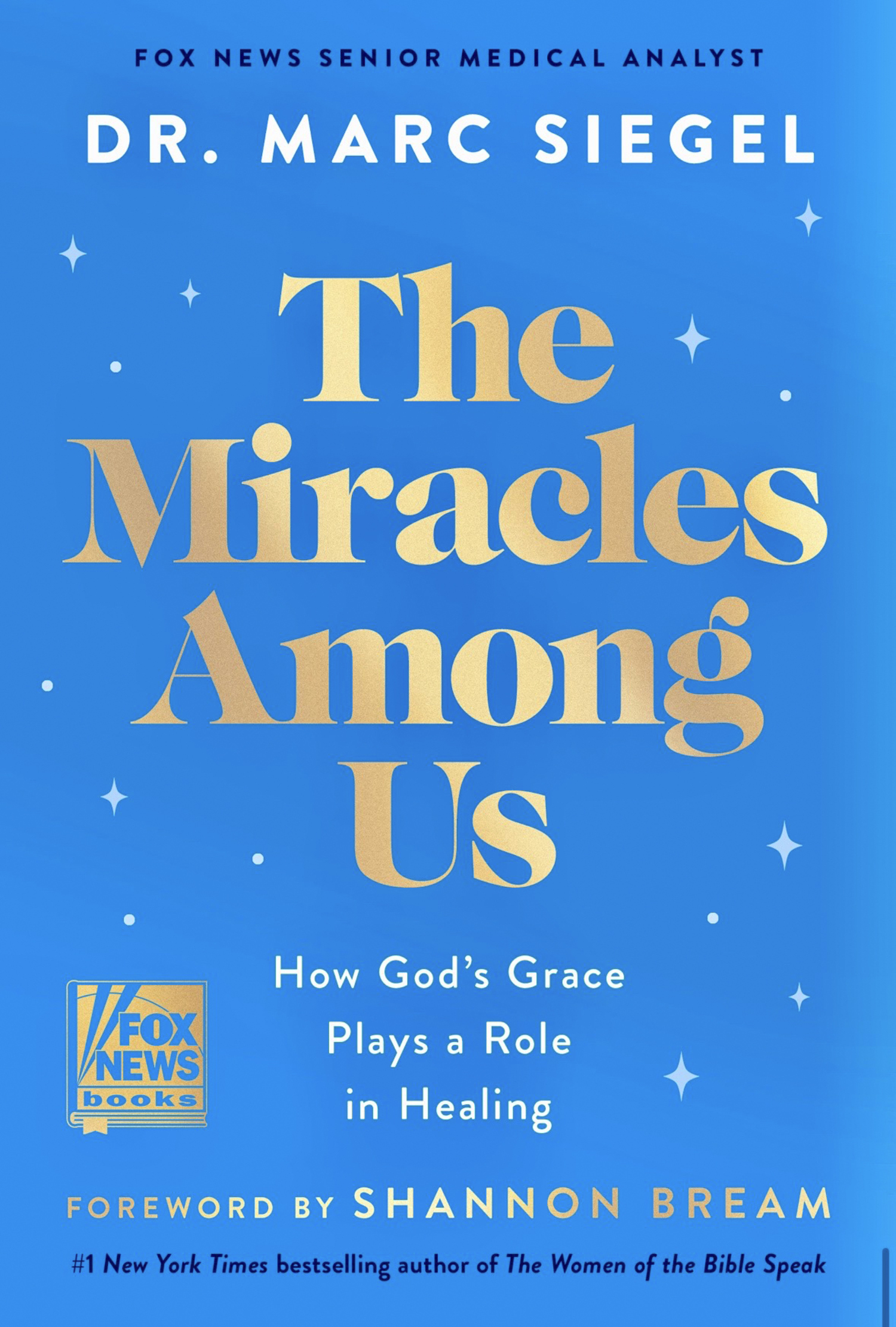
Dr. Marc Siegel's latest book, "The Miracles Among Us."
Dr. Marc Siegel ended up as a Sag Harbor homeowner — and it was kind of a miracle.
“I was very good friends with the writer E.L. Doctorow, and I used to go to all his parties in Sag Harbor,” Siegel, a practicing physician and a Fox News senior medical analyst, recalled. He and his wife, Dr. Ludmilla Siegel, a neurologist, would stay in rentals in Montauk, but his visits in the late 1990s to Doctorow in Sag Harbor got them thinking.
They eventually began bidding on a house in Noyac, one they had some misgivings about. Enter Doctorow, who told him the house right next to his, on John Street in the village, was about to go on the market. That house included a tiny 19th century cottage, once a horse barn, which was being used as a space to do pottery.
Today, Siegel, who also is a clinical professor of medicine and a practicing internist at NYU Langone Medical Center, and is medical director of the channel Doctor Radio on SiriusXM, uses that cottage as a place to write books.
On November 18, his seventh book, “The Miracles Among Us,” was the 17th title released by Fox News Books. Fox News also plans a television special, with a special airing on Fox Nation, Fox News Media’s streaming service, available on December 3.
At its release, Siegel said, “My hope in ‘The Miracles Among Us’ is to remind readers that God’s love has the capacity to surprise us even in our darkest moments.”
He spoke recently about the new book in a Zoom interview that has been lightly edited for length and clarity.
Q: As a doctor, your job is all about science and all about facts, and this book is very much not like that. How did you come to write this book?
First of all, I don’t agree with that statement, so that’s how I came to write this book.
I think that physicians are like engineers. In other words, it’s like saying an engineer’s a physicist — he’s not. He or she is not a physicist. An engineer is someone who uses physics and comes up with practical solutions.
So, a physician is somebody who applies medical science to clinical practice, dealing with real-live people, who have spirits, and have souls, and are precious, and are valued, and valuable. And bringing that sense that you value the person to your job as a physician should be essential.
It isn’t essential in one way, by the way, to be totally fair — I’ll back off on that and say, if I have a great surgeon who could repair a hernia, I don’t care who they think they’re operating on, as long as they repair that hernia.
But there’s certainly the art of medicine to be considered … the idea that if you bring to bear the idea that you’re engaging with an actual precious soul, you might honor it more, the way we’re supposed to honor our own bodies that God gave us.
So, I think you can bring the two together without compromising the science, and the trick is to understand that the science itself, which is advancing dramatically, is itself a manifestation of a higher reality. Our ability to do robotic surgery — where the heck did that come from? Where did all of these great advances come from?
So, I don’t separate out science and religion or science and philosophy. I don’t think that they’re independent, but I don’t think they should be polluting each other, either.
Q: How would you define “miracle”? Because medicine has them all the time — there are so many moments where medicine seems to change reality in a positive way. But how do you define a miracle for purposes of this book?
Well, let’s start with the way the Catholic Church defines a miracle, which I don’t discount.
There’s a guy in Lourdes that’s in my book, named [Dr. Alessandro] de Franciscis — he’s phenomenal. He’s an epidemiologist trained at Harvard, and he also is a pediatrician who practiced for years. And he sits there in Lourdes, France, with hundreds and hundreds and hundreds of applications for miracles. And in the end, only 72 miracles have been approved by the Catholic Church.
He’s not the one that does the approving, but he’s the one that recommends it to the bishop. And de Franciscis’s attitude is, “Look, I’m a religious person, but I’m actually evaluating these miracles for whether they defy all scientific possibility.”
He says, in the case of Bernadette Moreau, he farmed it out to 33 other doctors, including an incredible expert on the back, and trained in France, and he ended up determining that it was medically impossible that her cauda equina syndrome and her twisted spine could have been overcome three days after a visit to Lourdes, where she immersed herself and prayed.
And then when she was back at her home, she felt some warmth going through her body, and then was able to pee again on her own without a catheter, and was able to stand and walk without assistance, without devices.
I believe that that kind of miracle occurs, but I also believe that that’s not the only kind of miracle.
And Cardinal Dolan was a guide for this book, because he believes also in soft miracles. Soft miracles are maybe more what I think of from my background in Judaism, which is: Soft miracles are an accumulation of God’s presence. And they may be coincidences, they may be things happening in a way where there’s so little probability of it that all of these things accumulate.
In talking about this book a lot, I’ve come up with different ideas, and one of the terms I’ve come up with is: You’re in a “miracle lane.” So, where the coincidences just keep happening, where they keep accruing.
And one of the things the publisher said to me was, “Choose a miracle in each chapter” — and we always have a joke about that, because some of them, there’s too many to choose.
There’s the chapter that takes place on October 7, 2023 in Israel, where Hamas burns down a family’s house, and the father and the mother — the mother is a doctor, she’s an anesthesiology resident at Soroka Hospital — and they hide the baby between them and keep the baby alive, as their outer bodies are getting burned to a crisp.
They use a mattress to protect themselves, they escape out a window naked, they hide in a room over a tractor, and she’s breastfeeding the baby to keep the baby from a coma. Then they end up limping to the front of the kibbutz, and [Israel Defense Forces] happened to be there, just happened to be there at the moment they arrived — that’s a miracle.
Q: So, not one miracle, but sort of a whole series of miracles.
Yeah. They get on a helicopter, they end up at Sheba Medical Center. She’s in a coma for a month. Get this: She has burns over 60 percent of her body, she has infections, three different infections, she’s on a ventilator, she has COVID, she has blood clots — she survives. Not only survives, completely survives, and goes back to work at Sheba, and then wants to go back to Soroka to continue her life, full circle, and complete her residency.
But the publisher says the biggest miracle of all in the chapter is something called NexoBrid, which is a burn cream that was developed in China, that is used in Israel, that is now starting to be used in the United States, where you apply this pineapple derivative onto your skin, and it burns down right to the viable tissue. It gets rid of all the dead tissue much better than a surgeon can do with a scalpel. None of them would’ve survived without that.
The book has a lot of miracles like that, where the technology is riding right ahead of the event, almost like you’re surfing. You’re surfing through medicine, and they go, oh, by the way, that was incurable last year, but this year we got this.
And it’s a mistake to think that those advances are occurring completely separate from spirituality, or from a soul, or from a greater reality. You can have whatever religion you want — I believe in a greater reality. I don’t make this book about my religious beliefs. This book is about the idea of almost a certain magic in the world that can uplift all of us.
Q: Do you think your faith made you more able and open to seeing these miracles? Or did seeing these miracles strengthen your faith?
Fantastic question. Fantastic question. Can I give an answer from the book?
Q: Sure.
Bobby Redfield III is a transplant surgeon; his father is Robert Redfield, the former [Centers for Disease Control and Prevention] director. His brother, Danny, was in a very bad accident, had severe head trauma, and ended up in a bad coma, where he almost had a herniation. And they brought him to the hospital, and he went on diuretics, and he went on steroids, and they removed part of his skull.
And then, Redfield flew him to Maryland Shock Trauma, with Tom Scalia, he is the head. And he and Redfield have debates all the time, because Redfield Sr. — a man of deep faith, friends of Pope John Paul II, with the HIV era was really involved with the Catholic Church, really involved with these Franciscan sisters in Poughkeepsie, who were praying for Danny Redfield — Robert Redfield Sr. was praying to God every day.
His son was saying, I don’t believe in all of this, and my brother’s not going to make it. But what ended up happening was, because of the great medicine of Tom Scalia and Maryland Shock Trauma, he survived.
And I said to Scalia, “Are you a man of great faith?” He says, “Not like Robert Redfield is.” And we debate about this all the time.
And that’s another thing in my book: It’s not a prerequisite to believe in the very miracle you’re participating in. It’s not a prerequisite.
So, they have these debates; meanwhile, Danny recovers, and I said to Scalia, “What were the chances he was going to recover full function like this?” He says, “Now, that is about as close to zero as you get.”
So, then, Bobby Redfield III says, “My brother’s out there golfing, and he’s getting better scores than before, and he’s traveling around the country.” He says, “I’m now a big believer, because the three lobes of his brain were destroyed, were decimated. How the hell did this happen? How did he recover? Now this surgeon is a big believer.”
Q: The one risk of this conversation to me is that morality might start to come into it … When you talk about somebody who gets a miracle, it sort of feels like it’s a reward for their beliefs, or a reward for the beliefs of people around them who are supporting them. If somebody doesn’t get that outcome, doesn’t that suggest something negative?
I love that question, it’s a complex answer. Number one, God decides what miracles he gives — we don’t decide. So, we don’t evaluate whether God let us down or not: God is God. So, we fear God, we revere God, we look to God for solutions, and we pray to God hoping that God will recognize us.
In my religion, we’re always saying, we’re just dust. We’re just dust. We came from dust, we returned to dust. And so, to be humble is to not evaluate God. God brings you the miracles that he believes you should have.
And sometimes we don’t recognize that miracle. And he may be looking down the road and see things that we don’t see, like when Hannah is praying in the Old Testament for a son, and her sister has all these kids, and, finally, God gives her a son at the age of 40, she thinks God has answered her prayers, but it isn’t really exactly true.
What God has done is give her Samuel, who’s going to become a great prophet, and that’s why he’s done it. He’s done it because he sees down the road.
But the other way to put this that you’re also going to like is that the people I told you about with Hamas, Ellay Hogeg Golan and her husband, Ariel, refused to call what they say happened to them a miracle, because they feel that dishonors those who didn’t make it. And I love that point of view.
So, I’m not here either to call something a miracle, I’m here to just tell it like a writer does. I tell these stories, and you decide.
Q: And you’re basically just marveling at what you find, right?
Correct.
I have to add or emphasize something I said earlier, which is the unlikeliness of this makes me more of a believer. But, again, I’m just presenting.
We like to say that on TV, if I’m reporting. I go down to interview somebody — I won’t mention the name — and I bring our best field producer we have at Fox, and I’m not going to say who this is, and I’m not going to say whom I interview. And we write these questions that are really hard, and afterward, the interview goes viral.
And I said to the producer, “Did I do something wrong?” And they go, “No, you’re not the one who answered those questions — you’re just presenting the questions.”
Our success is if we are not in the interview. The interview can go viral, but we don’t want ourselves to be named. But it’s hard to experience the following, what I’m about to tell you, and not become more of a believer.
We’re doing a special for Fox Nation right now on the book, and one of the things I did was revisit Bob Montgomery. And Bob Montgomery is the chief of surgery at NYU. And I could go on and on about the story he told, but I’m only going to tell one tiny part of it now.
He had a heart transplant, he had seven cardiac arrests before the heart transplant, he had one of the first defibrillators — his whole life is a miracle. But the one thing he told me, if you sit and listen to Bob, you know that Bob is a man of great science. He also trained as an immunologist at Oxford when he wasn’t able to operate. So, he’s a man of great science, and he’s a serious scientist who’s also got a Ph.D. in immunology. He’s not just a surgeon, not just a transplant surgeon, not just operating on pig kidneys.
But then he tells a story and he said, every time I had a cardiac arrest, the same thing happened. And he tells this story that he feels he’s suddenly part of some great vastness, and that vastness is way greater than anything else he’s ever experienced. And then, all of a sudden, each time he says it occurs the same way: He hears a sound, and he isn’t sure what the sound is, and he hears it, and it gets louder, and it gets louder, and all of a sudden he realizes it’s the sound of someone breathing.
And then as time goes on, a few more minutes pass, and he feels that he’s back in his body, and he feels more limited, and that he’s lucky to be there, and it’s fragile, and he can compare it momentarily with that great vastness that he felt part of before.
To hear that from a man of science … Now, I’m not saying he’s not a man of faith. But it’s hard to hear that story and not believe.
Q: So, what are you hoping people take away from your book?
I just want people to enjoy it. I want people to take away from my book the idea that we need to love each other more, be kinder to each other, to have more hope. I believe in faith, that we shouldn’t take ourselves as seriously as we do. Cardinal Dolan said to me the other day, “We can disagree on the issues, but how about we love each other?” And I think this world needs that, and I think that believing in a greater presence that manifests himself through miracles is a way there.
Q: So, there’s a bigger question here than just about believing in miracles, it’s really about unity and about bringing people together.
There’s a part of the brain — there’s a scientist I just interviewed that’s doing study on where in the brain miracles reside, and when you believe in miracles, it’s the right frontal lobe of the brain, right here, that you’re experiencing the miracle. And that happens to be the same part of the brain where we fill in the dots, where we have a political belief, or any ideology.
And so we’re filling in the dots because we don’t have A + B = C, and he also is discovering that that part of the brain wants us to be part of a community, and I’m suggesting that that community is more positive … I’m not saying all religion is positive — it’s used also to hurt people, as you know. But the idea of believing in miracles is probably a much more productive and positive way to go about life than political divisiveness. They may be in the same part of the brain.
Q: It leads to an empathy.
Yeah. If it’s experienced the right way. Yeah.


