


 29 Photos
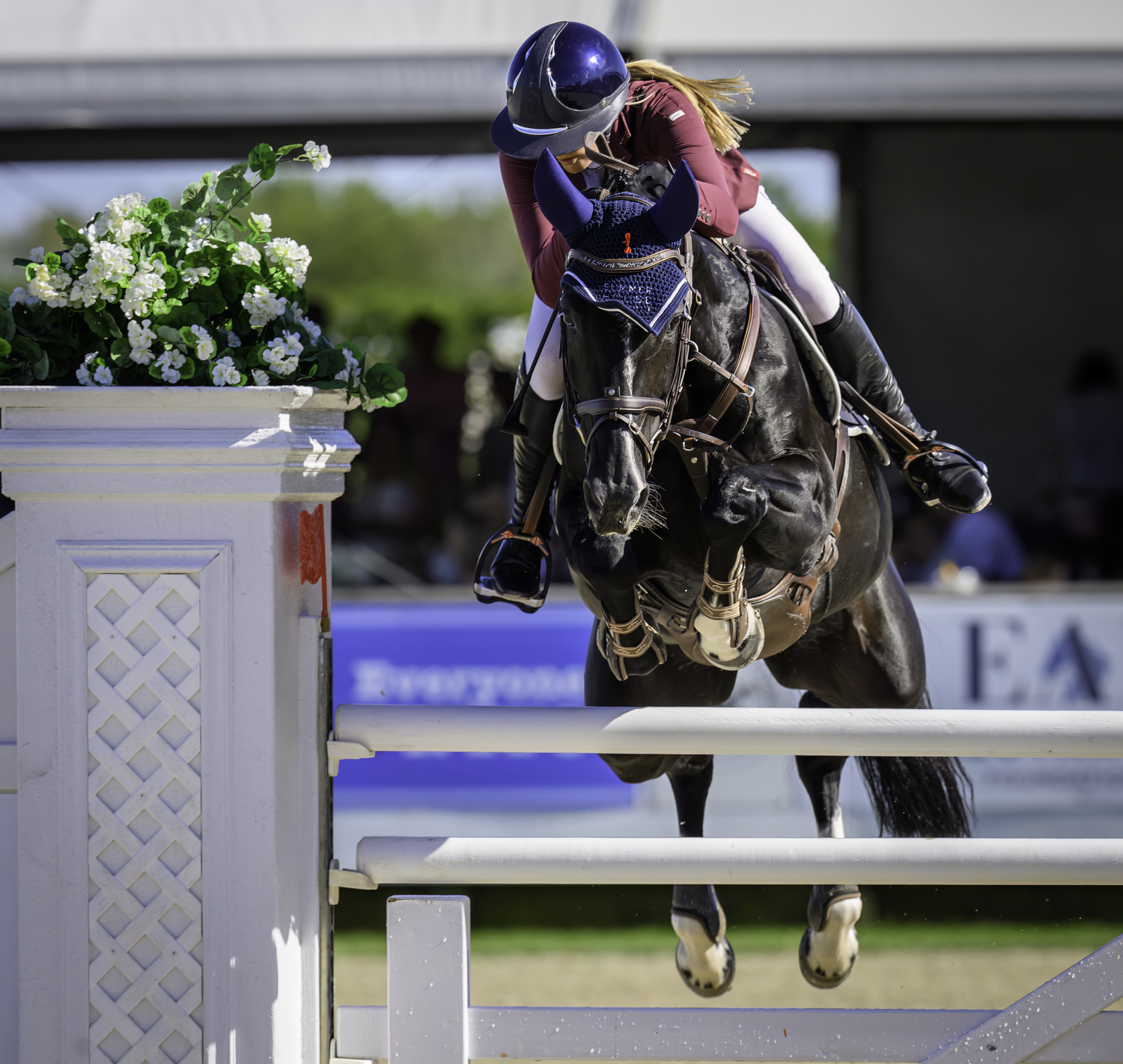
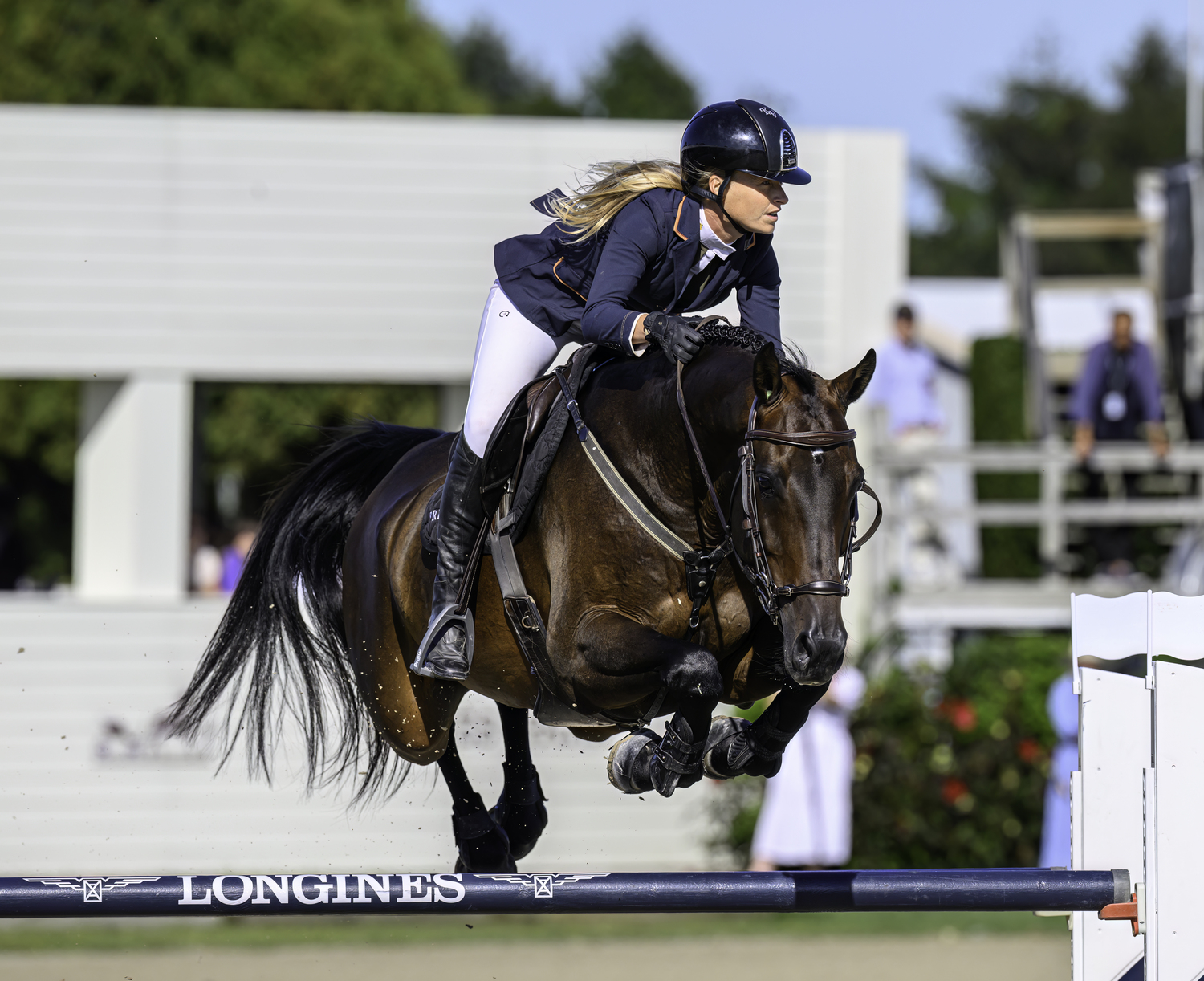
Jessica Mendoza trying to steady after the water jump and on to the second clear. MARIANNE BARNETT
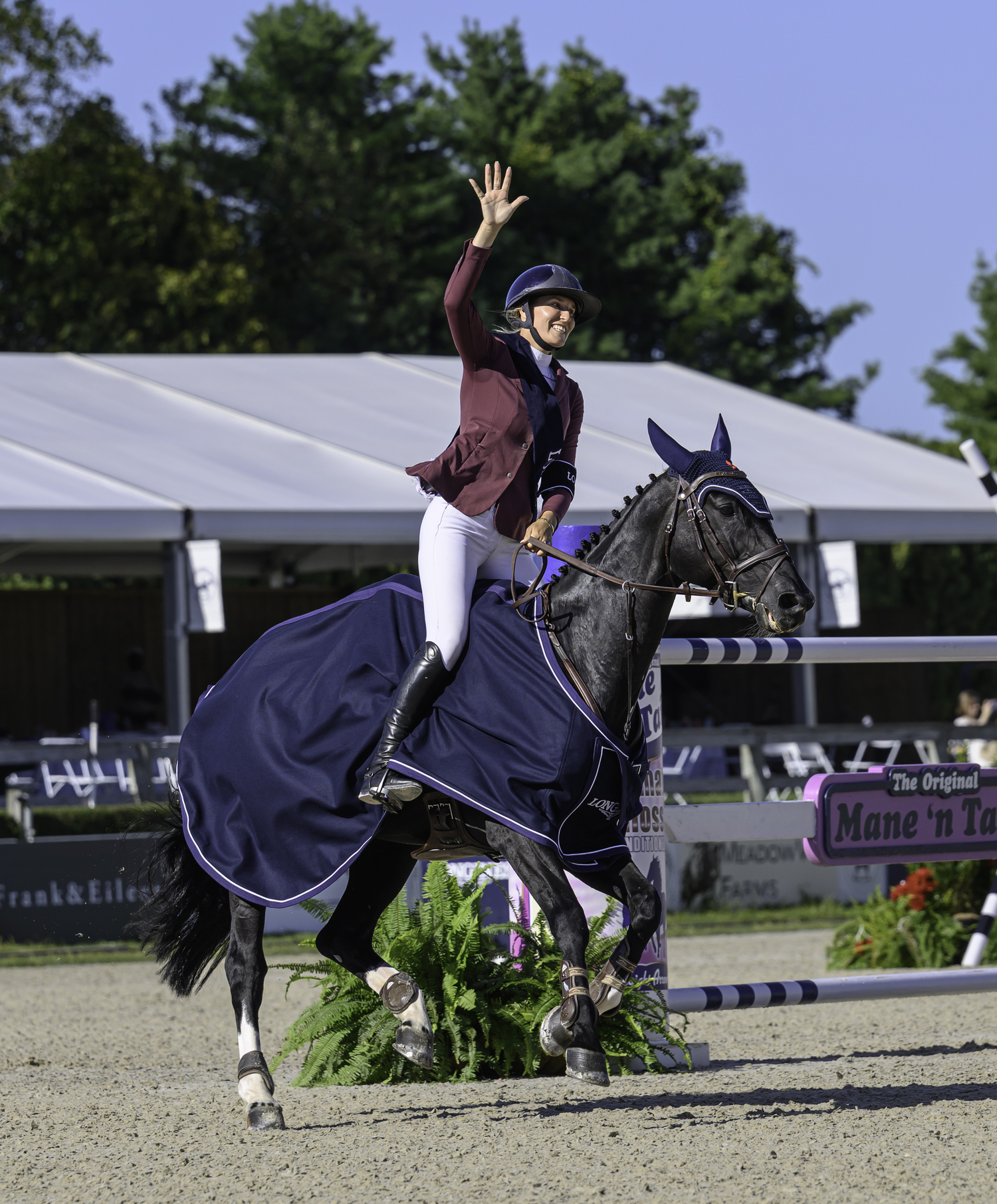
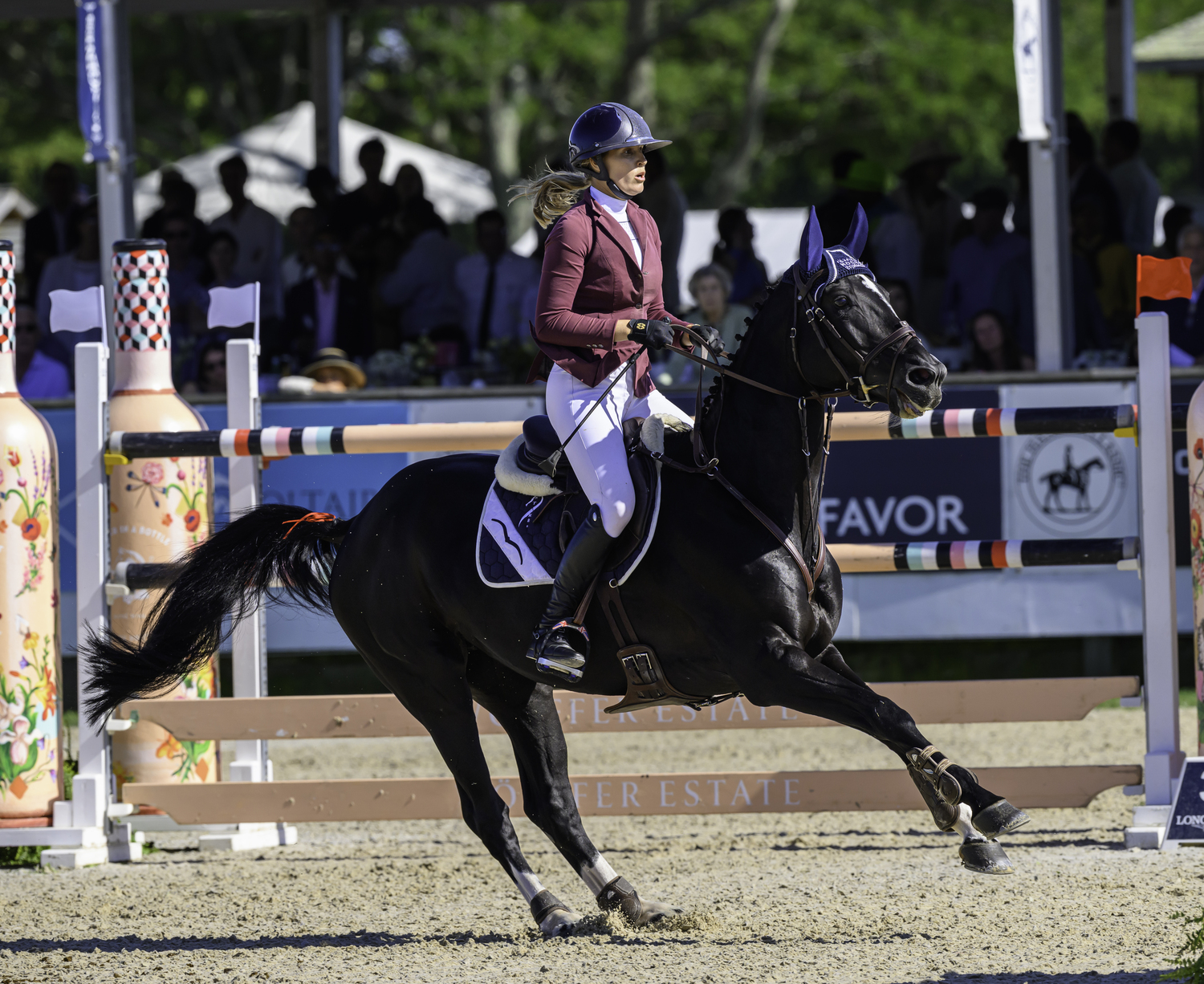
The victory gallop by Hampton Classic Grand Prix winner Jessica Mendoza. MARIANNE BARNETT
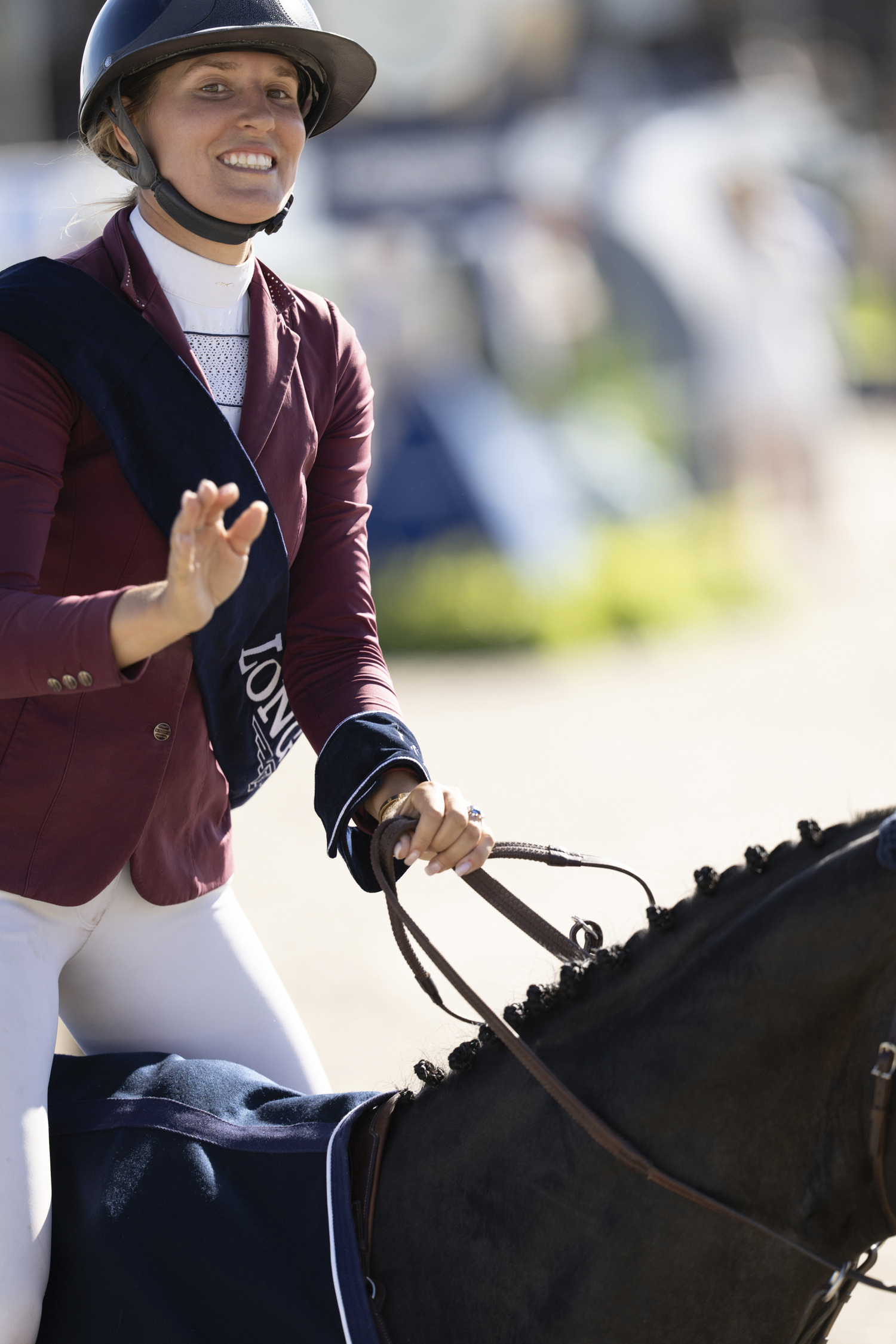
Jessica Mendoza and In The Air claimed their first 5* victory in the $400,000 Longines Hampton Classic Grand Prix on Sunday. LORI HAWKINS
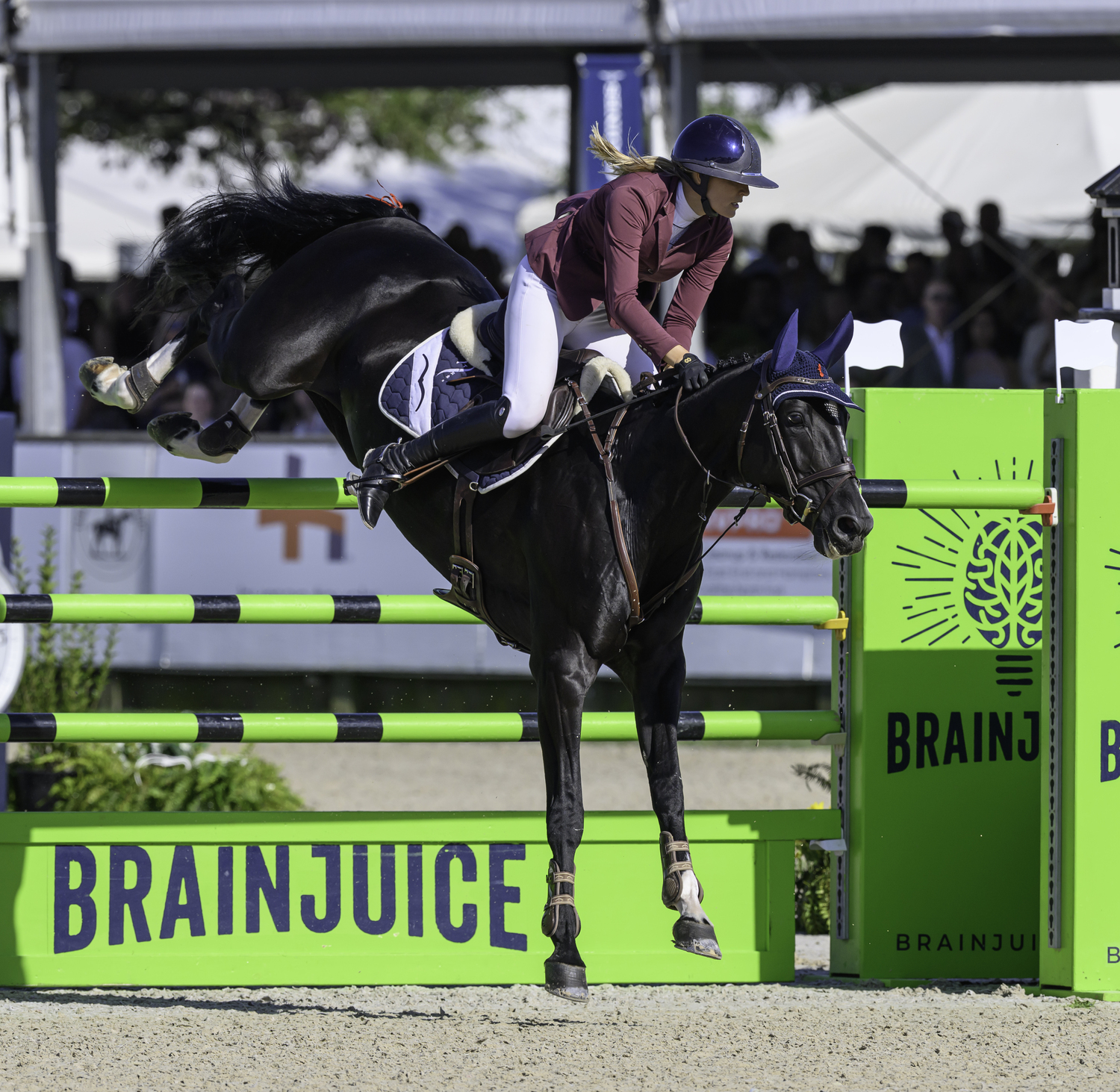
Jessica Mendoza over the Brainjuice jump. MARIANNE BARNETT
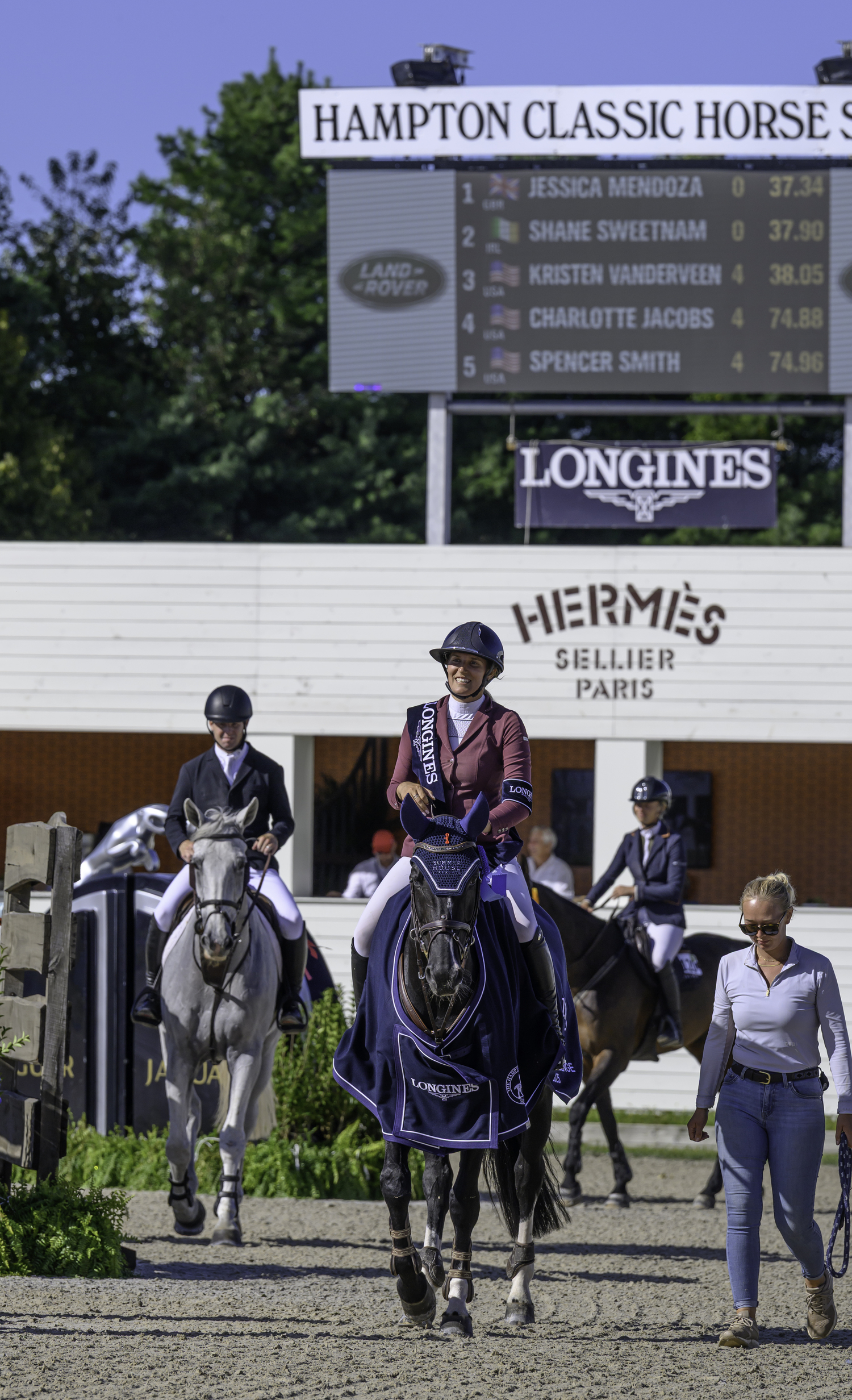
Jessica Mendoza, with her name atop the leaderboard, heads out to get her award. MARIANNE BARNETT
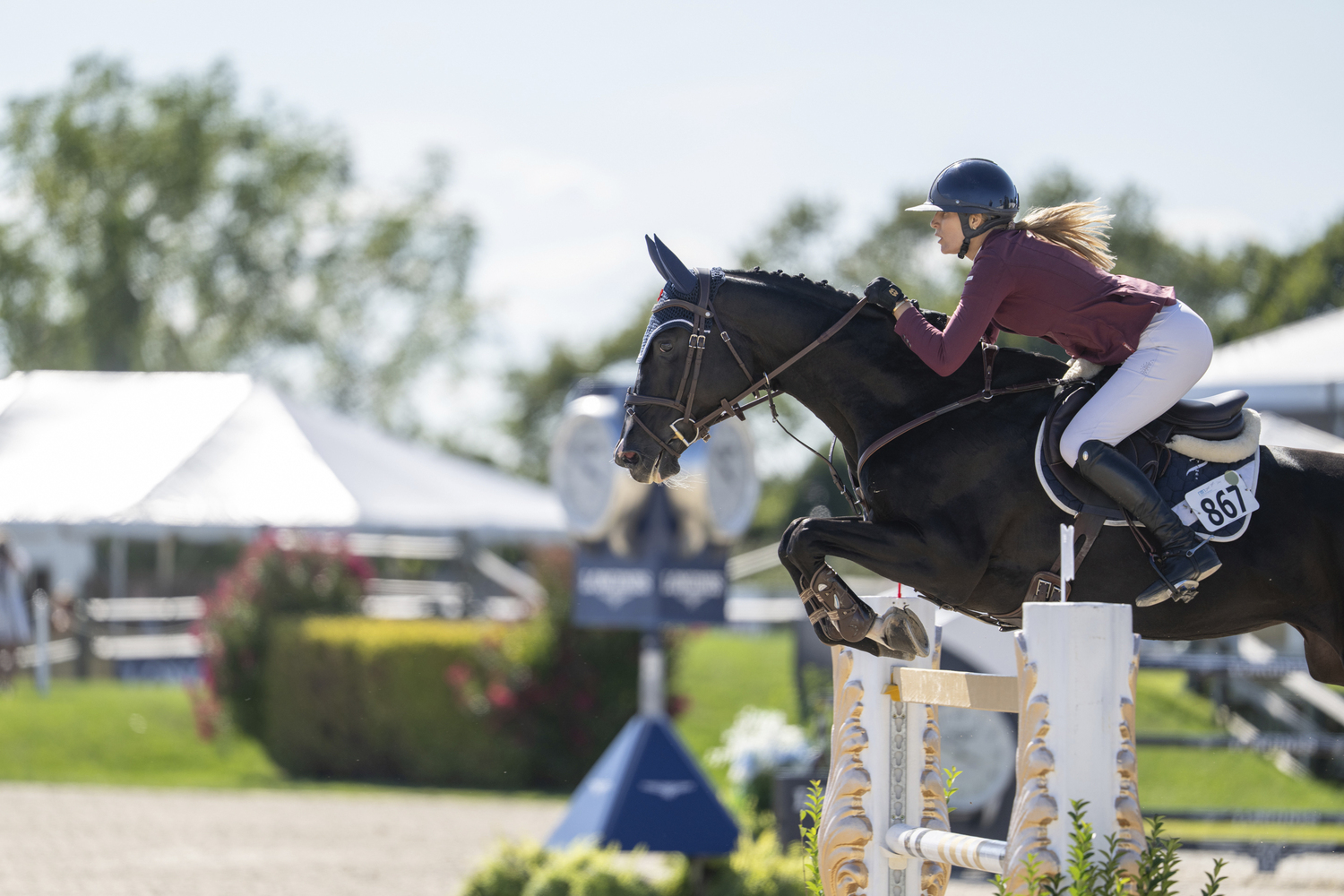
Jessica Mendoza and In The Air claimed their first 5* victory in the $400,000 Longines Hampton Classic Grand Prix on Sunday. LORI HAWKINS
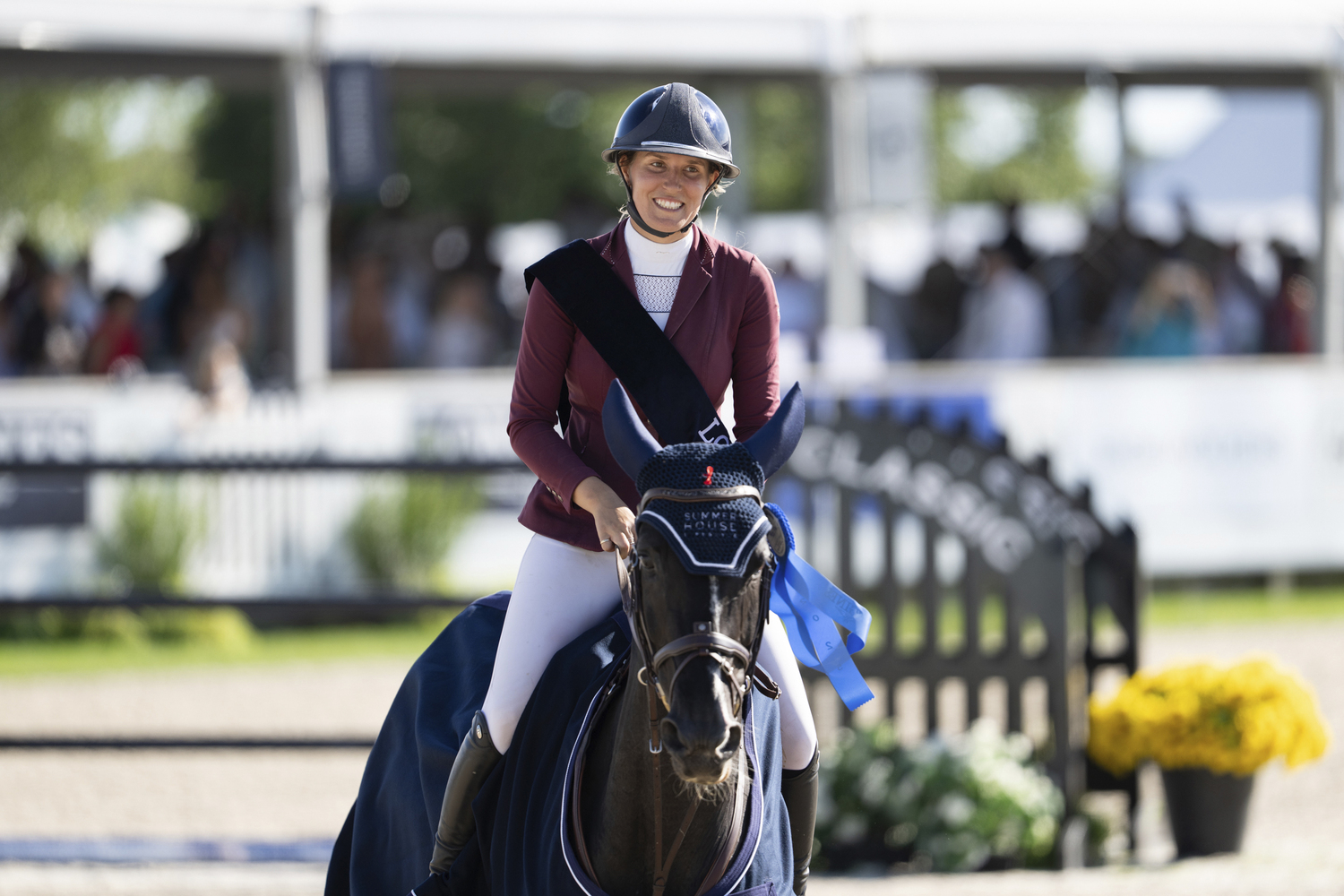
Jessica Mendoza and In The Air claimed their first 5* victory in the $400,000 Longines Hampton Classic Grand Prix on Sunday. LORI HAWKINS
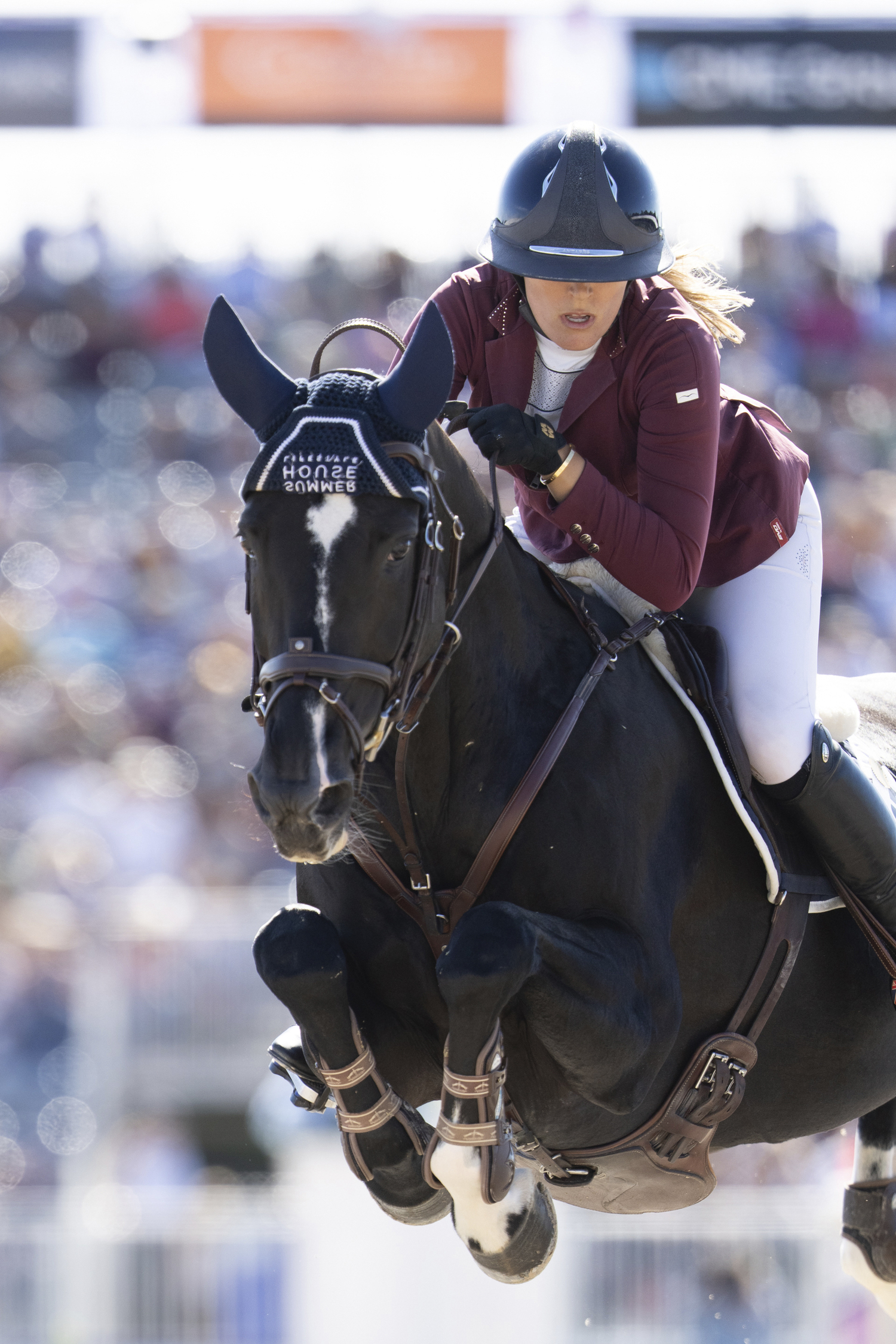
Jessica Mendoza and In The Air claimed their first 5* victory in the $400,000 Longines Hampton Classic Grand Prix on Sunday. LORI HAWKINS
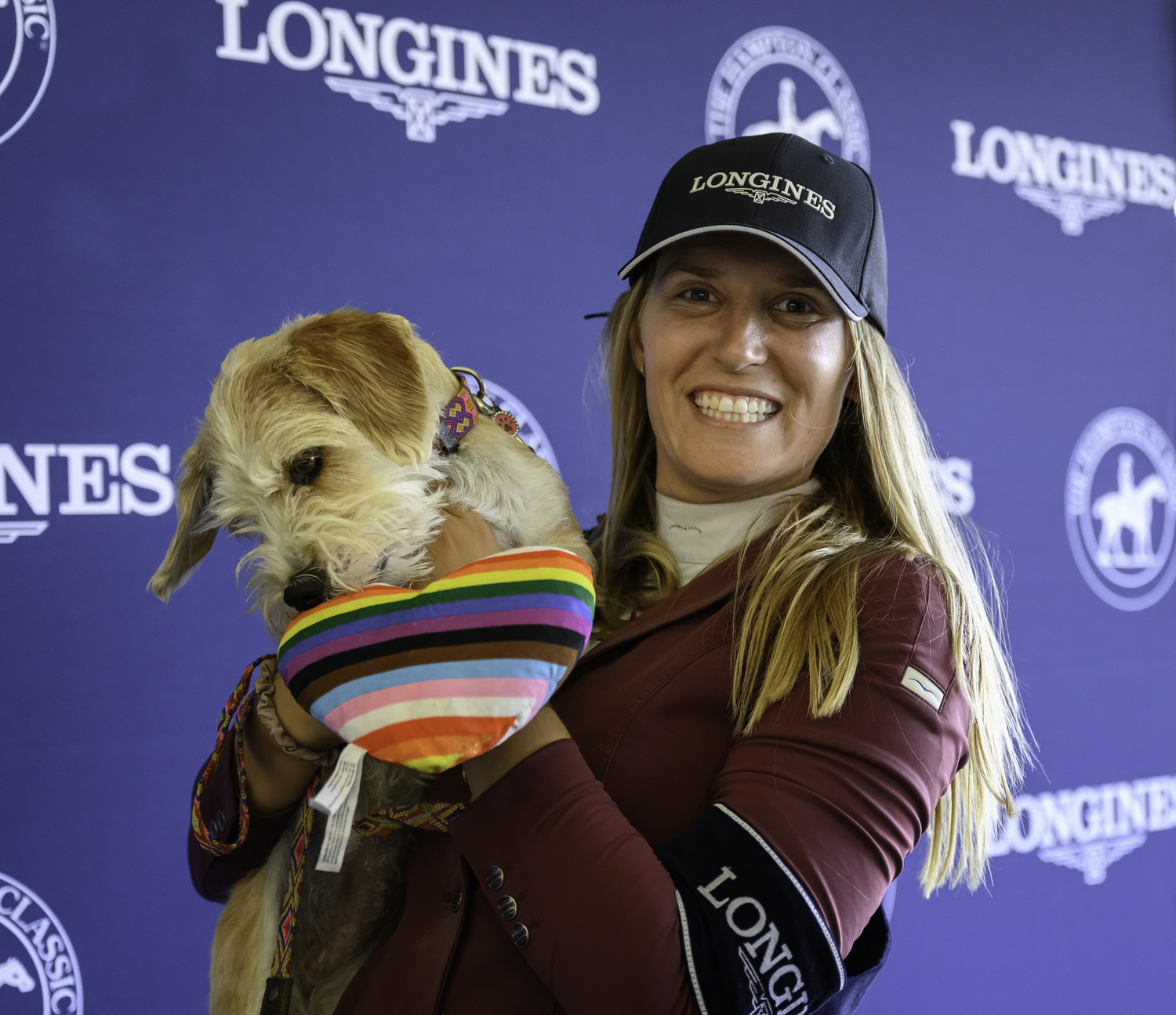
Jessica Mendoza and her dog stole the show in the media lounge during the press conference after the Grand Prix. MARIANNE BARNETT
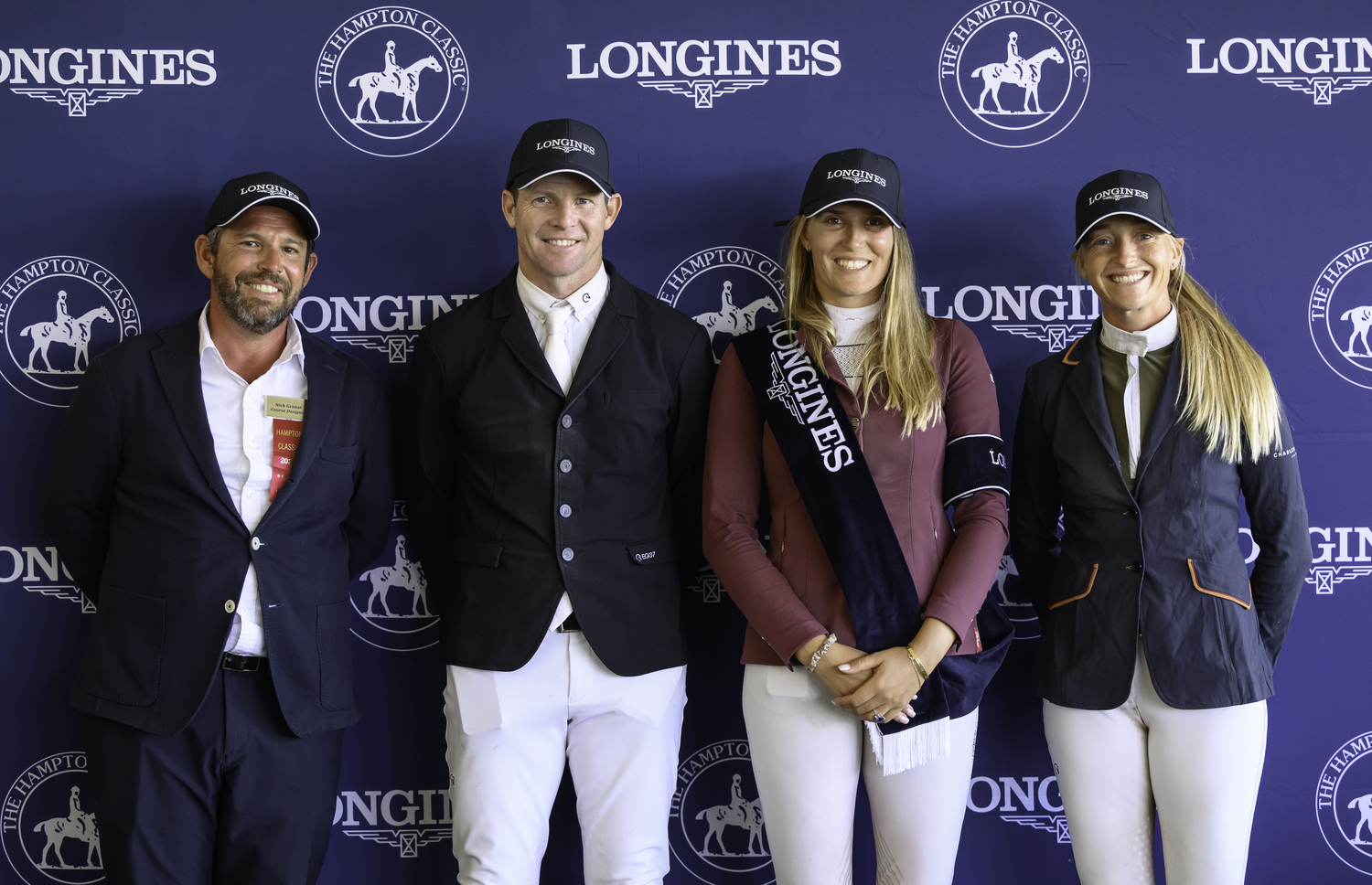
Course designer Nick Granat, left, with Shane Sweetnam, Jessica Mendoza and Kristen . MARIANNE BARNETT
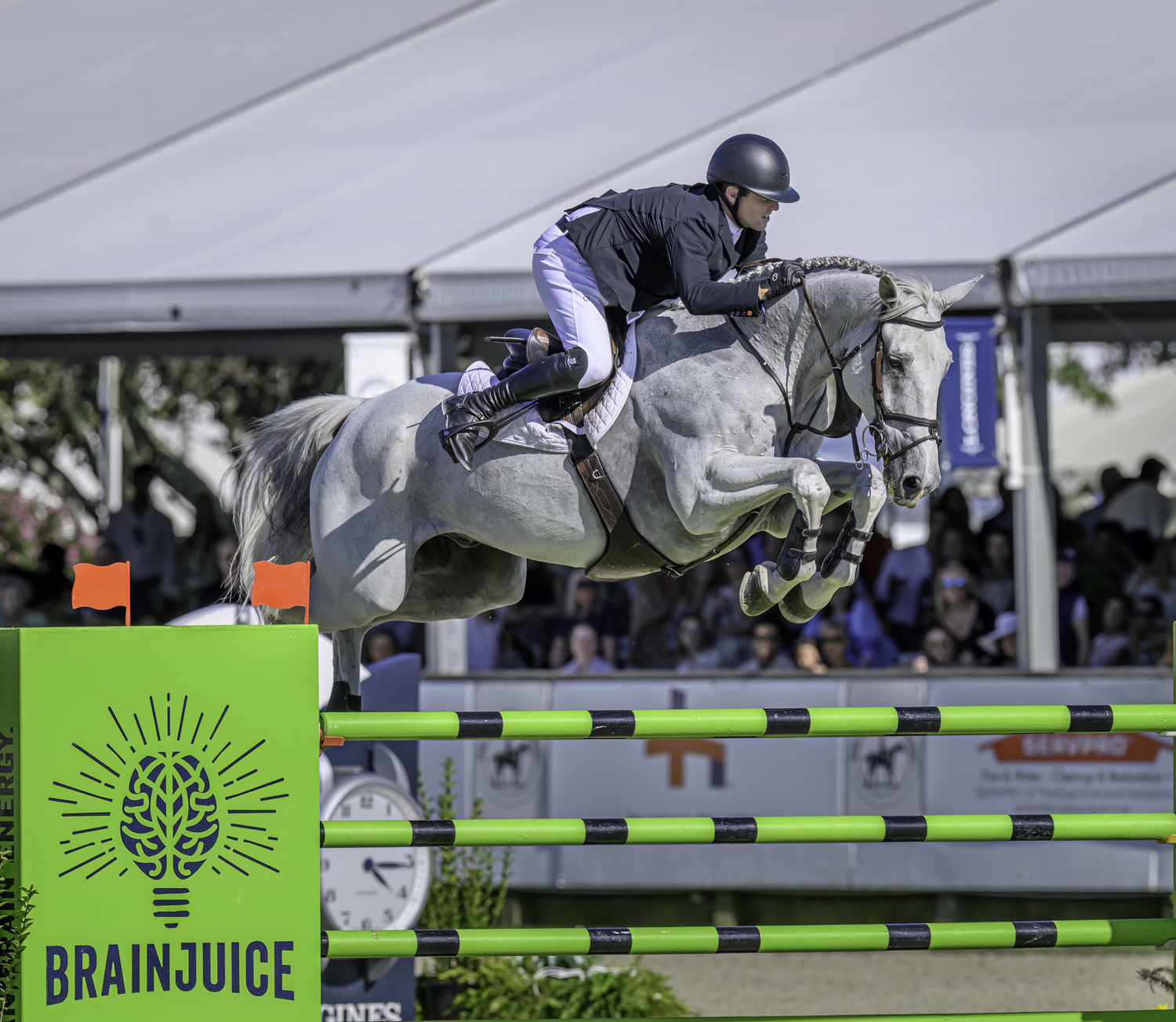
Shane Sweetnam gets over the Brainjuice jump. MARIANNE BARNETT
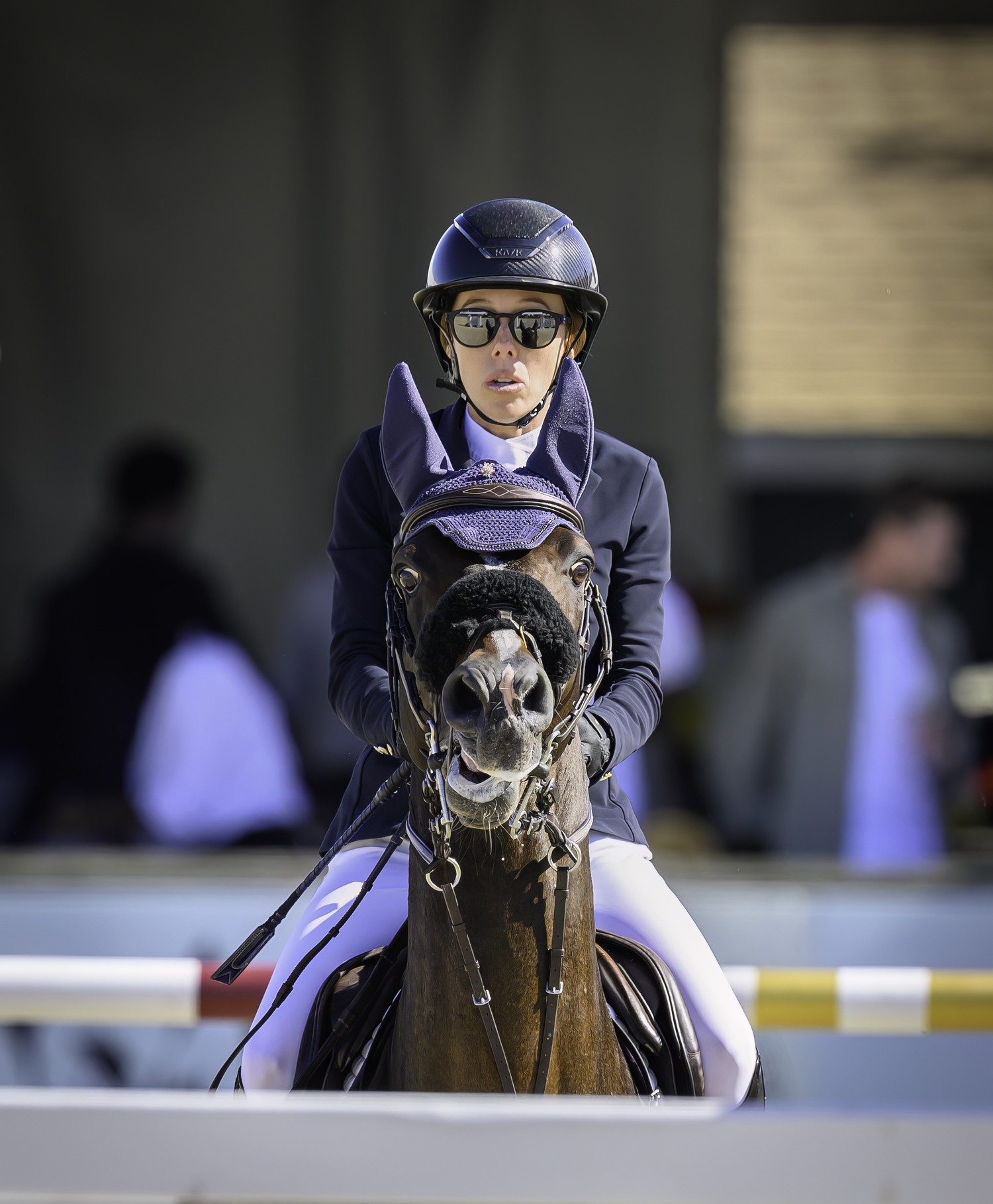
Chloe Reid and Crossover 4 with similar expressions before one of the highest jumps. MARIANNE BARNETT
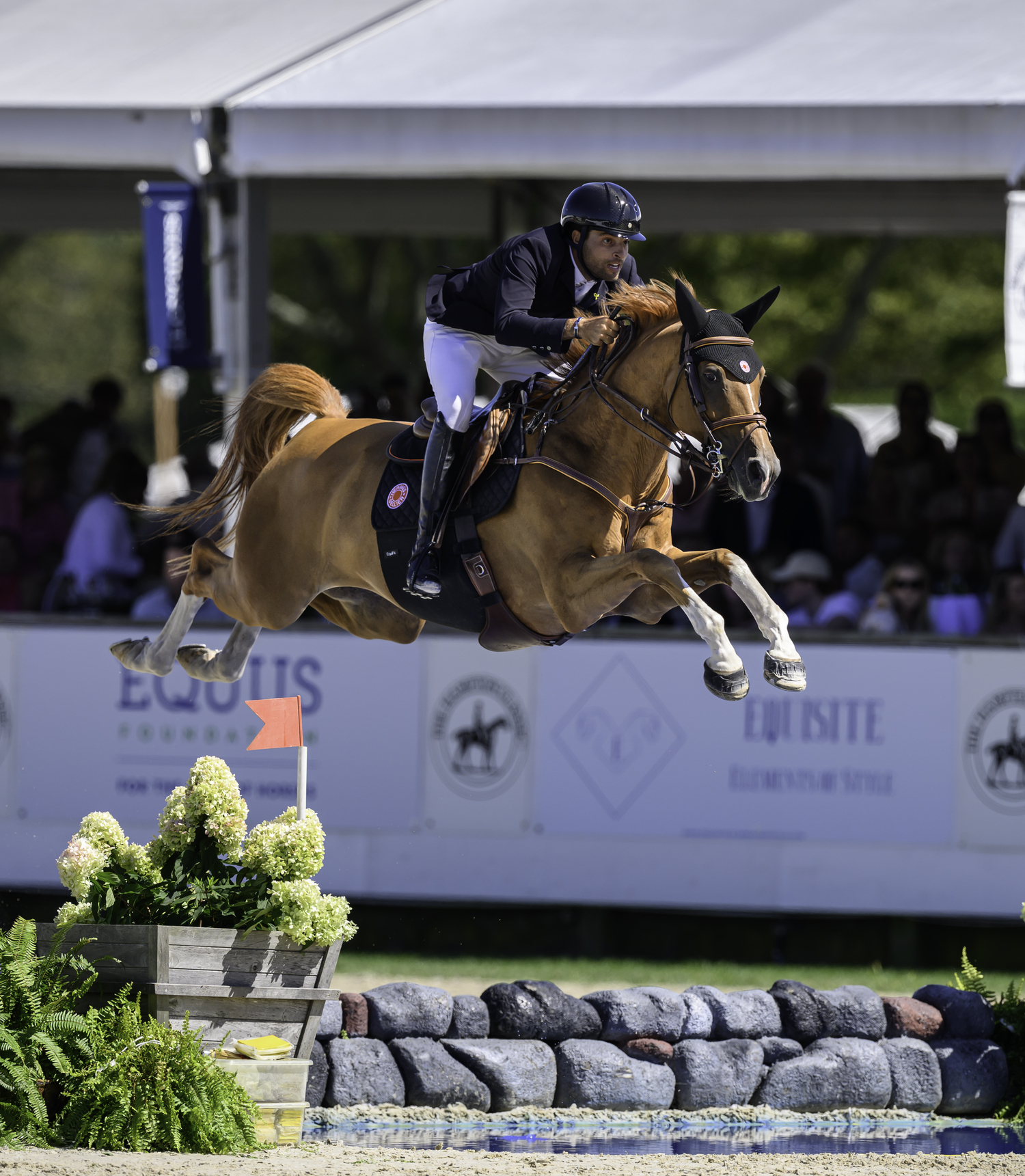
Daniel Bluman, former winner and currently ranked No. 21 in the world, clearing the water jump. MARIANNE BARNETT
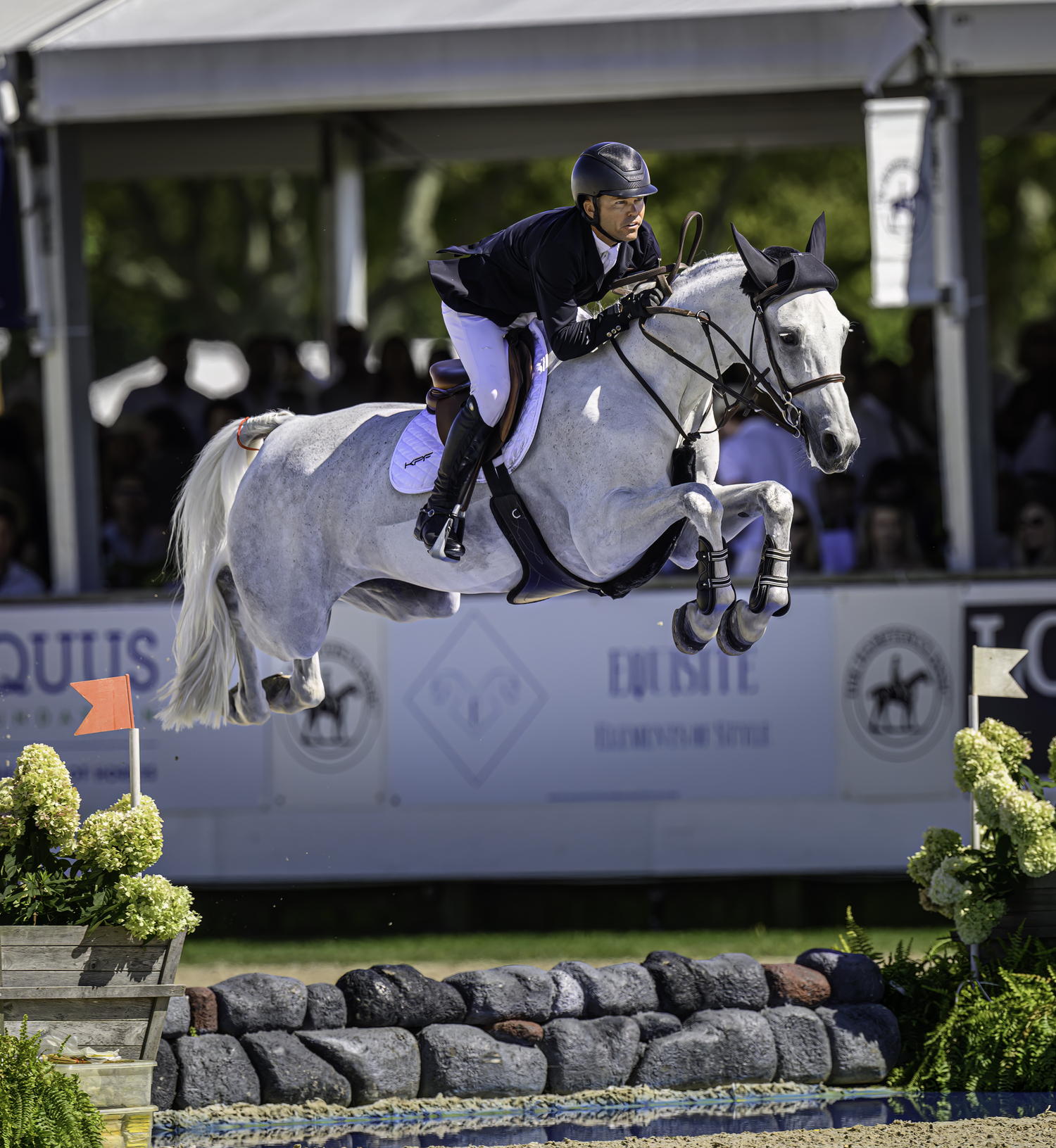
The world's top rider in Kent Farrington on Greya in perfect form over the water jump. MARIANNE BARNETT
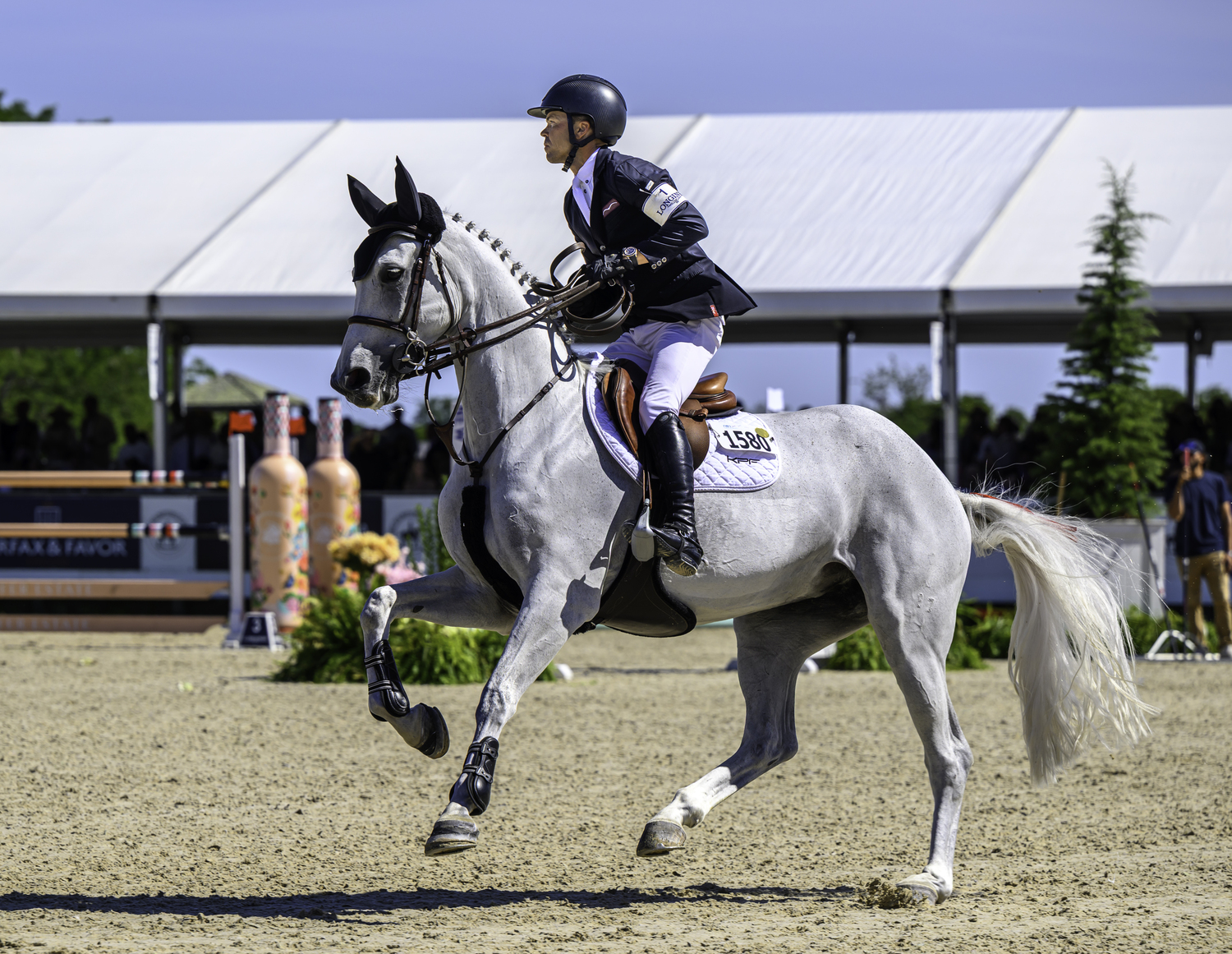
Kent Farrington on Greya. MARIANNE BARNETT
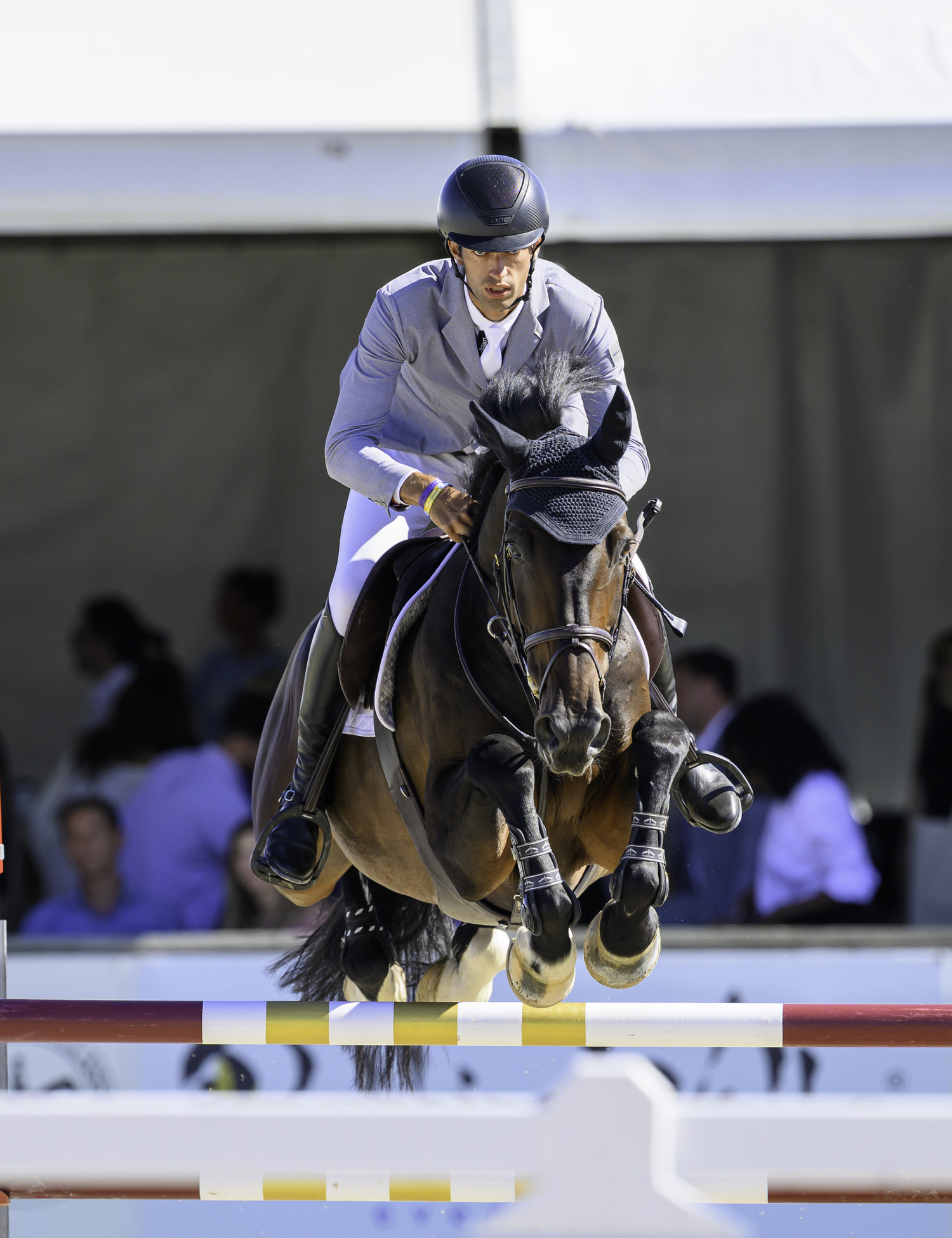
Last year's Grand Prix winners Rene Dittmar on Corsica X. MARIANNE BARNETT
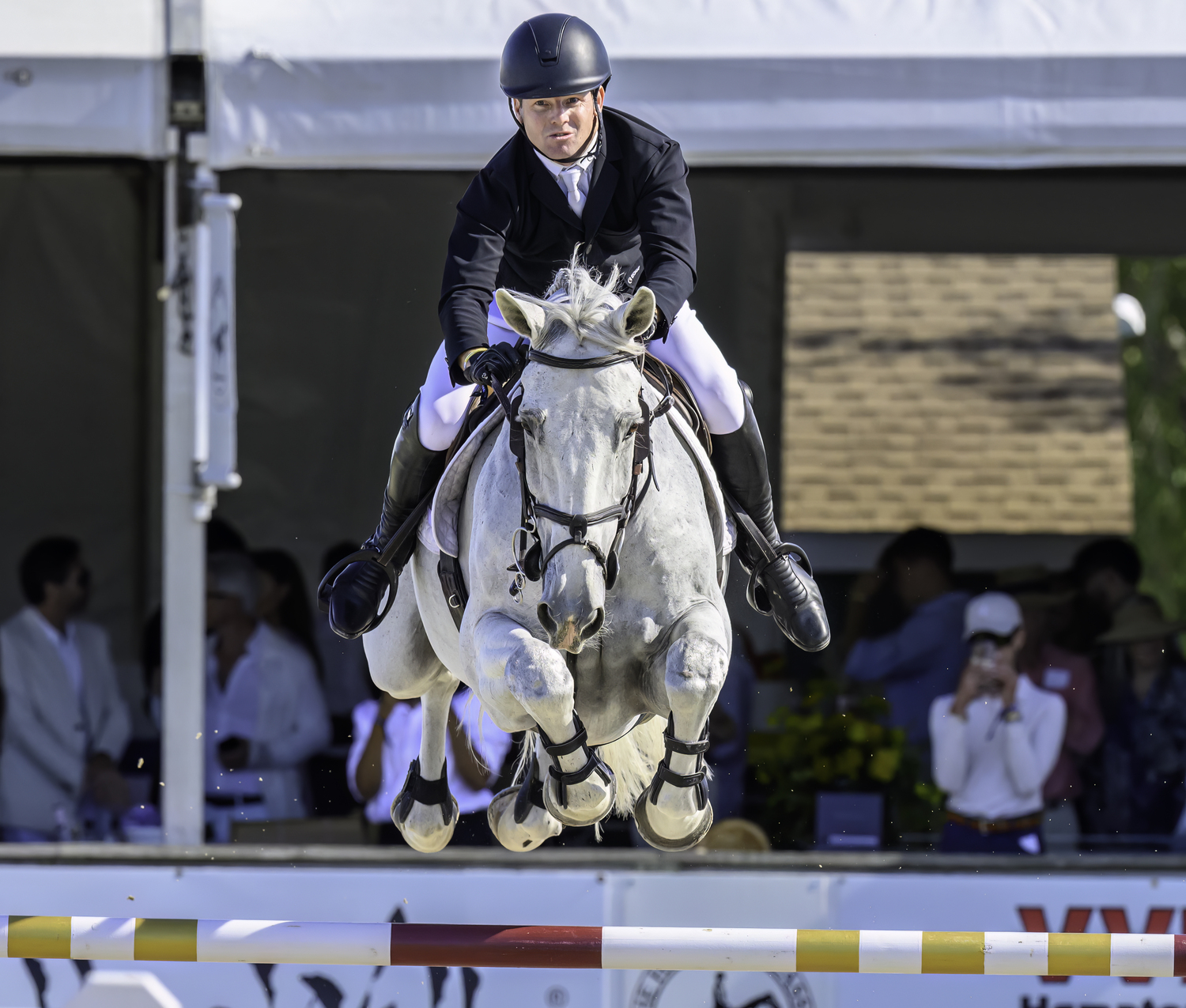
Shane Sweetnam and James Kann Cruz in perfect form over the double combination and on to a third and final clear round. MARIANNE BARNETT
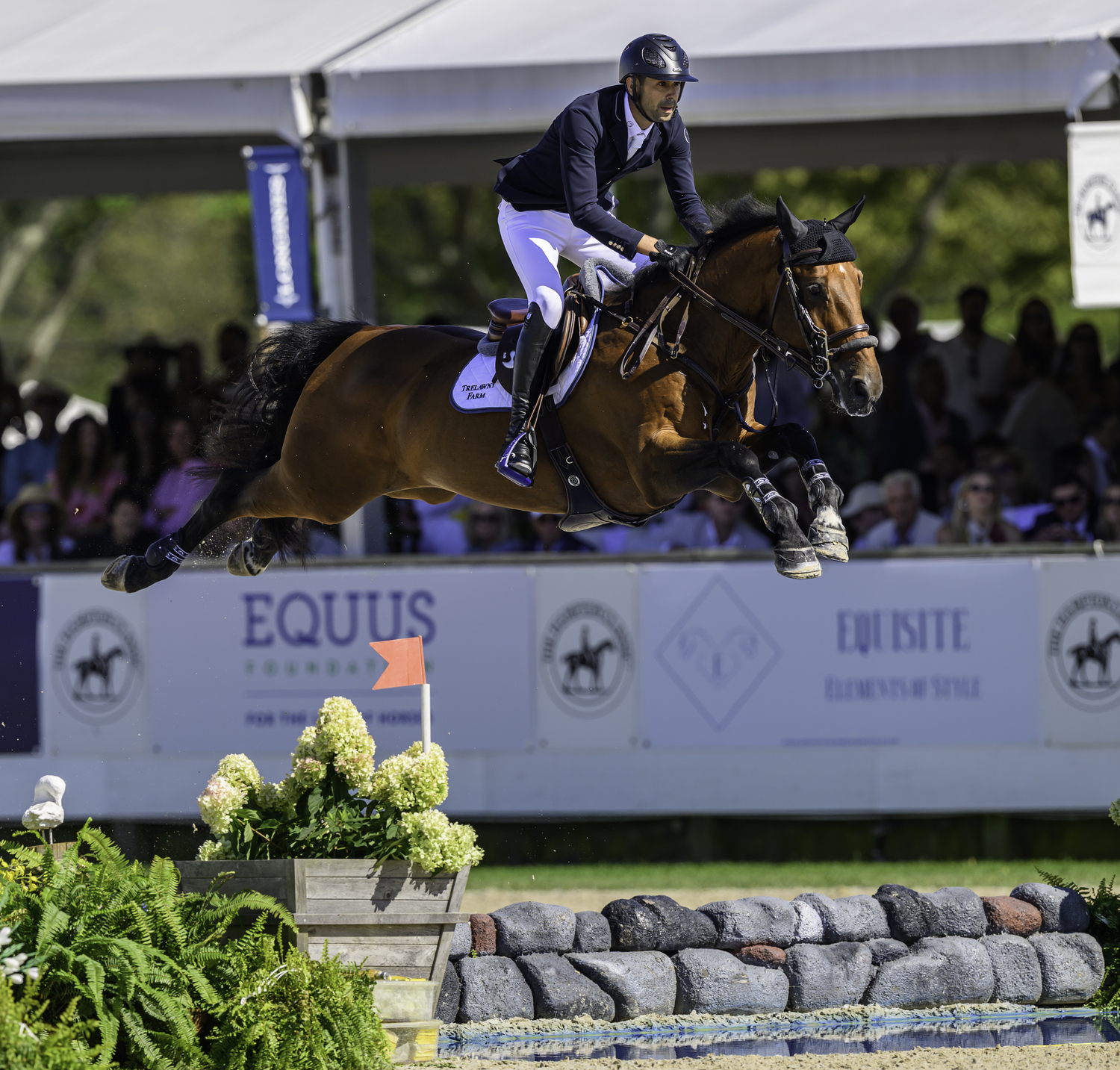
Nayel Nasser on Little Magic D'Asschaut on his way to a great round before an unfortunate dismount. MARIANNE BARNETT
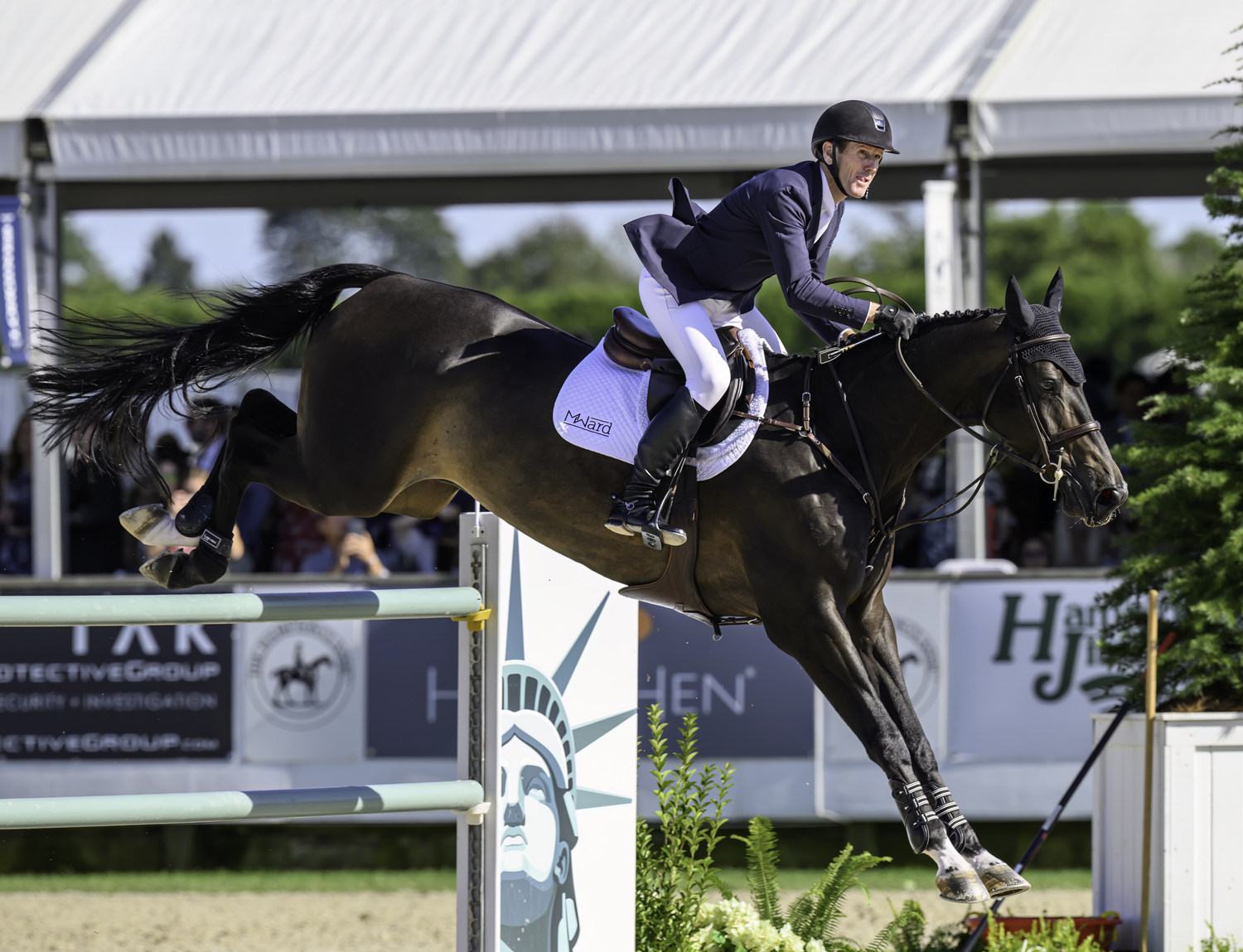
McLain Ward, ranked eighth in the world, checking his time on the Jumbotron, on Imperial HBF, a new mount for him. MARIANNE BARNETT
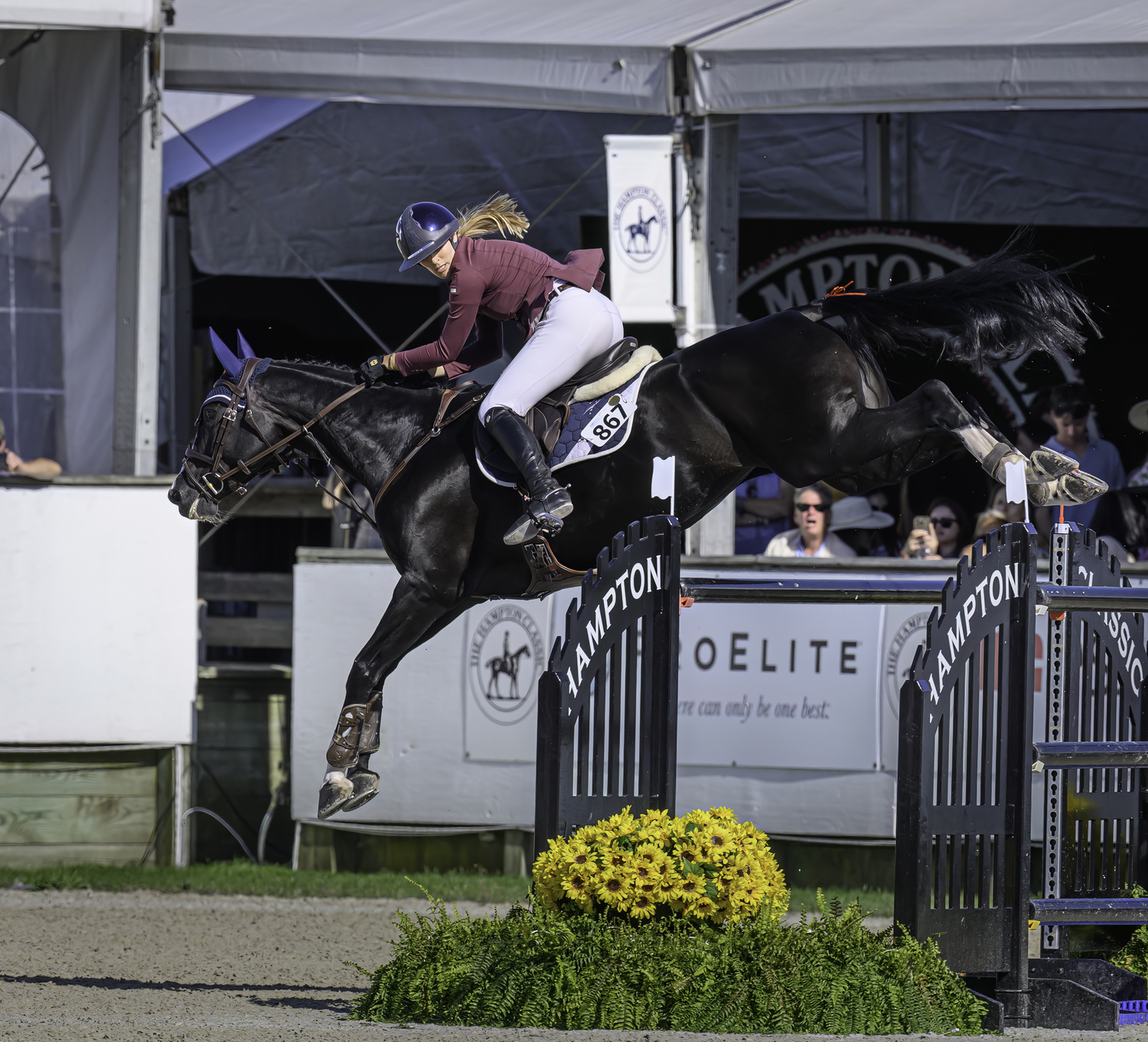
Jessica Mendoza looking back over the last jump to make sure it stayed up. MARIANNE BARNETT
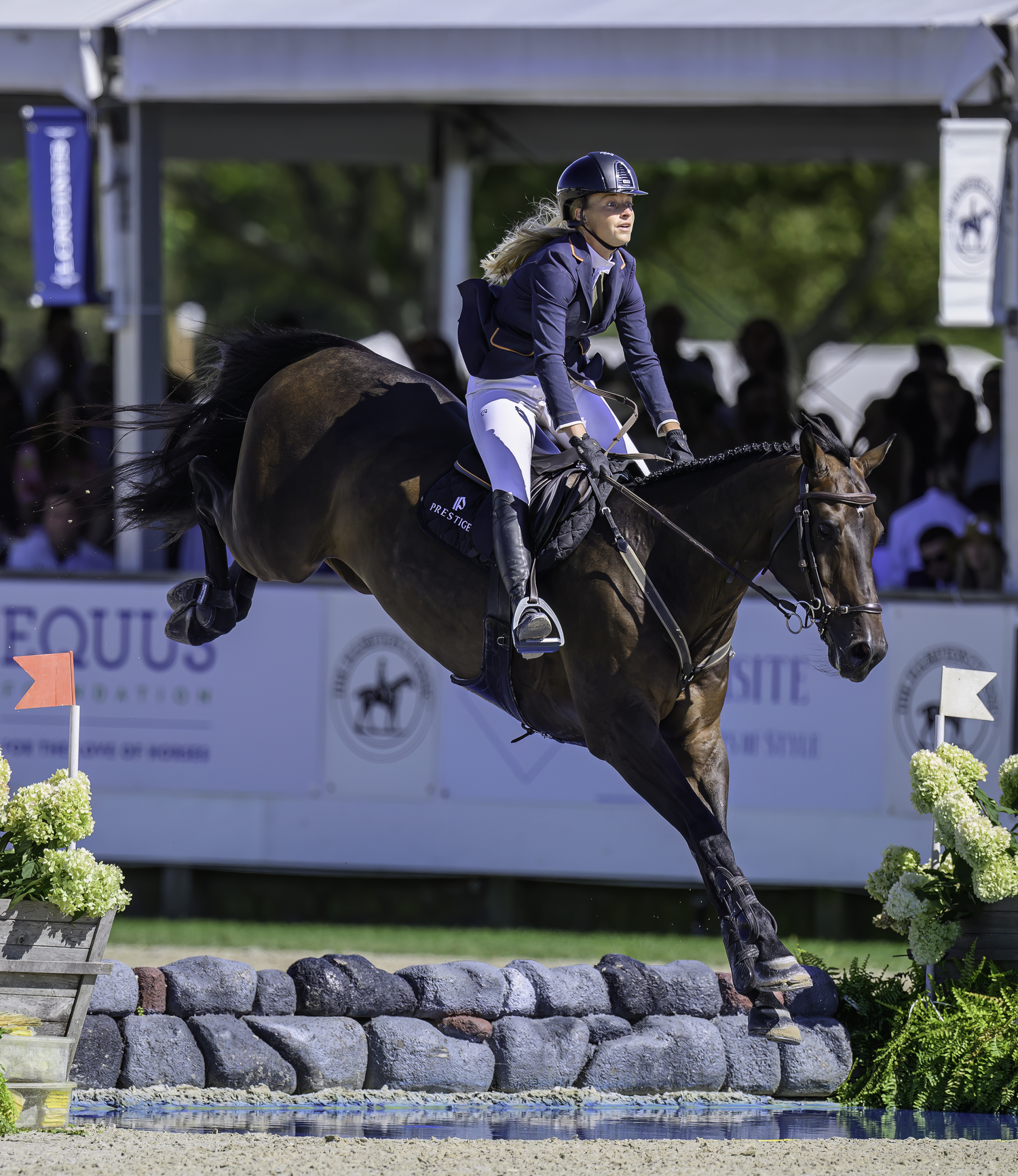
Kristen Vanderveen, ranked 40th in the U.S., was the first clear round after 20 riders. MARIANNE BARNETT
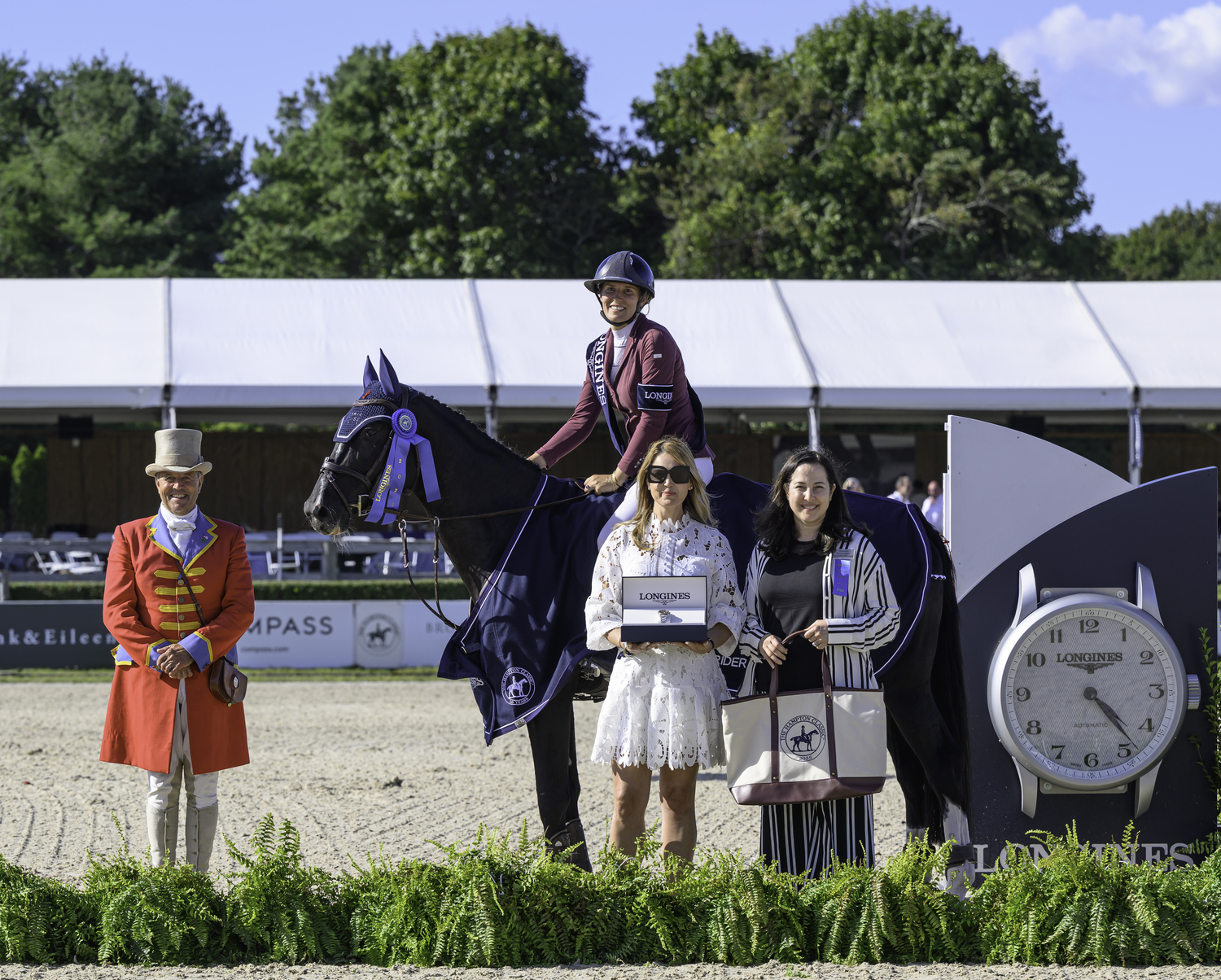
Jessica Mendoza and In The Air were the winners of the Longines 400,000 Grand Prix on Sunday. MARIANNE BARNETT
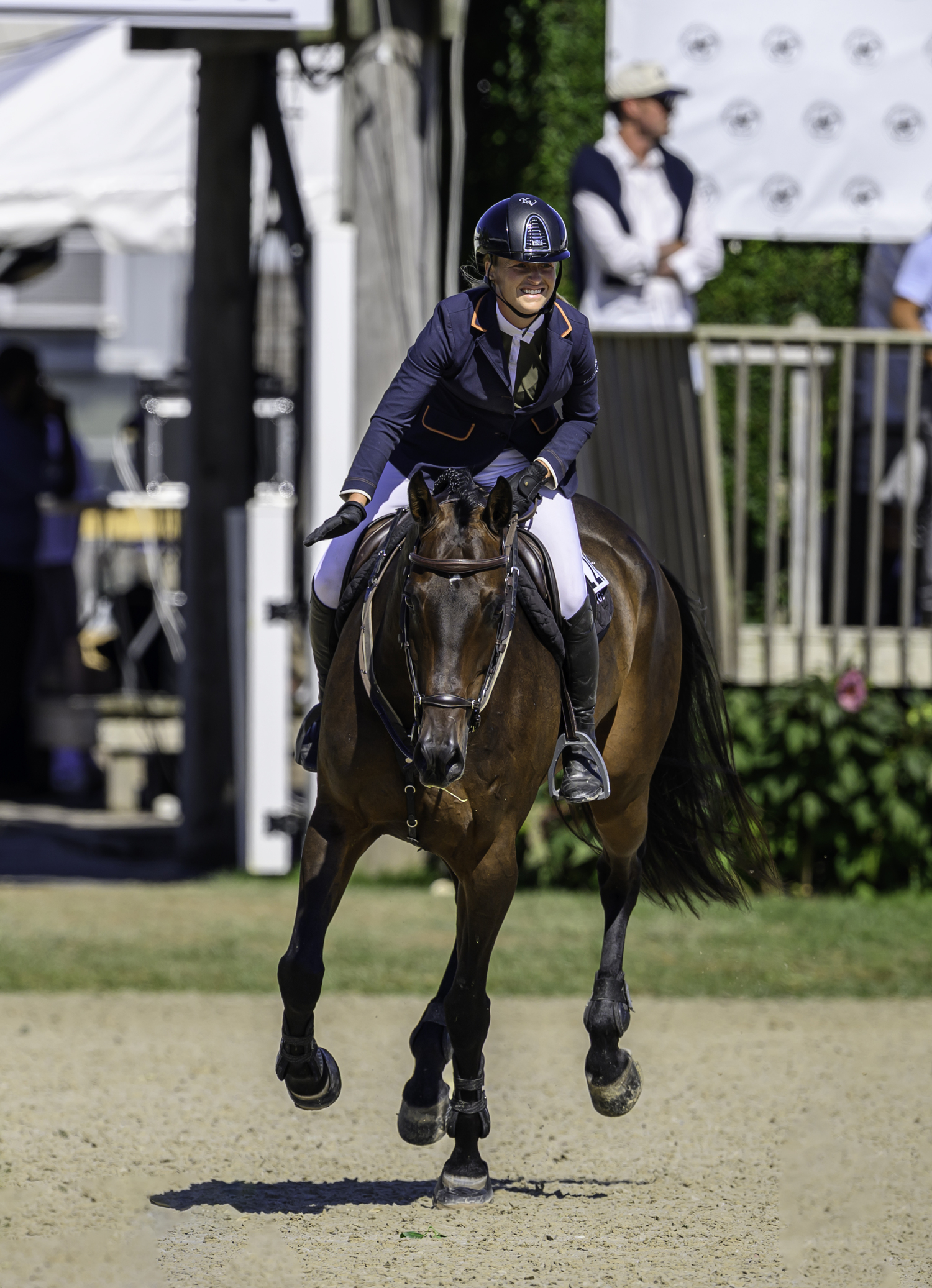
Kristin Vanderveen all smiles and a pat for Bull's Run Jireh after the first clear. MARIANNE BARNETT
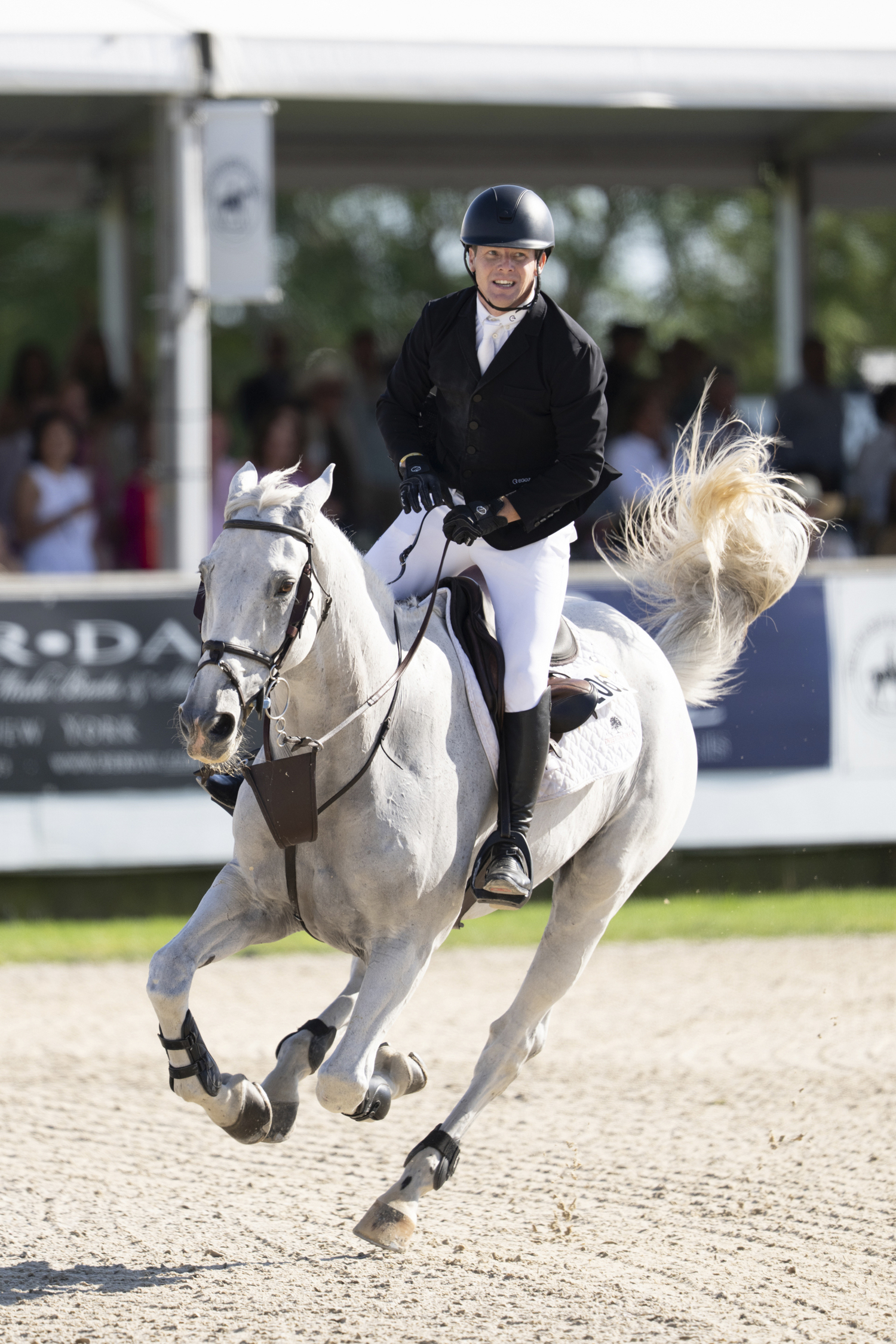
World No. 22 Shane Sweetnam and James Kann Cruz claimed second place in the $400,000 Longines Hampton Classic Grand Prix in Bridgehampton on Sunday. LORI HAWKINS
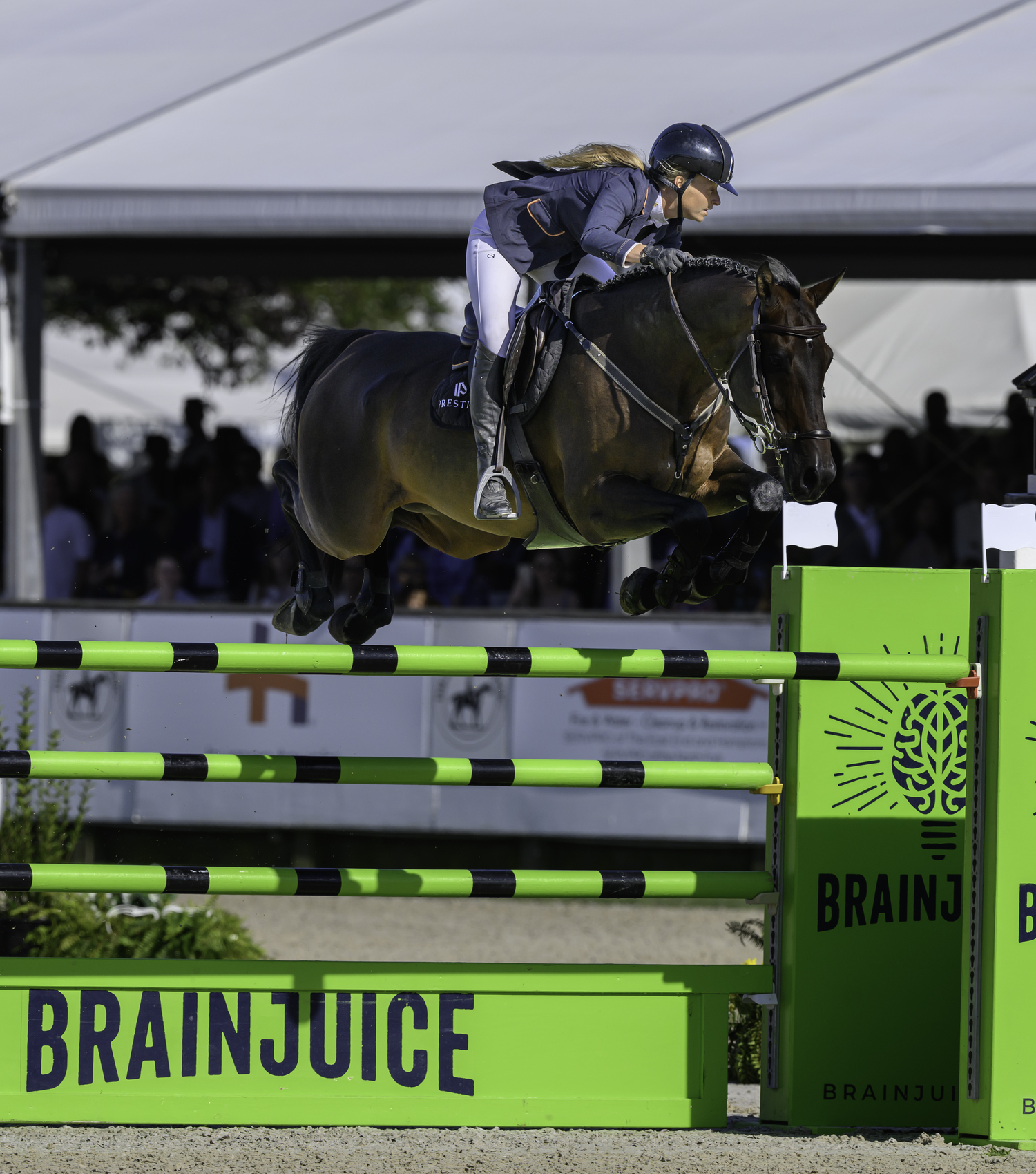
Kristin Venderveen over the new Brainjuice jump. MARIANNE BARNETT
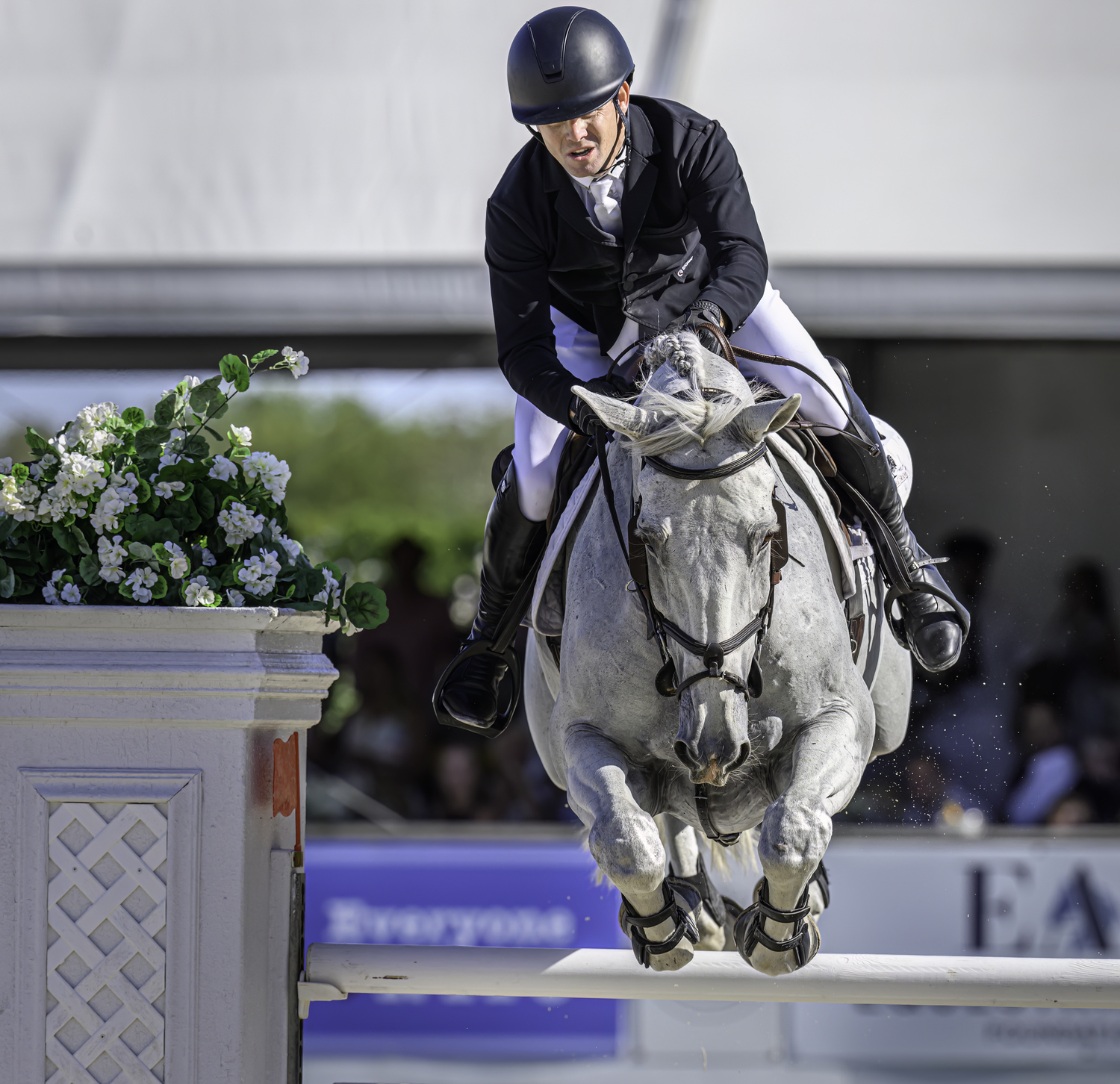
Shane Sweetnam finished third in the Grand Prix jump-off on James Kann Cruz. MARIANNE BARNETT
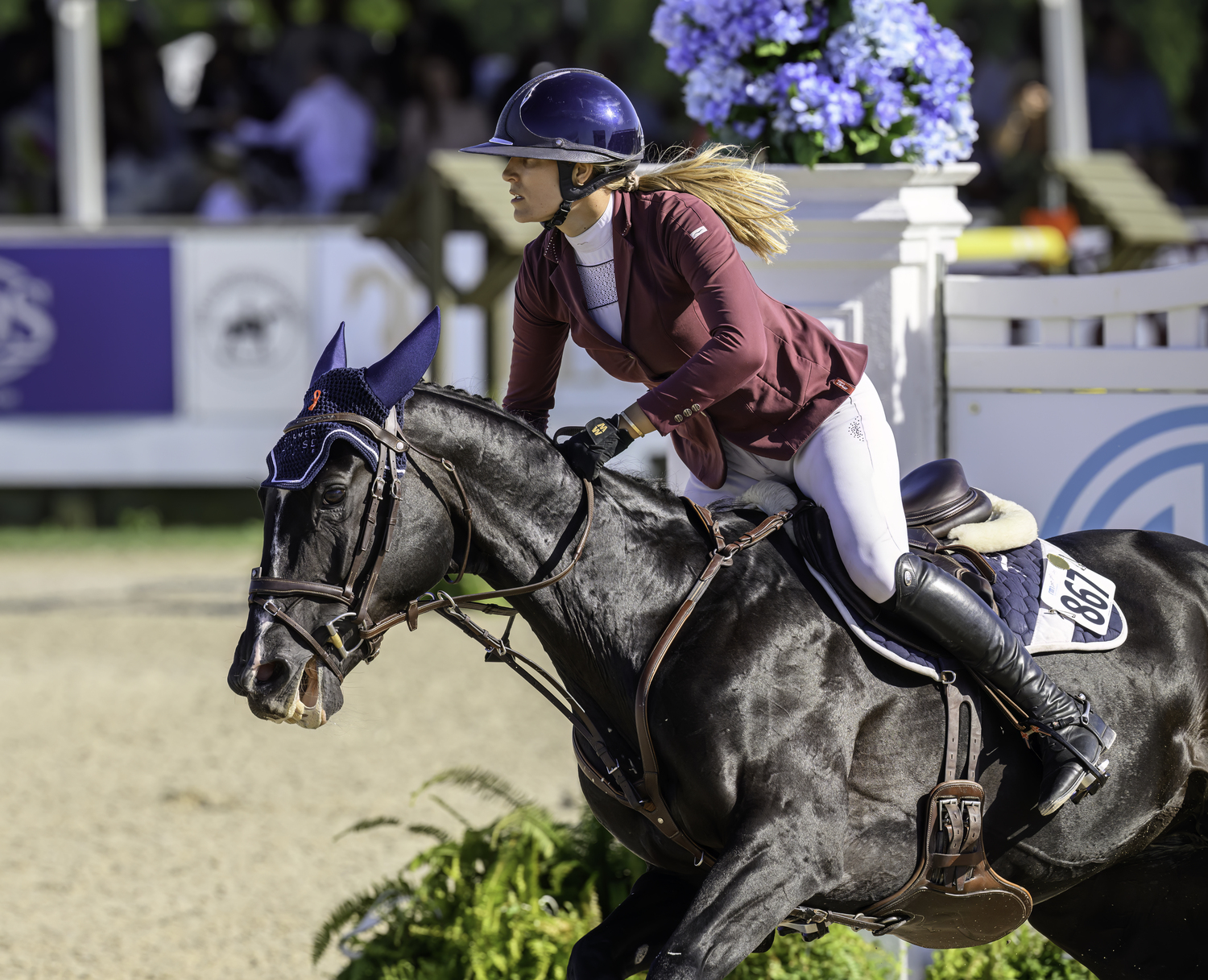
Jessica Mendoza charging to the fourth jump in the jump-off on In The Air. MARIANNE BARNETT
Kristen Vanderveen gets over the starting fence in the jump-off. MARIANNE BARNETT
Jessica Mendoza cutting it tight over the Douglas Elliman in the jump-off. MARIANNE BARNETT
It is fitting that Longines, the Swiss luxury watchmaker, is the most prominent sponsor of the Hampton Classic and its premier event, the $400,000 Grand Prix.
International equestrian showjumping is a sport in which fractions of a second can be the only difference between first and second place, meaning that timing is everything.
That was the case on a picture-perfect Sunday afternoon for the culminating class in the weeklong horse show, which celebrated its 50th year of competition this year. In a jump-off that featured only three horse-and-rider pairs, Jessica Mendoza, riding for Great Britain, came out on top, winning not only her first Hampton Classic Grand Prix but first five-star Grand Prix aboard her 12-year-old mare, In The Air, riding clean in the jump-off in 37.34 seconds. They edged out veteran Shane Sweetnam of Ireland, whose time of 37.90 with his 12-year-old gelding, James Kann Cruz, left him just shy of winning a class, in which he always seems to perform well.
American Kristen Vanderveen and her 11-year-old gelding, Bull Run’s Jireh, were the only other pair to make it to the jump-off. They had four faults in the jump-off, knocking off the rail at the final jump, the Hampton Classic Liverpool oxer, with a time of 38.05.
Course designer Nick Granat set what the riders agreed was a very challenging, but fair, course. There were multiple tests throughout the course that stymied many horse and rider combinations. Vanderveen rode 21st in the order out of 38 in the field, and was the first to ride clean. It wasn’t until Mendoza, who was 36th in the order, that a jump-off was assured. Sweetnam, who rode second to last in the order, assured the jump-off would include three riders.
The crowd was certainly hoping for a fourth, as the final rider to take the field was fan favorite McLain Ward. The Olympic medalist, who has won the Hampton Classic Grand Prix a record seven times, was in prime position to go for an eighth title. He won the Grand Prix qualifier on Friday, earning the advantage of going last in the order with his horse Imperial HBF, a 12-year-old gelding. But they knocked down a rail early on, and then finished with eight faults after failing to fully clear the open water obstacle, which was one of the biggest trouble spots on the course that day.
No less than 12 riders picked up four faults at the open water. The open water is always a feature included in the Grand Prix. While it does not include an actual fence that needs to be cleared, it requires horse and rider to gallop up to it and bravely and boldly leap across the wide expanse. If a hoof touches the water when they land, they are given four faults. The riders had to make essentially a 90-degree turn after jumping the bright orange Hermes oxer in their approach to the open water, heading toward the grandstand. Some of the riders said that the 90-degree turn approach, as well as the fact that they headed away from the in-gate as opposed to toward it, which is the way the element is most often approached, was part of the challenge and the reason why it stymied so many riders.
But the riders said that tough tests were spread evenly throughout the course, which was set in a manner befitting a five-star class with a field of both talented up-and-comers and veterans of top level international competition. A tight double combination with one stride in between elements as the second-to-last obstacle was tricky for many riders, and a bending turn off the very high Douglas Elliman vertical gate into a triple combination also proved to be tough for many riders as well.
Both the original course and the jump-off required a lot of strategy from the riders. Mendoza described her approach in the jump-off. She took a very tight inside approach and angle at the Elliman vertical heading to what had been the triple combination, but was made into double combination for the jump-off. That tight turn — and another tight turn to the bright green Brainjuice oxer after the double — allowed Mendoza to take a slightly more careful approach to the all black Hampton Classic Liverpool oxer, which was the final element in both the original course and jump-off, preserving her fault-free ride.
“It’s always fun to go in a jump-off knowing you’re in the top three,” she said. “You don’t really have too much to lose. I played it a little safe to the last. I knew there was a bit of time that Shane could beat me, but [In the Air] was quick across the ground everywhere else. She’s an incredible horse and had an amazing summer. She’s sort of found herself this year.”
It was a great summer for Mendoza’s mare, and a great week at the show for Mendoza herself, as longtime Hampton Classic Press Coordinator Marty Baumann pointed out. Mendoza was consistently in the ribbons with top placements in open jumper classes all week.
“You were knocking on the door,” he said to her in the press conference. “I guess you were saving it for today.”
That consistency meant Mendoza not only won the big class, but also the Longines Rider Challenge, an annual prize at the show that goes to the rider who earns the most points in the five-star open jumper classes throughout the week. Mendoza went home with not one, but two, Longines watches for winning the Grand Prix and the rider Challenge. Sweetnam was second in the rider Challenge, while Skylar Wireman was third.
Speaking of knocking on the door, Sweetnam has done that many times in the Grand Prix and has never taken home the top prize. He did that again on Sunday, and spoke about what the difference was this year.
“They’re very different horses,” he said of his horse and In The Air.
While Mendoza’s mare may take more actual strides on the ground, her quickness at clearing the actual obstacles comes through as an advantage. “He spends a lot of time a little bit in the air, he’s just a little bit of a slower horse. So I did my plan, close enough to what I thought would be enough, and I was off by whatever, point-five. But I was very happy with my horse. He jumped great. I could probably take a couple more gambles with hindsight.”
Vanderveen had the disadvantage of having to go first in the jump-off, which is a challenge most pairs can’t overcome.
“It was cool to be the first clear and have the crowd so behind me,” she said.
She joked later on, when the group was discussing how badly everyone was hoping for a jump-off, that she would’ve been perfectly happy not having one.


 Cailin Riley on Sep 3, 2025