


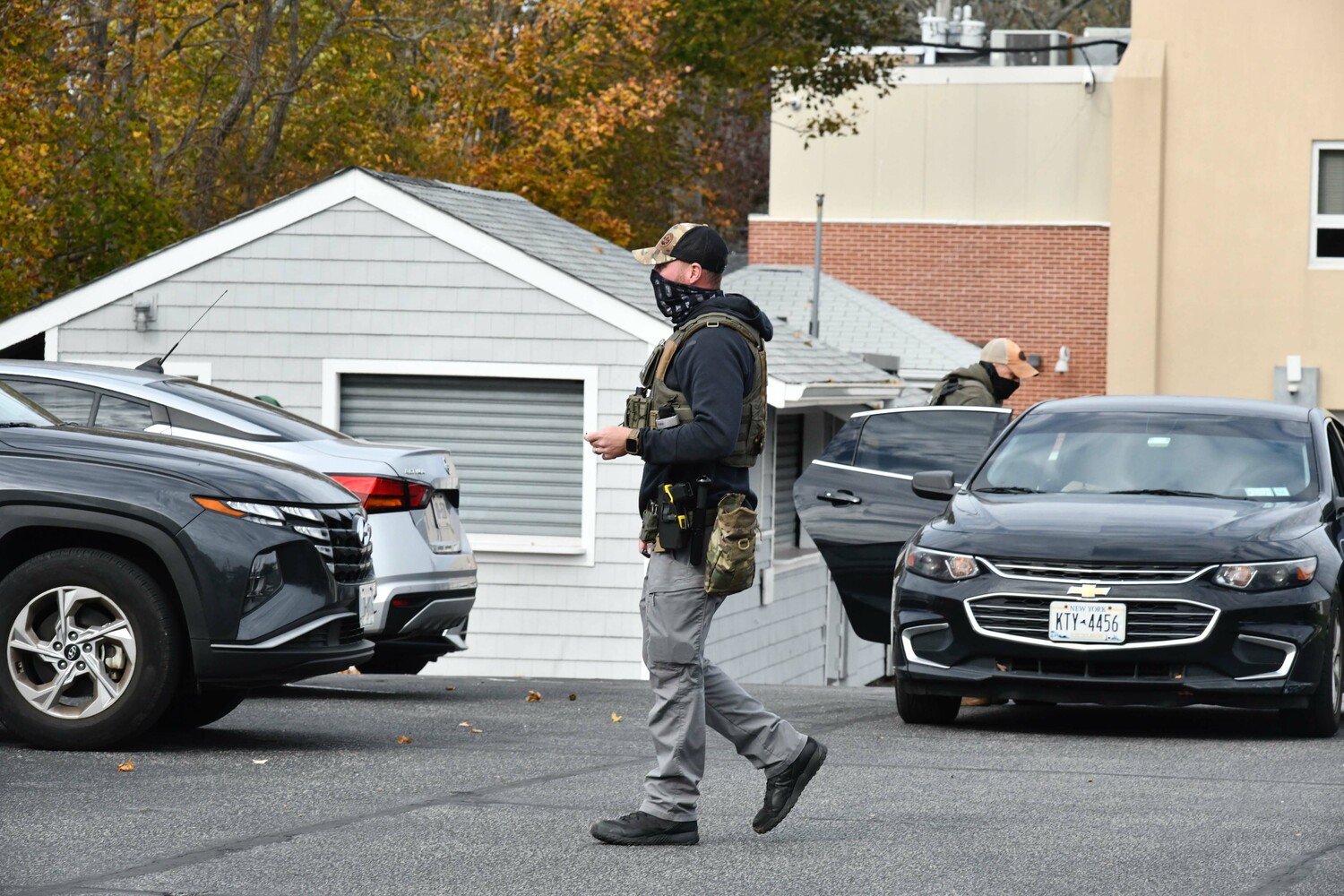
 3 Photos
Federal immigration enforcement agents at the Hampton Bays firehouse on November 5. DANA SHAW
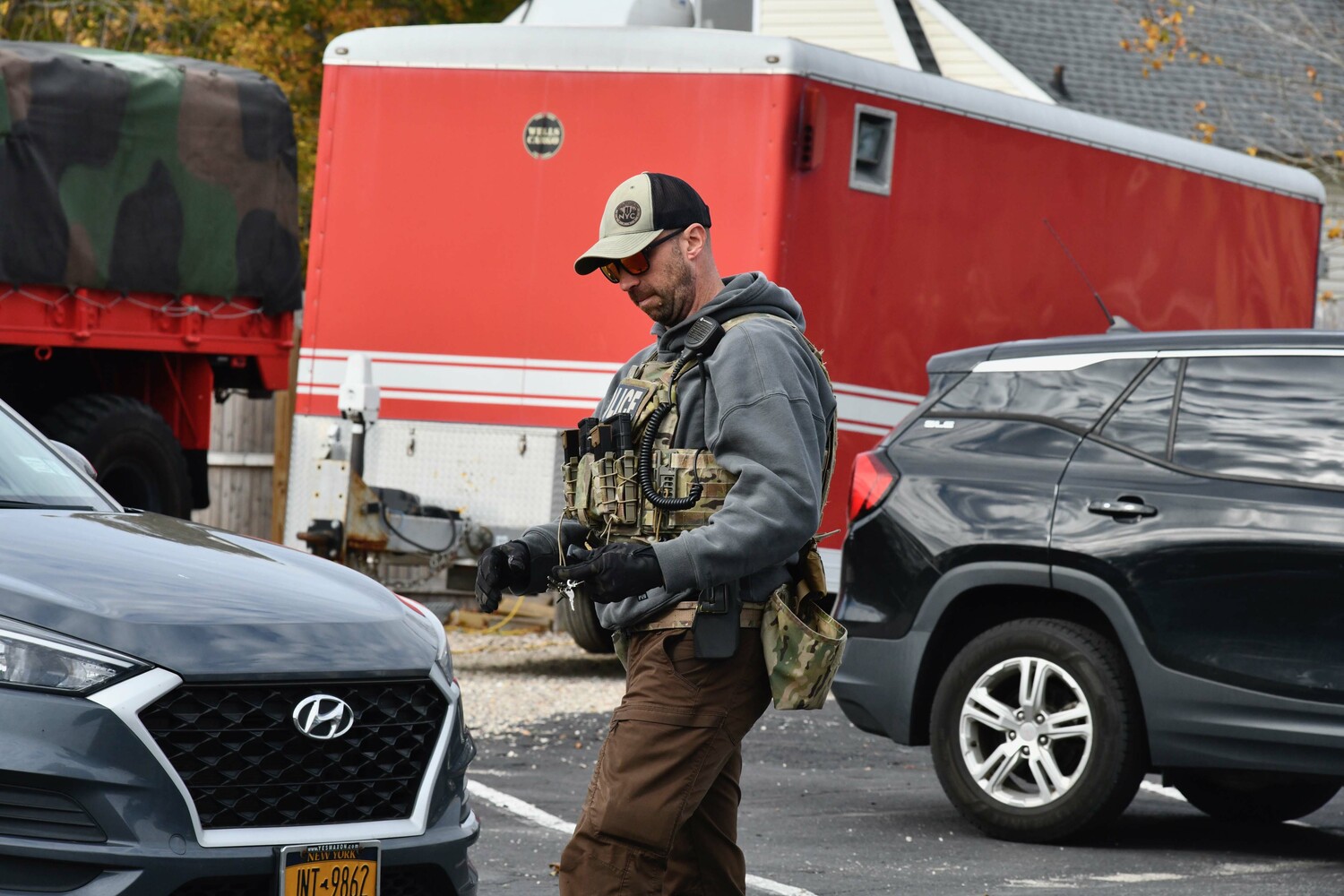
Federal immigration enforcement agents at the Hampton Bays firehouse on November 5. DANA SHAW

Federal immigration enforcement agents at the Hampton Bays firehouse on November 5. DANA SHAW
While the ICE sweep last week that ensnared a dozen immigrants has sparked outrage and protests from some, those who are dedicated to helping members of the immigrant community have been beset with a new mountain of demands.
For OLA of Eastern Long Island, the region’s most prominent Latino advocacy and support organization, the aftermath of last week’s sweeps has left the organization scrambling to get help to those detained and their families and address renewed anxieties about more parents, caregivers or employees vanishing.
From trying to document what the group sees as unconstitutional and unlawful actions during some of the federal operations, to sending attorneys to represent those arrested, to coaching employers about the rights of those with state work permits and helping families prepare for a loved one without what they call “legal status” being detained, the group’s resources are being stretched thinner than usual.
Erika Padilla, OLA’s legal advocate, said the group was alerted to the arrival of some 30 federal agents in Hampton Bays at 6:30 a.m. on November 5.
OLA alerted what it calls its “rapid response” volunteers, who go to any sites where ICE agents are detaining or questioning people to document on video or in photos how the searches and detentions are carried out and to try to get information about those being arrested, since it is often days before the federal agency makes the names of those seized public.
“The goal of rapid response is not to alert people that ICE is in the area … the goal is to document, to witness and be able to support any people who are victims to something that is actual lawless activity,” OLA’s president, Minerva Perez, said on the “27Speaks” podcast on November 6. “We are looking to make sure there is enough of this documentation so that we can share the reality with our leaders and with everyone else. Then we’re going to be in a better position to show what truly is happening out here and the damage that is being done.”
One of those arrested, a man named Victor whose arrest in the parking lot of a 7-Eleven was caught on video by a witness, was told by one of the federal officers, in Spanish, that he would be able to call his family shortly, apparently to discourage him from shouting information to bystanders. Padilla said the man’s family had still not heard from him more than a day later.
She said she also spoke with the relatives of two men, both of whom had been in the United States for more than 20 years and had never been arrested or had deportation warrants issued but were taken by the ICE agents and have not been heard from.
Such arrests are evidence, the OLA leaders said, that the federal agents are not focusing on people with serious criminal backgrounds but just randomly seizing anyone who cannot prove their legal immigration status.
“Even those targeted, we have come to find out, are not what a lot of people would like to put in the messaging narrative that ‘Oh, that must be the murderer or the rapist that they were looking for,’” Perez said.
On the day of the sweep, she said, the OLA staff was immediately met with calls from family members and from local school officials seeking help in “triangulating” who among their student bodies might have been impacted by the detention.
The lack of any information about who had been detained flowing from ICE only serves to heighten the anxiety for young people and detracts from the missions of school administrators.
“We should be having … transparency of who has been extracted from our community,” Perez said. “At the very least, we should know what human being that’s been part of our shared community has been taken without any word whatsoever — who has been disappeared.”
On the day of the raids, Padilla led a clinic for nervous restaurant owners about the legal protections for employees with state-issued work permits, which are granted to those who are legally registered in the immigration system — like someone seeking asylum — and should be afforded legal status to remain in the country.
When detentions like those in Hampton Bays and Westhampton, and several the previous weekend in Riverhead, hit, the group also tries to get attorneys, either their own in-house lawyers or those from law firms that have agreed to respond, on the case of those detained as quickly as possible — because hours can sometimes make the difference in how a detained person’s immigration status will be adjudicated.
Padilla said detainees are often forced or coerced while in detention, with no lawyer present, to sign a deportation order, agreeing to be deported, even if they don’t understand what it says or means for them.
“In many cases, they should not be signing that document,” Perez said. “A lawyer may be able to guide them on whether or not they have a case, or they have a pending case. Many people who are getting picked up have a legal status in that they have a case pending, but ICE isn’t asking that … and if you don’t have a lawyer and you sign this document and you are on your way.”
If the group cannot identify a detained person and get a lawyer to them while they are in the first holding site after their arrest — which is typically in Central Islip — they are often moved to New Jersey or upstate New York and face a much more complicated and costly effort to interdict the process.
“That is why we need everyone who has any kind of a voice to stand up,” Perez said. “It’s not time for anyone to stand back and be comfortable with what is going on. It’s affecting everyone and it is really horrific.”


 Michael Wright on Nov 13, 2025