


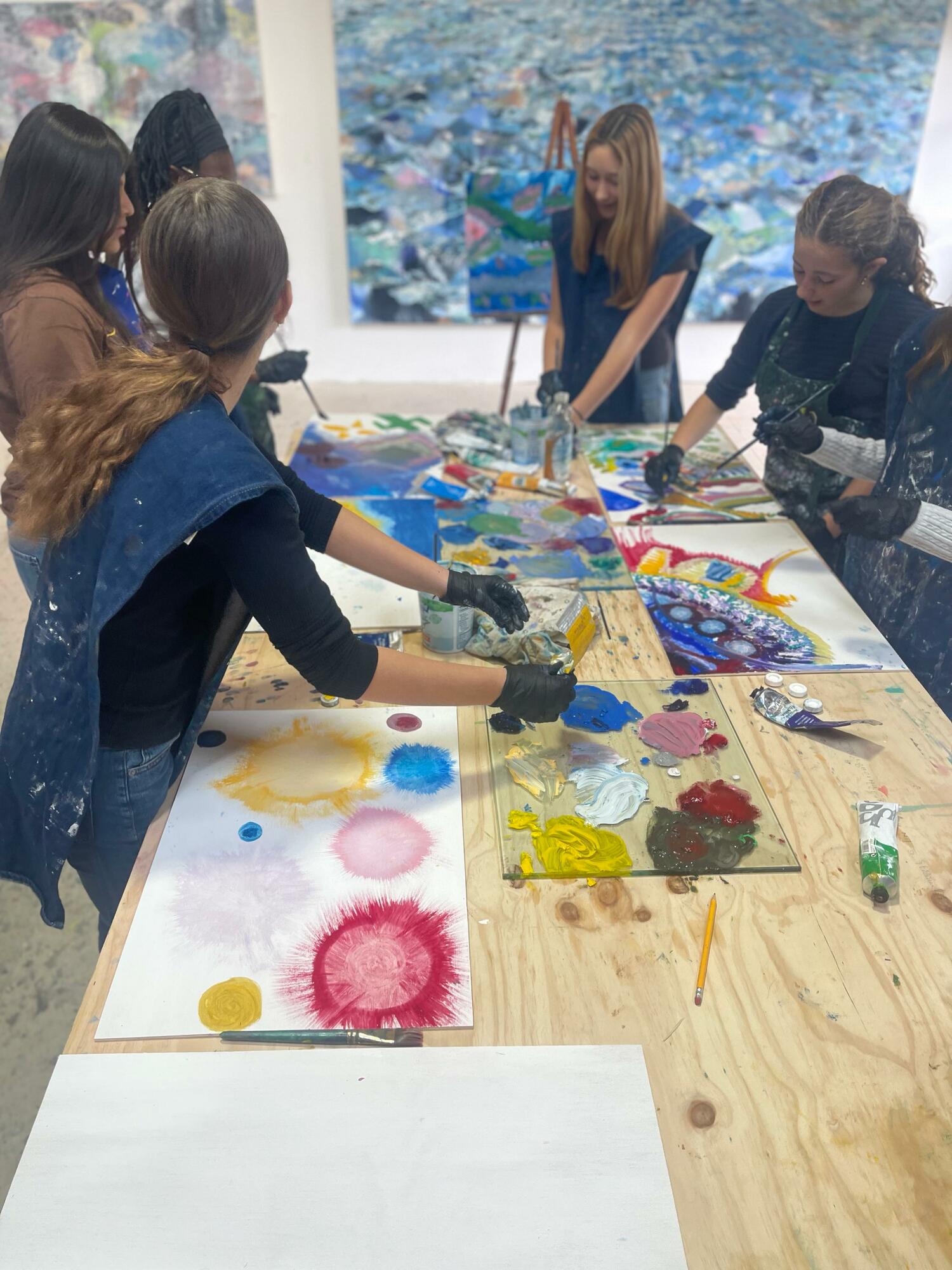
 3 Photos
The Hayground School's senior learners were recently treated to a trip to the studio of artist and teacher Perry Burns, where they learned about his process and his life as a professional artist. COURTESY HAYGROUND SCHOOL
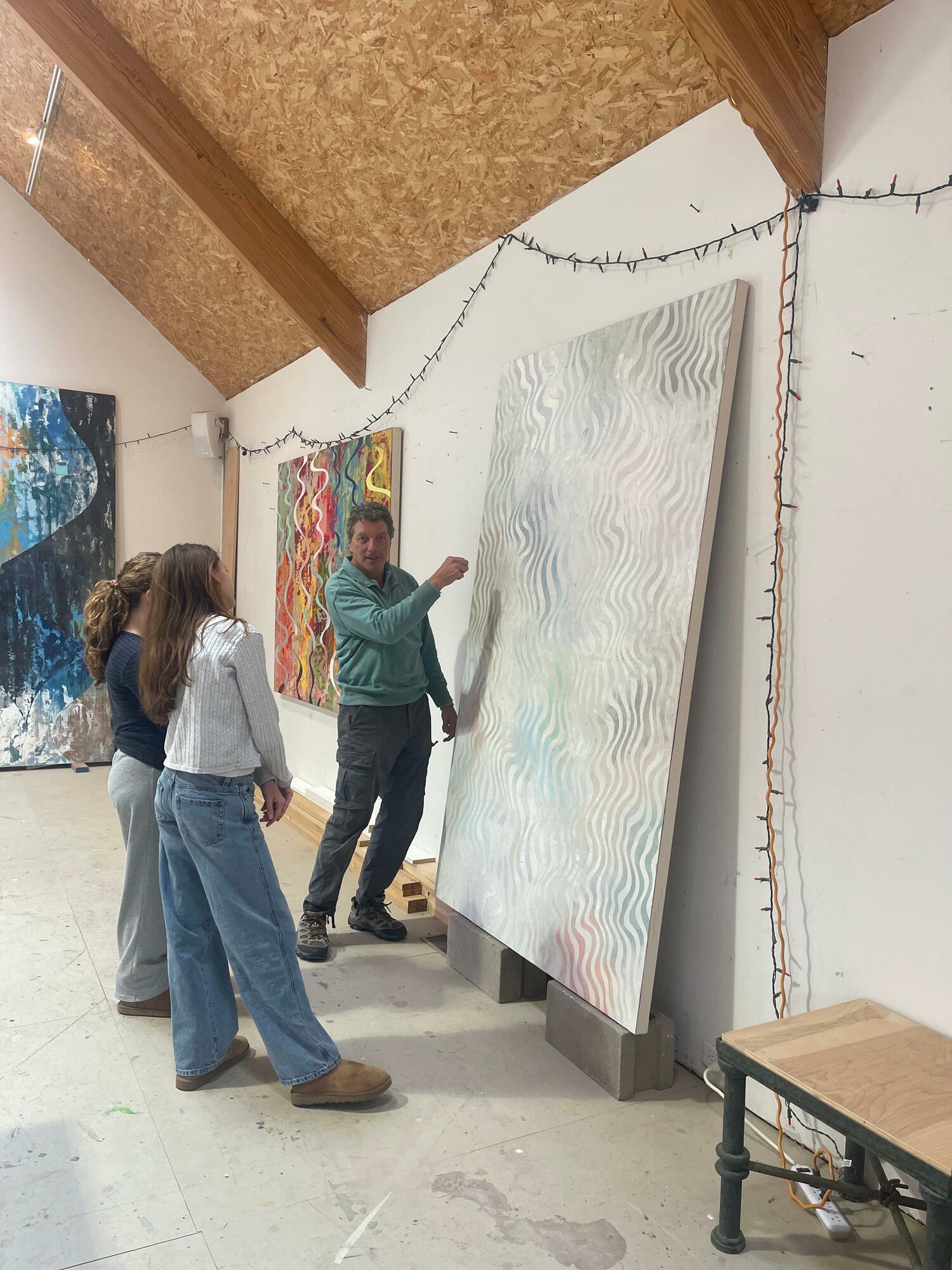
The Hayground School's senior learners were recently treated to a trip to the studio of artist and teacher Perry Burns, where they learned about his process and his life as a professional artist. COURTESY HAYGROUND SCHOOL
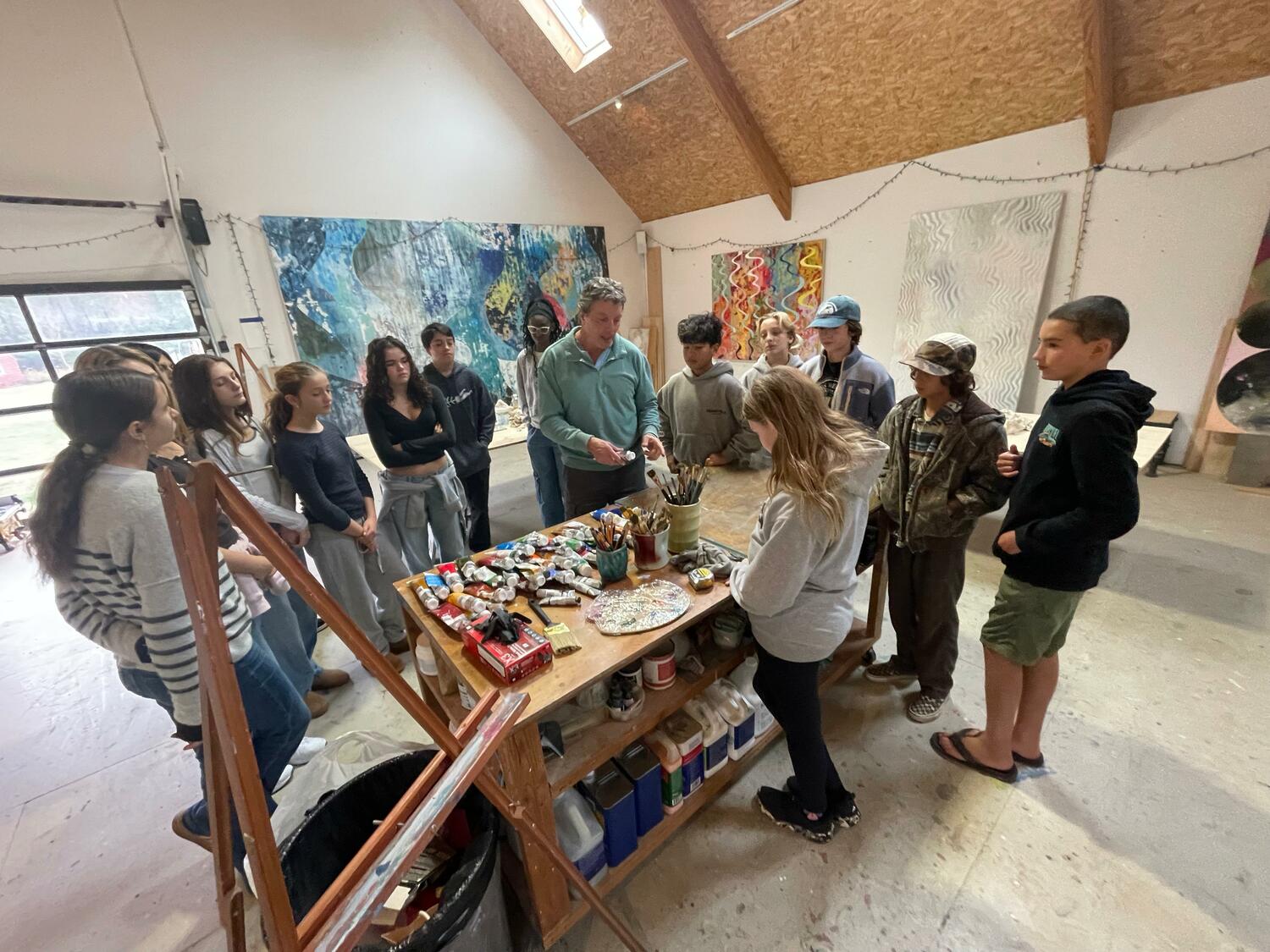
The Hayground School's senior learners were recently treated to a trip to the studio of artist and teacher Perry Burns, where they learned about his process and his life as a professional artist. COURTESY HAYGROUND SCHOOL
At the Hayground School, students are taught to enjoy and appreciate art, to explore their interest in it, and to engage with it as much as possible throughout the time they’re there, which extends to roughly their eighth grade year.
But the Bridgehampton private school also places a strong emphasis on giving students insight into what life as a professional working artist is really like.
That was the goal for Perry Burns when he opened the doors of his studio and home to Hayground’s senior learners at the end of last month.
Burns teaches art at Hayground, along with his co-teacher, Sabra Moon Elliot. He’s also a working professional artist, with more than 30 years of experience as a painter and photographer.
Near the end of November, he spent the day with the students, taking them on a tour of his studio, showing them his work, talking about his process, and answering questions. He also led them in a session in which they created their own oil paintings.
Perry and his wife, Jolie Parcher, also invited the students into their home for lunch.
It’s become a tradition at the Hayground School, where teachers like Perry develop close-knit relationships with their students, most of whom they teach from the time they are as young as 3 years old until they finish their time at the school as senior learners. Hayground doesn’t have traditional grade levels, but the senior learners, the oldest students in the school, are in the seventh and eighth grade age range.
Perry spoke about what the experience of inviting the students into his studio and his home is like, and why it’s a key component of their educational experience.
“I had them to my studio so they could see what a professional artist’s work and life actually looks like,” he said.
Perry said he shares both practical advice and also speaks from the perspective of what it’s like to live and work in a creative field.
“On the creative side, they had a lot of questions on, technically, how I do my paintings,” he said, adding that some of them were surprised to discover how in depth his process is, because it requires working in a lot of different layers, with oil paints.
“We have two-hour art classes at Hayground, so that’s a lot of time for them to be able to delve into a project,” he said. “But at the same time, for me, some of my paintings take me months to do. So they’re often shocked by that.”
It’s important, Perry said, for the students to learn that “there’s value in putting time and effort into something.”
Perry said he also shares with the students different, perhaps less glamorous lessons about life as a working artist.
“I tell them that, as a professional artist, you also have to be a business person,” he said. “And you have to be able to promote your work and market it, and there’s a whole business side to it with galleries. You have to wear two hats as a professional.”
Perry said that inviting students into his studio for a more personal experience than they might experience at a traditional school is an example of what makes Hayground special and unique.
“We have mixed age groupings at Hayground, and we do that intentionally so that kids aren’t earmarked into certain skills or only having certain skills at certain age levels,” he said. “So we can just take kids where they’re at. And the school is small enough that the teachers know all the kids. So that’s pretty amazing. It ends up being a very close-knit, communal, family-type of environment.”
The type of gathering and studio tour that Burns hosted is all part of the process of preparing the students for the next step in their educational journey, and beyond.
“The older kids have, for part of the year, an apprenticeship program where they go out and work in local businesses for part of the school day,” he explained. “So, with the older group, we’re starting to connect school to what happens in the real world.”


 Cailin Riley on Dec 9, 2025