


 1 Photo
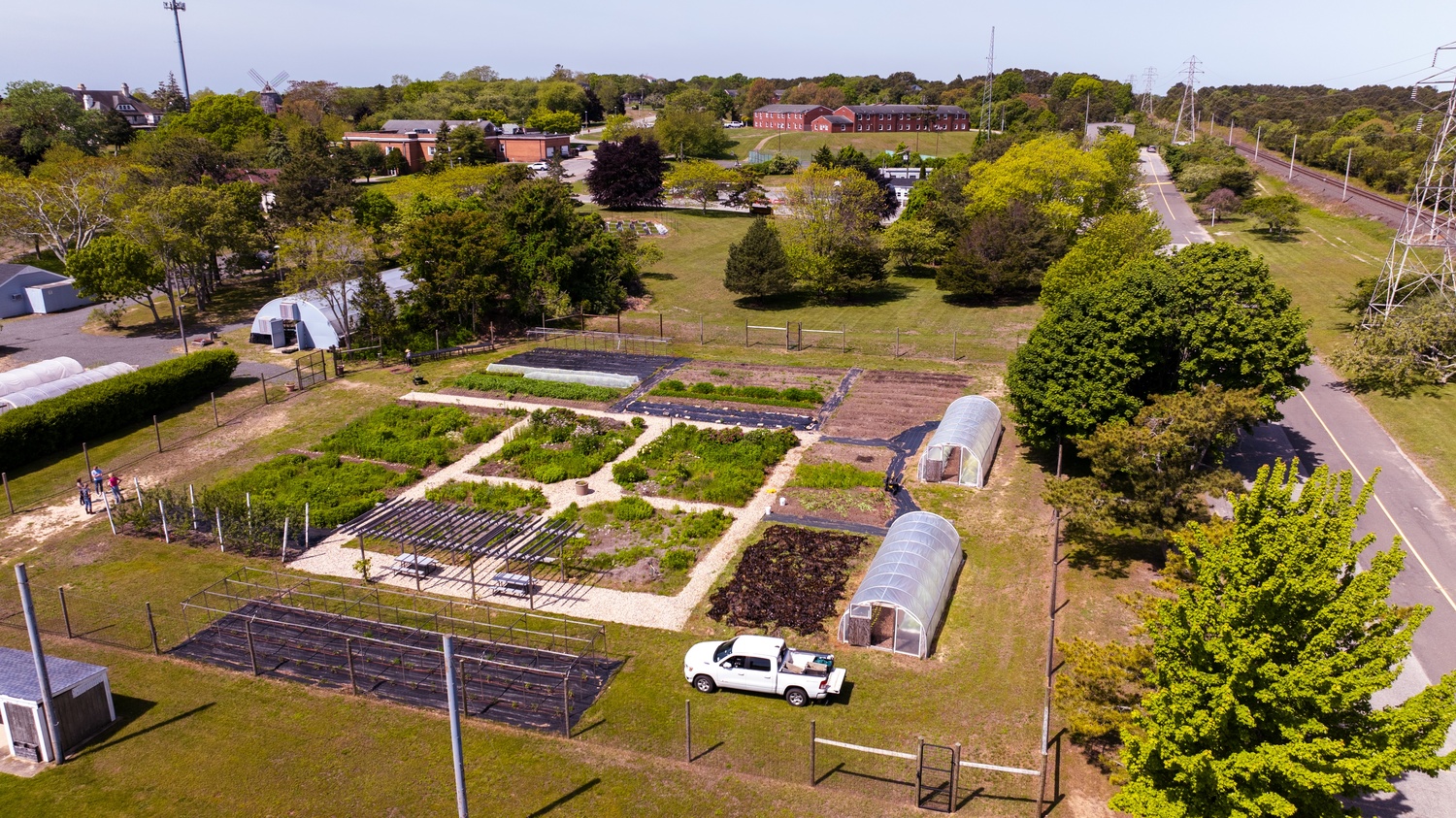
Stony Brook University's Food Lab will add a community garden to the space it already occupies at the Southampton campus this spring.
Since its creation, the Food Lab at Stony Brook Southampton has been committed to studying challenging food-related issues, with a focus on how to feed a growing world population facing climate change and diminishing natural resources.
It’s a global problem, but the solutions are often local.
That’s a truth that Judiann Carmack-Fayyaz understands.
She is the executive director at the Food Lab, and also sits on the New York State Council for Food and Hunger Policy, leading the effort to develop programming that addresses the big food-related issues facing the local community.
One main focus for the Food Lab has been developing programming that revolves around food as medicine. It’s a collaborative effort between the Food Lab, Stony Brook Medicine and its hospitals.
Putting a strong emphasis on the idea that food can be, and often is, as powerful as medicine is something she wanted to incorporate into the community in a hands-on, tangible way.
That idea has led to the upcoming launch, this upcoming spring, of a community-powered garden program on the Stony Brook Southampton campus that will bring fresh vegetables to students and neighbors who live on and near the campus. It will follow a CSA (community supported agriculture) model, where members will tend their own plot and help in shared production rows that will supply “produce prescriptions” for households in need.
The Food Lab is partnering with the Bridgehampton Child Care & Recreational Center to identify families, and with Stony Brook Medicine to help identify nutritional needs associated with particular health conditions. FoodLab will pair CSA produce with simple, condition-friendly recipes and quick cooking classes, and manage the space.
This model is inspired in part by New York State’s new Social Care Networks, a Medicaid initiative supporting health-related social needs including nutrition services like produce prescriptions and medically tailored meals.
Carmack-Fayyaz described the Stony Brook Southampton campus as a “food desert,” saying that there’s currently nowhere on campus for students to buy groceries or fresh produce, and adding that the campus café is only open from 9 a.m. to 3 p.m., and that there aren’t great options for buying food within walking distance of campus. She also pointed out that there’s a dearth of places for students to gather together, to congregate and socialize.
The new community garden space, which will measure about 100 feet by 100 feet, will help address those issues.
A presidential mini-grant helped provide initial funding to create the garden, and Food Lab also applied for a grant from the New York State Department of Agriculture and Markets. That grant required the participation of a sub-recipient, and Carmack-Fayyaz said the Bridgehampton Child Care & Recreational Center was a natural choice.
“We’ve been working with the child care center for a number of years now on our workforce program in the summer,” she said. “And I know [BHCCRC Executive Director Bonnie Cannon] has a food pantry, and I’ve worked with her in the past giving her produce from the [garden at the Bridgehampton School].”
Carmack-Fayyaz said Food Lab will coordinate with Stony Brook Medicine to determine what kinds of greens, produce and herbs are beneficial to be grown for addressing specific diseases and health conditions.
“Whatever we decide to focus on, we’ll grow in our community garden and then deliver these produce prescriptions to people that are identified by the child care center as being on Medicaid or near Medicaid eligible,” she said. “So we’d be helping our local community get healthy and the students on campus would not only be able to produce for themselves but also give back in a meaningful way through these produce prescriptions.”
Cannon said the partnership with the Food Lab garden is a good fit for the Center, and that it’s a natural extension of philosophy already in place at the Center, which has its own vegetable garden, dubbed the Soul Garden.
“We’ve been working with Judiann for many years, and several of our young people have been continuing to work with her right now, learning trades,” she said. “This is a way for us to expand what we’re doing a bit more, to help people understand what they need to be eating for their health, taking it a step farther in terms of thinking about what’s your ailment and what things do you need to heal and sustain your health.”
Plans for the garden are coming at a time when grocery prices remain sky high, combining with the persistently high cost of housing to make putting any food on the table, particularly healthy food, an overwhelming challenge for many families.
Community solutions like this garden may need to be the answer for communities, at least for the time being, because it doesn’t appear that the federal government is interested in making access to fresh produce a priority. Carmack-Fayyaz pointed out that crops like soybeans and corn are subsidized by the federal government, while fresh fruits and vegetables are not, making them prohibitively expensive for many people.
“It’s a luxury to have fresh vegetables almost,” Carmack-Fayyaz said. “And it shouldn’t be. It’s really really needed.
“I really think that these community gardens are a really super important way for people to source food in a financially reasonable way,” she added. “I think people forget that they can actually grow their own food, so it’s putting more power into people’s hands.”


 Cailin Riley on Nov 14, 2025