


 3 Photos
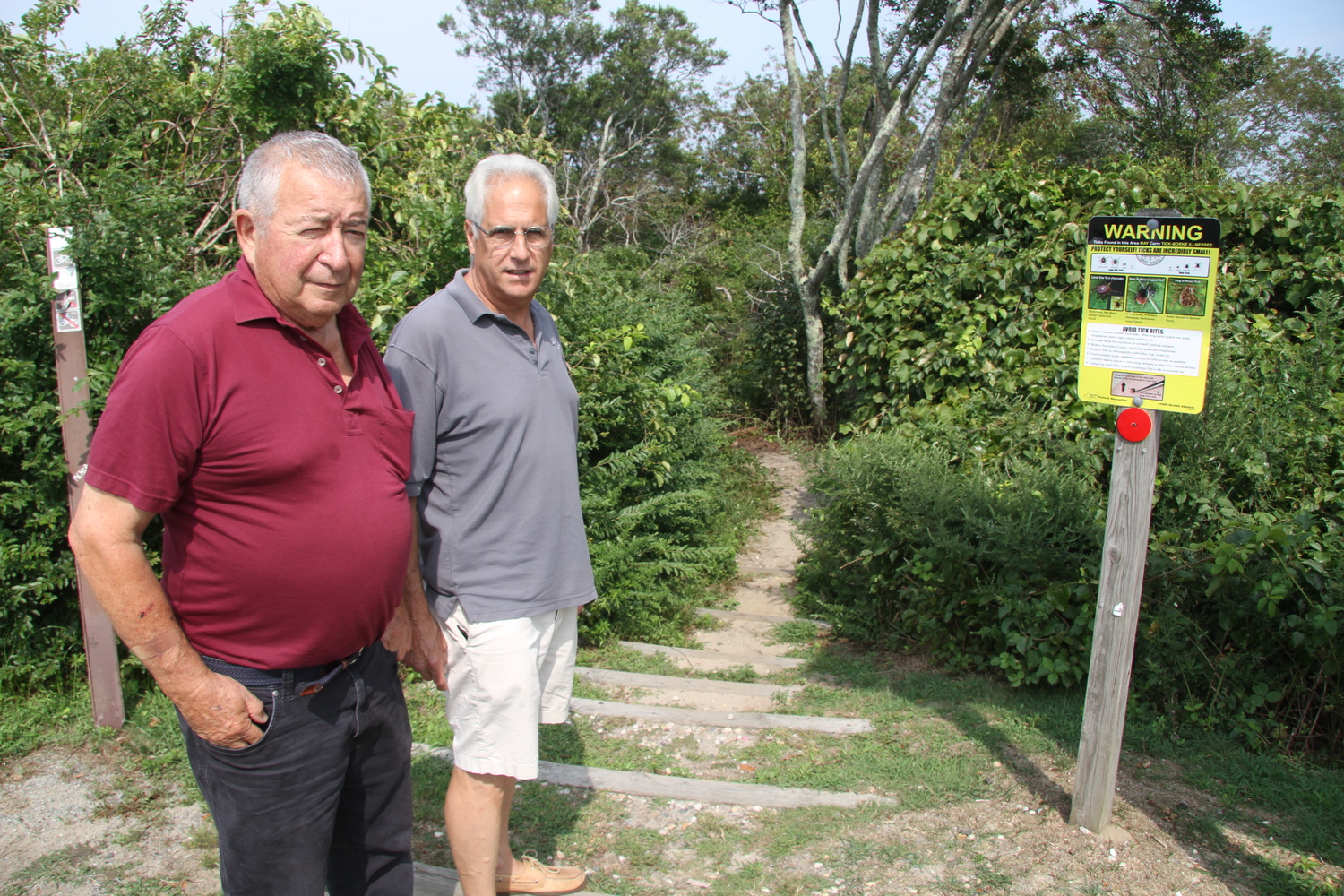
Charlie Morici and Tom Grenci are former East Hampton Town Police officers who put the spotlight back on the Montauk Mary case in hopes that modern forensics may help identify her and, potentially, her killer. MICHAEL WRIGHT
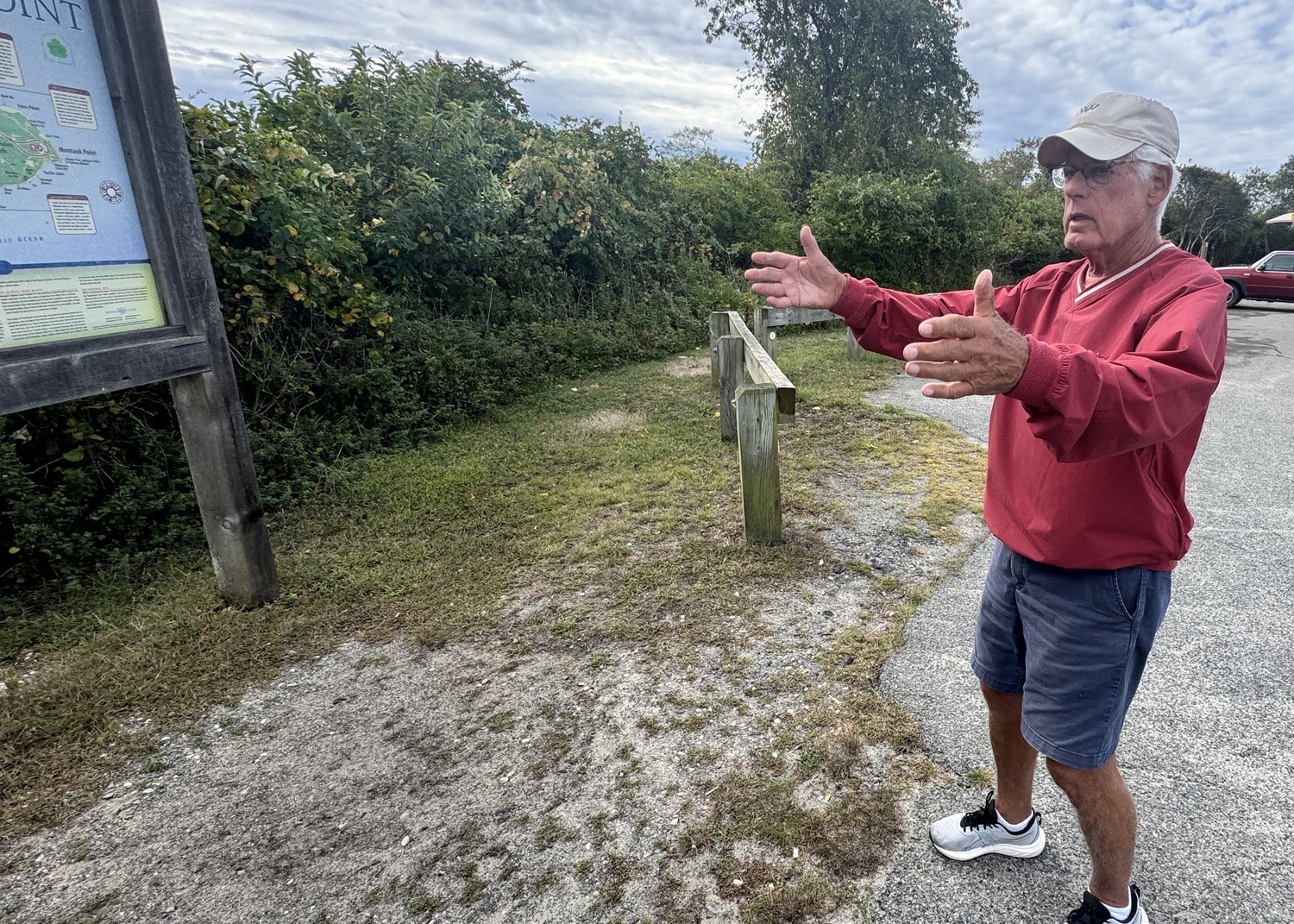
Richie Lia was an East Hampton Town Police detective in 1978 and one of the first officers to respond to the scene when the body of the still unidentified woman referred to as Montauk Mary was discovered near an overlook off Route 27 between downtown and the lighthouse. MICHAEL WRIGHT
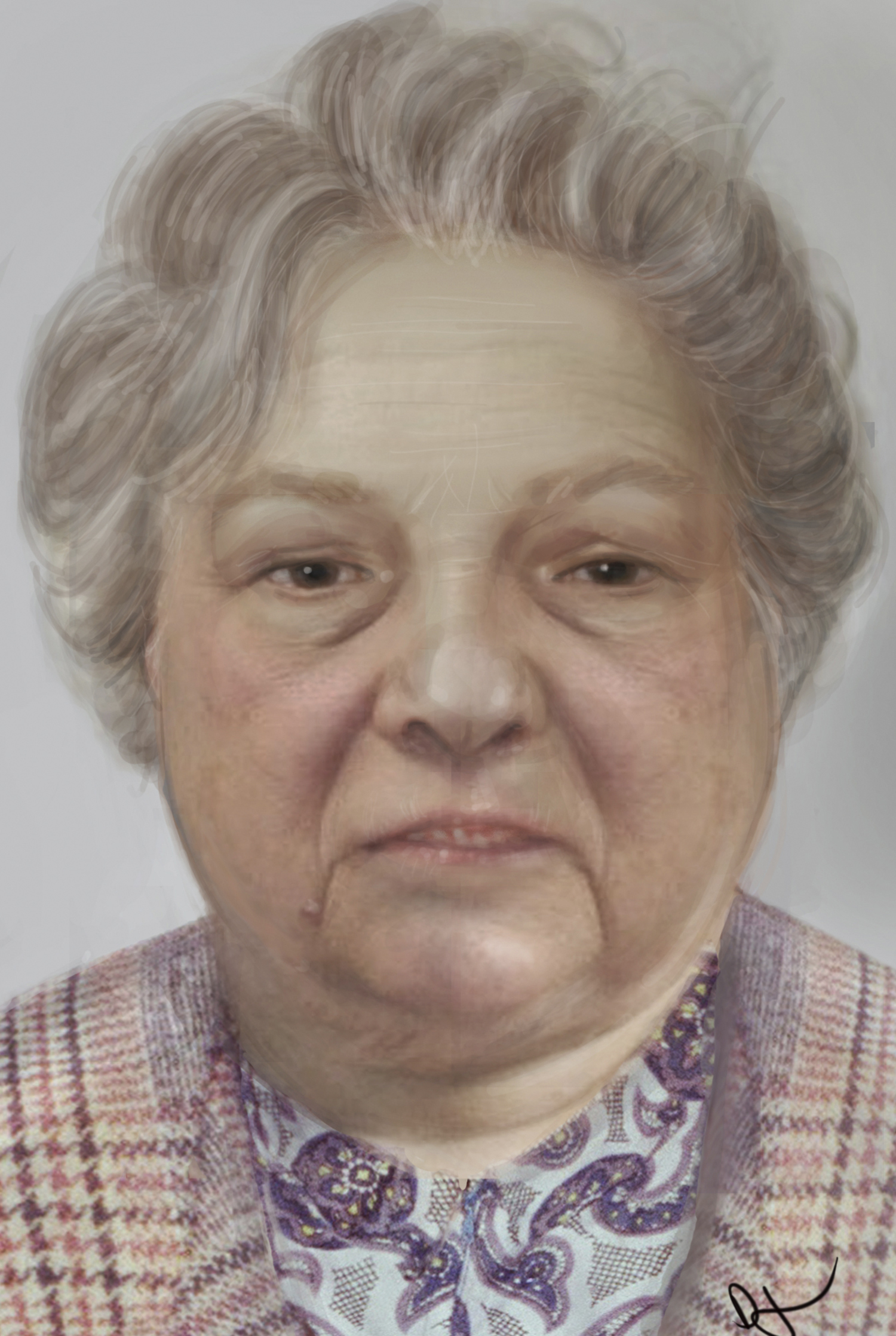
A newly created artists sketch of "Montauk Mary," the woman whose body was found near the overlook on Montauk Highway more than 50 years ago is believed to have looked like.
On a Wednesday in March 1978, the second day of spring, Edward Kenney, a civilian U.S. Air Force employee, had been enjoying his lunch in his car in the parking lot of the east overlook just off Route 27 in Montauk State Park, when he sparked a murder investigation that may only now, 47 years later, have its best chance at being solved.
Kenney was 48 at the time, raising his family in Amagansett, and had worked in the administration office of the Air Force base Camp Hero, a mile to the east, for 22 years.
On most days, he would leave the confines of the bleak military building on the base and drive to the overlook, which in those days had sweeping views of Long Island Sound, Lake Montauk and the Atlantic, to have his lunch.
When he was done eating on that particular day, he strolled over to the garbage can at the south end of the parking lot. As he pitched his sandwich wrapper into the trash and turned to walk back to his car, something caught his eye.
“I saw two pink things,” Kenney recalled on Tuesday.
“It was her fluffy pink slippers.”
He’s 95 now but says he remembers that day — the day he discovered the body of the woman who is still known only as “Montauk Mary” — like it was yesterday.
“I went over and took a peek. She was lying there in this ditch just at the edge of the parking lot,” he said by phone from his home in Florida. “I only got close enough that I could tell it was a woman, and she wasn’t moving. I assumed she was dead.
“I got in my car and drove back to the base and told my commander, and he called the police.”
Richard Lia was a detective with the East Hampton Town Police and was one of the first to arrive at the overlook after police received that call from Kenney and his boss at about 12:30 p.m.
The woman’s body, Lia said earlier this week, was lying just a few feet from the pavement at the southeast corner of the lot, farthest from the roadway, in the area where a trail now leads into the thick bramble that obscures much of what the overlook used to overlook.
The woman, estimated to be in her 60s, was about 5 feet tall and weighed 200 pounds. She was wearing a floral house dress, the fluffy pink slippers Kenney had spotted and a tweed coat.
She’d been shot four times — once in the chest and three times below the waist.
“We figured she was local, because she just had a nightgown on and the fluffy slippers,” Lia recalled this week, standing at the edge of the parking lot where he’d crouched over the woman’s body on the day the body was discovered. Lia had been on the force for nine years at the time, and had been a detective for five.
“She was lying on her back, right here,” he said, pointing to the now-dense woods and narrow trail that leads into it. “This was all different — it’s much more overgrown now. In those days, it was very open, and she was right here, just a few feet down.”
He said investigators thought at the time that she had been shot in the spot where her body was found. But who she was and where she’d come from remain a mystery to this day — one that some of those who were there at the time say they hope might finally be solved thanks to new DNA techniques, and a spotlight being put on the case, in part due to the efforts of some former local police officers who have tried to renew attention on the investigation.
Suffolk County Police homicide detectives took over the investigation that afternoon, Lia said, but Town Police detectives and officers worked with them for weeks on the search for someone who could identify the woman. Local officers went door to door in Montauk, showing the woman’s photo to people, in hopes someone would recognize her. Officers flagged down cars on roads to hand drivers fliers with her photo and a plea for information.
“We probably talked to 90 percent of the people in Montauk and came up empty-handed,” Lia said. “In 1978, this was still a small town — you would think somebody would have known her if she had been from around here. So I think she was brought here from somewhere else.”
The case of Montauk Mary would remain famous among local police in the years that followed. Even after the case had faded from prominence, as the weeks of searching for a clue to who she was turned into months, and then years, without anything to identify the woman or a possible killer, local officers would be reminded intermittently of the mystery.
Young recruits at the police academy were shown her body in the county morgue for many years following as part of their early training. One local officer carried a photo around in his ticket book for the remainder of his career, showing it to those he encountered in hopes someone might recognize her.
For three former officers, including a former chief of the department, the arrest of Rex Heuermann for the Gilgo Beach murders, based on decades-old DNA evidence, put the case back in their minds — and may have landed Montauk Mary in the sights of investigators with renewed hope the case may be solved.
“Charlie had brought it up to us when I was still working — we got the park police involved and got the [county medical examiner’s office] to put together what they had for us, and we sent it to ‘America’s Most Wanted,’” former East Hampton Town Police Chief Edward Ecker Jr. said, speaking of his former colleague, Charlie Morici, also a longtime East Hampton Town Police officer. “We thought that would maybe get someone who recognized her. But it never made the show. We don’t know why.”
Morici was a sergeant on the town force at the time the body was found and remembers the case quickly becoming vexing, because there was no identifying evidence of the woman’s identity. Like Lia, he remembered the canvasing by local detectives across the South Fork with the photo of the woman, hoping to find someone who could identify her. “We took her photograph and went all over, to all the hotels and restaurants, all the way to Riverhead — nobody recognized her,” Morici said.
Ecker said that it was the Suffolk County medical examiner’s office that dubbed the unidentified woman Montauk Mary — an alliterative replacement for the typical Jane Doe monicker given to an unknown female – and kept her body in its morgue for nearly a decade.
“I went to the [Suffolk County Police Academy] in 1981, and one of the trips you made was to the ME’s office for a day,” Ecker recalled. “They still had her body in a drawer, and they would pull it out and show us Montauk Mary.”
Ecker, Morici and their former colleague Tom Grenci, who retired from the Town Police in 2015 and lives in Montauk still, started stirring for the case to be picked up by new investigators shortly after Heuermann’s arrest.
“I was still in school when it happened, but I lived in the state park, so before that my memory of the case was, I remember going by the scene on the way home on the school bus and seeing all the commotion,” Grenci said, in 2023, shortly after Heuermann’s arrest. “Then it would come up from time to time when I was on the job, and we’d try to think of something new that could be done. But, now, you have all this DNA evidence being used to find someone’s killer decades later — it might be a chance to finally figure out who she was.”
In 2024, a year after his initial arrest in connection with the murder of four women whose bodies had been found in Gilgo Beach in 2010, Heuermann was charged by Suffolk County District Attorney Ray Tierney’s office with the murder of Sandra Costilla, whose body was found in Southampton in 1993.
Tierney’s office had begun scouring the case files of unsolved murders from around the region looking for evidence that could be linked to Heuermann’s orbit and discovered the murder of Costilla, which occurred more than a decade before the next earliest murder they had pinned on him at the time.
Just weeks after the charges were filed for Costilla’s killing, Tierney, who had resurrected the Gilgo investigation from years of stagnation when he took office in 2022, announced that he was creating a dedicated Cold Case Unit to begin taking a fresh look at dormant murder cases and applying the new investigative smarts and evidence analysis “in a comprehensive, systematic way,” as he put it at the time, that had come out of the hunt for the Gilgo killer.
And earlier this month, that Cold Case Unit added the case of Montauk Mary to its case list — spotlighting the case on its website. The zeal of the local officers to get the case back on the front burner might get the credit for it landing there.
Back in the spring, Grenci was talking to a friend who mentioned he was friends with the newly appointed Suffolk County Police Commissioner Kevin Catalina — and Grenci jumped at the chance to bring up the case of Montauk Mary. “I thought, who better to get a plug in about Montauk Mary than with the commissioner,” Grenci said last week, with a chuckle. He asked his friend if he would mention the matter to Catalina.
A few weeks later, Grenci was on the phone with the new police commissioner talking about the details of the Montauk Mary case. “I told him about seeing it when I was a kid and I sent him what I had, the old article and a couple other things … and said it would be great if they could help out,” he said. “I never heard anything more all summer. Then, bang, there it was.”
On September 15, the D.A.’s office sent out the announcement that the Montauk Mary case was being added to the Cold Case Unit’s list of featured cases.
The unit had already taken evidence to a “forensic artist” who created a new sketch of what the woman would have looked like at the time of her death, and released some new details about the killing — including that the evidence indicated she’d been killed only hours before she was discovered.
The local officers took no small amount of satisfaction in seeing it put back on the front burner of a much larger and more powerful audience.
“It would be nice if they can find something in the evidence that helps them actually identify the poor woman,” Grenci said last week. “And if they do, I would bet they’ll be able to figure out who did it. Somebody is going to know something.”


 Michael Wright on Oct 4, 2025