


 4 Photos
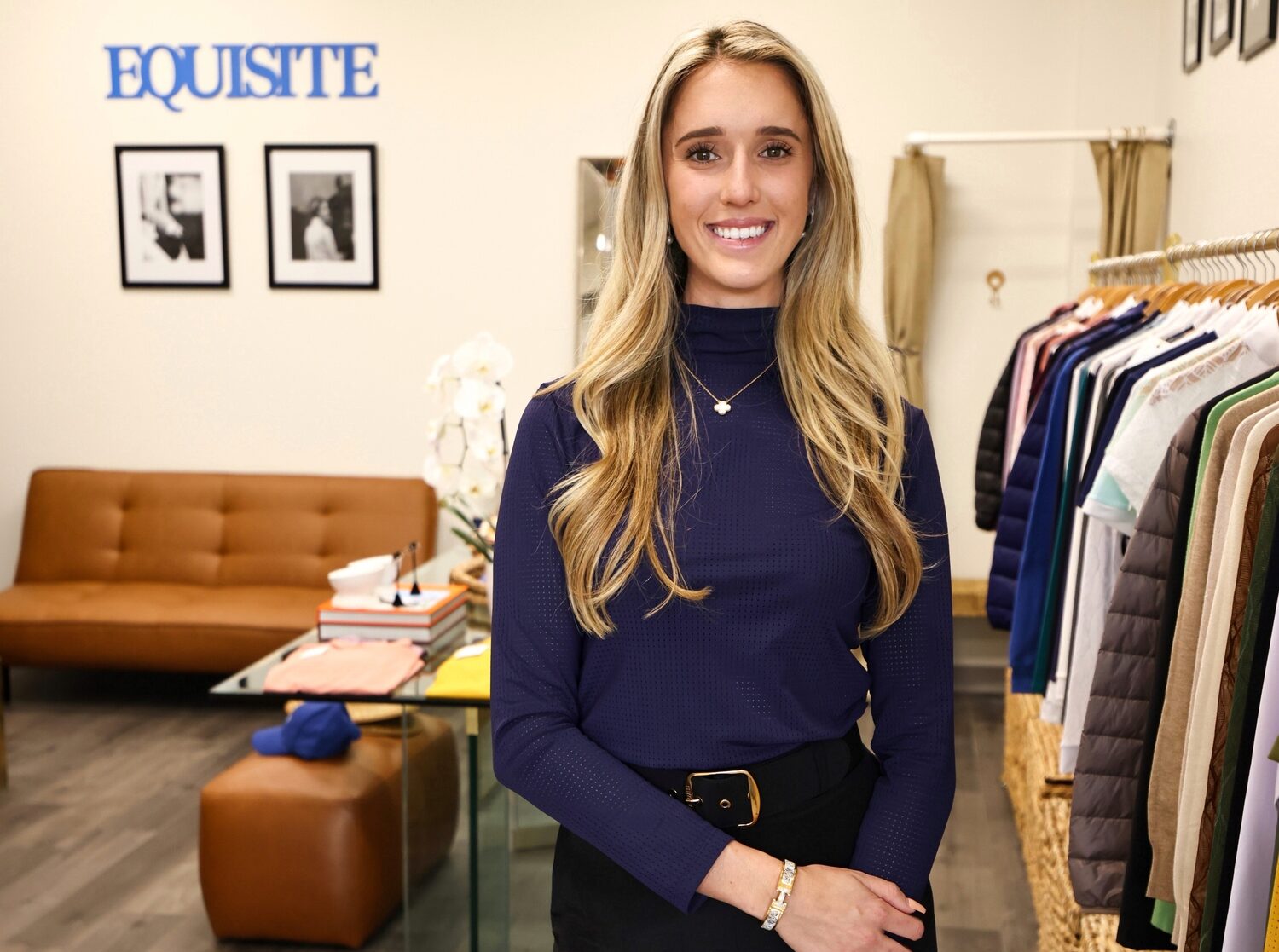
Brianne Link created Equisite while she was a senior at the Savannah College of Art and Design. COURTESY EQUISITE
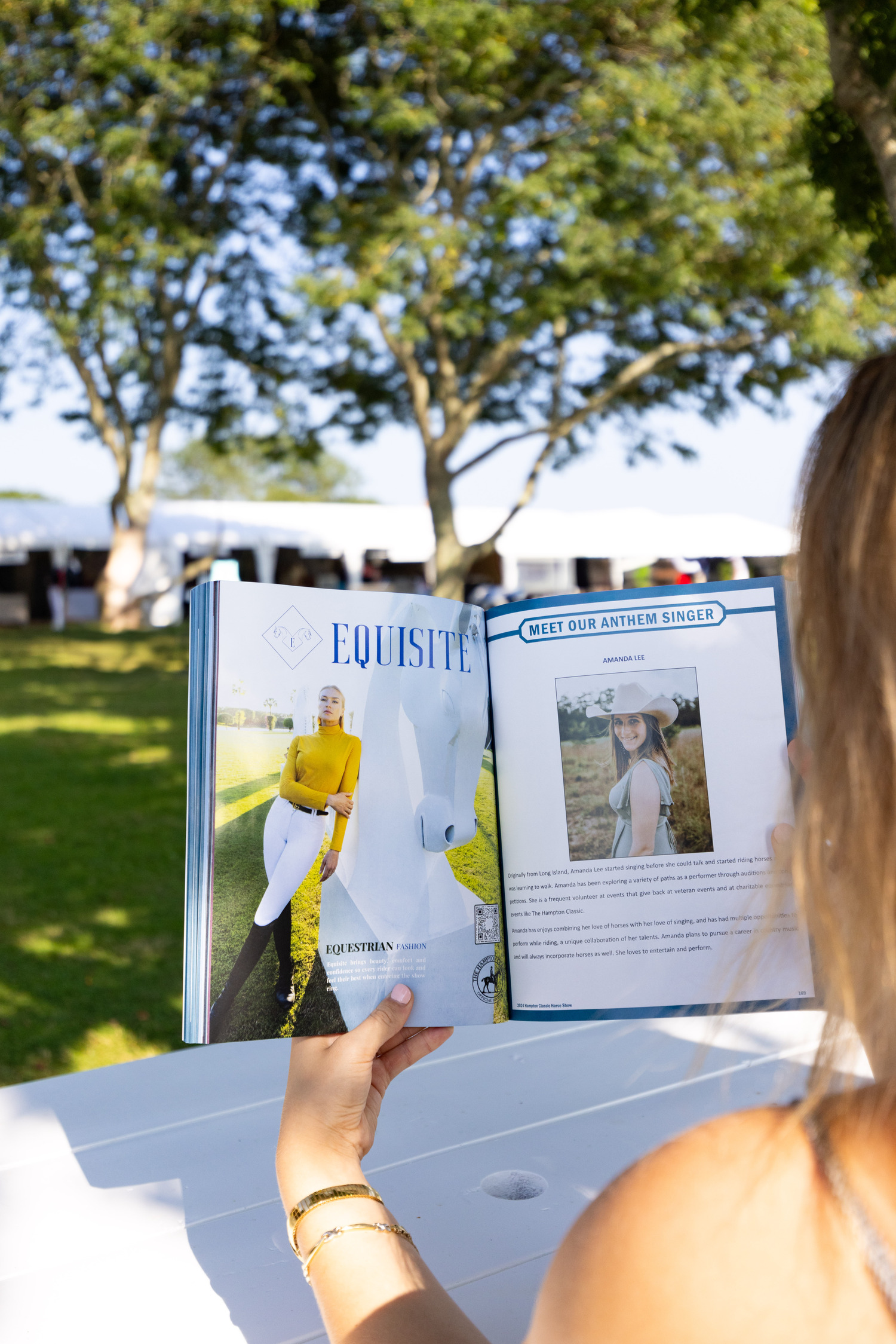
The Equisite booth at the Hampton Classic. COURTESY EQUISITE
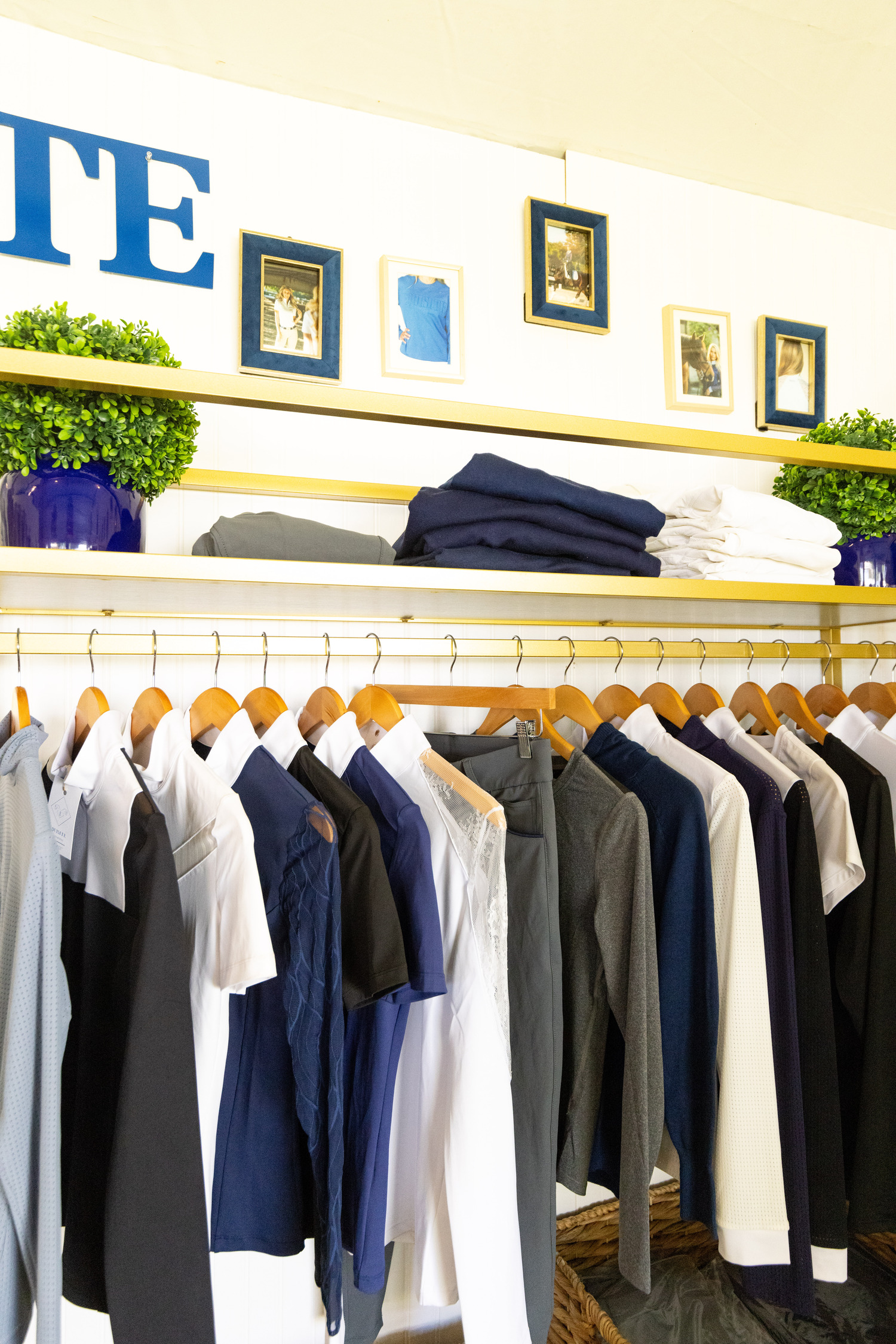
The Equisite booth at the Hampton Classic. COURTESY EQUISITE
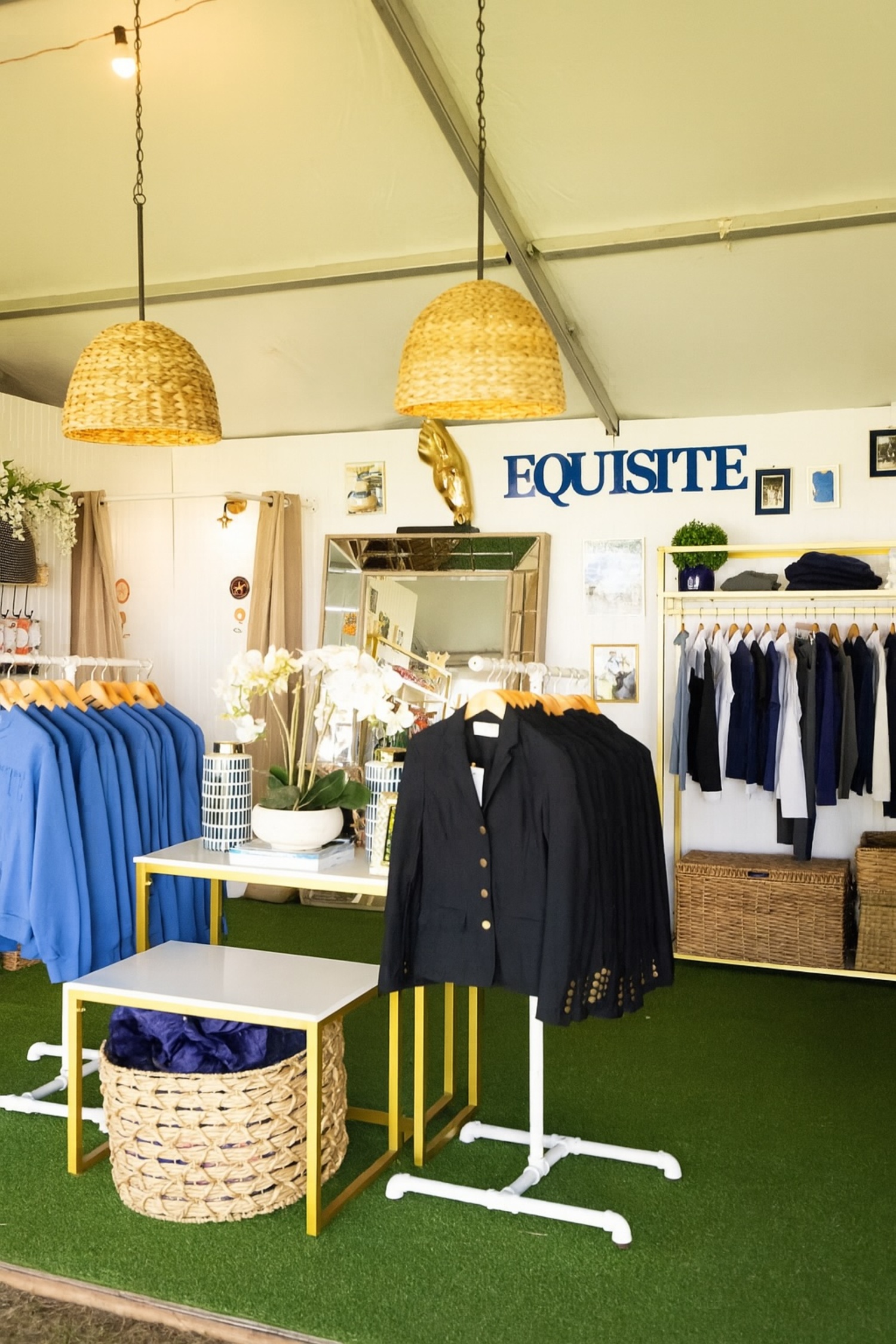
The Equisite booth at the Hampton Classic. COURTESY EQUISITE
For the uninitiated, the attire riders sport when they enter the show ring at the Hampton Classic and other hunter/jumper equestrian competitions across the country can be a bit of a head-scratcher.
The dark, long-sleeved, button-up formal sport coats (even, in some instances, those with long coattails, draping past the back of the saddle and grazing the horse’s back), paired with high-collared white shirts, tight-fitting white or tan breeches, and tall shiny black leather boots can, to some, seem a bit over the top, or old fashioned. There’s even the continued traditional requirement of concealing long hair neatly underneath the riding helmet, with the assistance of hairnets, an accessory most frequently associated with dowdy cafeteria lunch ladies.
But equestrian-inspired style has been a classic theme in the fashion world for decades, and is one of the few “trends” that reliably becomes en vogue every few seasons.
While show attire may look, to the naked eye, like it hasn’t changed in hundreds of years, there’s actually been a huge shift in the last 20 years toward making equestrian attire that both preserves the traditional elegance long associated with the sport while recognizing that hunter jumper riders are true athletes who deserve clothes and gear that move with them while they excel in the sport, both during training and at competitions.
Brianne Link knows a lot about it.
The 27-year-old resident of Wellington, Florida — who grew up on Long Island, in East Islip — is a lifelong competitive equestrian and a young and successful entrepreneur. She created her business, Equisite (a play-on-words mashup of equestrian and exquisite), during her senior year at Savannah College of Art and Design. She wrote her thesis on the evolution of equestrian fashion—an academic exploration that ultimately served as the foundation for her future brand. Her education, paired with years of firsthand riding experience, positioned her uniquely at the intersection of style and sport, she says in the bio on her website.
Equisite will be a vendor and sponsor at the Hampton Classic for the fourth consecutive year this summer, and Link says the show has a special place in her heart. It was the first show she ever competed in, when she was just 4 years old, and did the leadline class. She rose in the ranks throughout the years, eventually competing in the under-25 Grand Prix level. She was a competitive show jumper until just three years ago, when she decided to focus full-time on her business.
Equisite blends “function and fashion,” selling shirts, show jackets, hats, outerwear, accessories and more — she even has an equestrian-themed pajama line — for competitive riders.
As recently as 20 years ago, riders did not have a lot of options when it came to outfitting themselves for training and competition. Thick and unbreathable wool show coats, long-sleeved cotton show shirts with a hard, starched button-on neck collar that put the neck in a vise grip, and stiff polyester breeches were the norm. The requirements in the show ring didn’t change, even in the heat of summer.
Thanks to technology, and entrepreneurs like Link, a lot has changed since then. Today’s show attire is lightweight and breathable, and overall much better suited to the needs of the rider, but still maintains the traditional look.
Link explained the dynamic between those needs, and why it matters.
“It’s a sport that’s built on tradition and being poised and classic,” she said. “Showing up to the competition arena looking your best is of utmost importance, not only from a judge’s aspect, but also a mindset aspect. You’ve worked hard with your horse to prepare them for this two-minute moment of glory, and hopefully it turns out exactly how you want it to be, and your attire is part of that.”
Just as, decades ago, women ditched the tradition of riding side-saddle, in heavy woolen skirts, the uncomfortable fabrics of several years ago have also been set aside.
“The old, heavy show coat is now a soft, breathable, stretchy fabric that riders can take to dinner as a blazer or wear as a business coat,” Link said. “We’re also seeing [riding] tops being worn with regular women’s wear; skirts, pants, leggings you’d wear to pilates or pickleball. There’s a lot of crossover, and it’s not so intense and segregated into equestrian wear.”
Link explained, from a horsewoman’s perspective, why the updates to riding and show attire matter for competitive equestrians.
“If your fabric is breathable and it’s a hot day, you might have the extra strength to fight for that inside turn in the jump-off,” she said. “It really comes into play in a multitude of ways.”
Link spoke about the enduring appeal of equestrian style in the fashion world.
“We see a lot of equestrian roots in brands that are perceived as being elite, like Hermes,” she said, pointing out that the image of a horse bit is a touch included in many pieces. “It’s that idea around the equestrian industry, that exclusivity and high-life feel, and brands are promoting that.”
She added that household celebrities who are also known “horse girls,” like the model Bella Hadid and former actress-turned-fashion-designer Mary-Kate Olsen — who co-created the brand, The Row, with her sister, Ashley — have also helped put equestrian style on the map.
“It’s that classic, simplistic, beautiful feel for consumers,” she said.
Link said she’s thrilled to be part of it, and carry those traditions on in the modern era, especially at the Hampton Classic.
“It’s a very special show and it really resonates with me,” she said. “It was my very first show and now, being part of it in a different aspect, has opened so many opportunities for me as a designer.”
Equisite will have its own set up in the Boutique Garden, and Link is also partnering with the official Hampton Classic souvenir shop as the co-designer for specialty apparel pieces.
For more on Link and Equisite, visit equisite-elementsofstyle.com.


 Cailin Riley on Aug 20, 2025