


 3 Photos
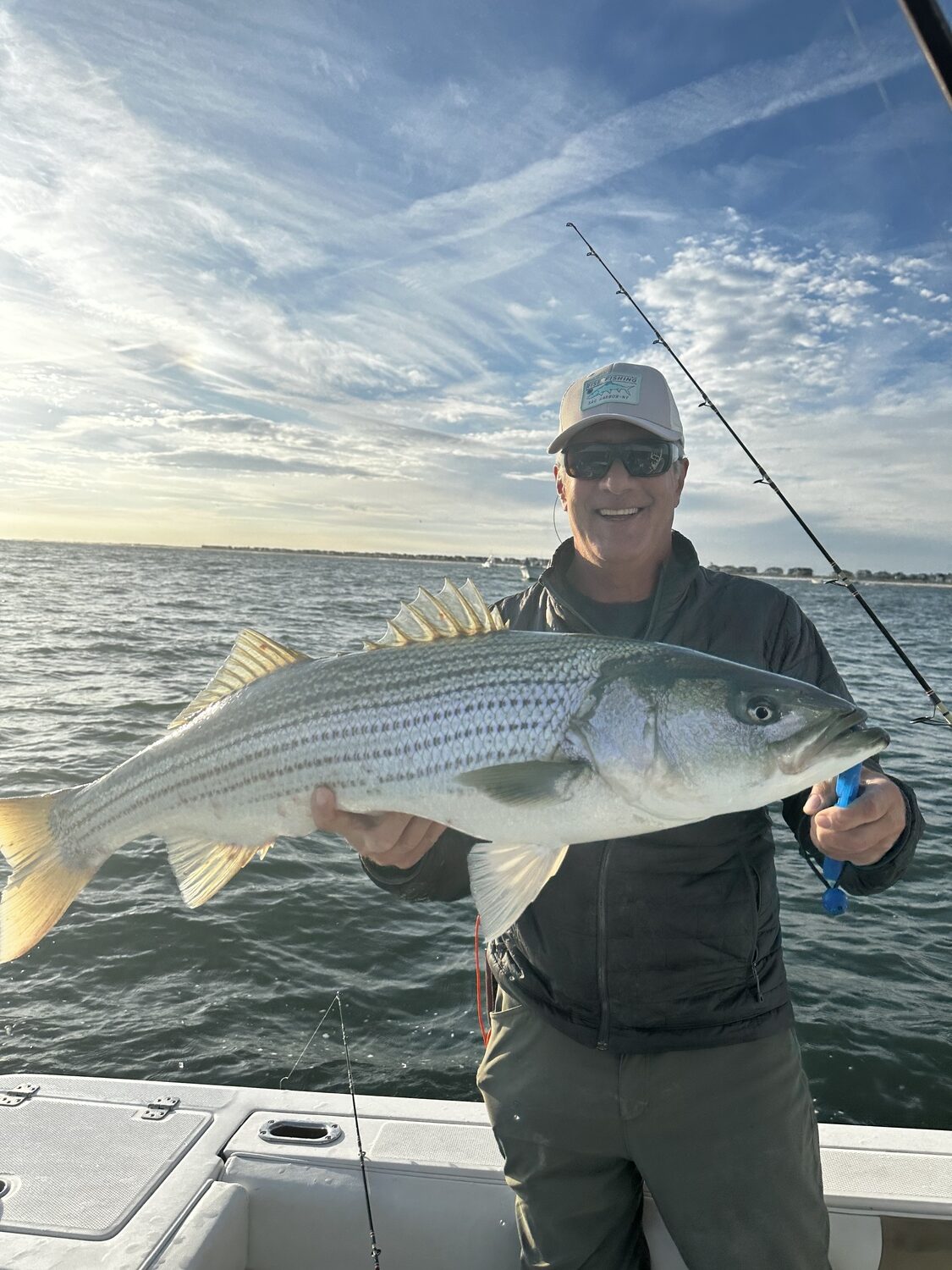
Don Meyer with a nice striped bass caught off the South Fork during the mid-October push of fish past our shores. The mass of striped bass that lives off our coast is steadily diminishing, with little coming down the pike to rebuild the stock, but fisheries managers declined to take steps to reduce the number of fish killed by fishermen next year. MICHAEL DEAN
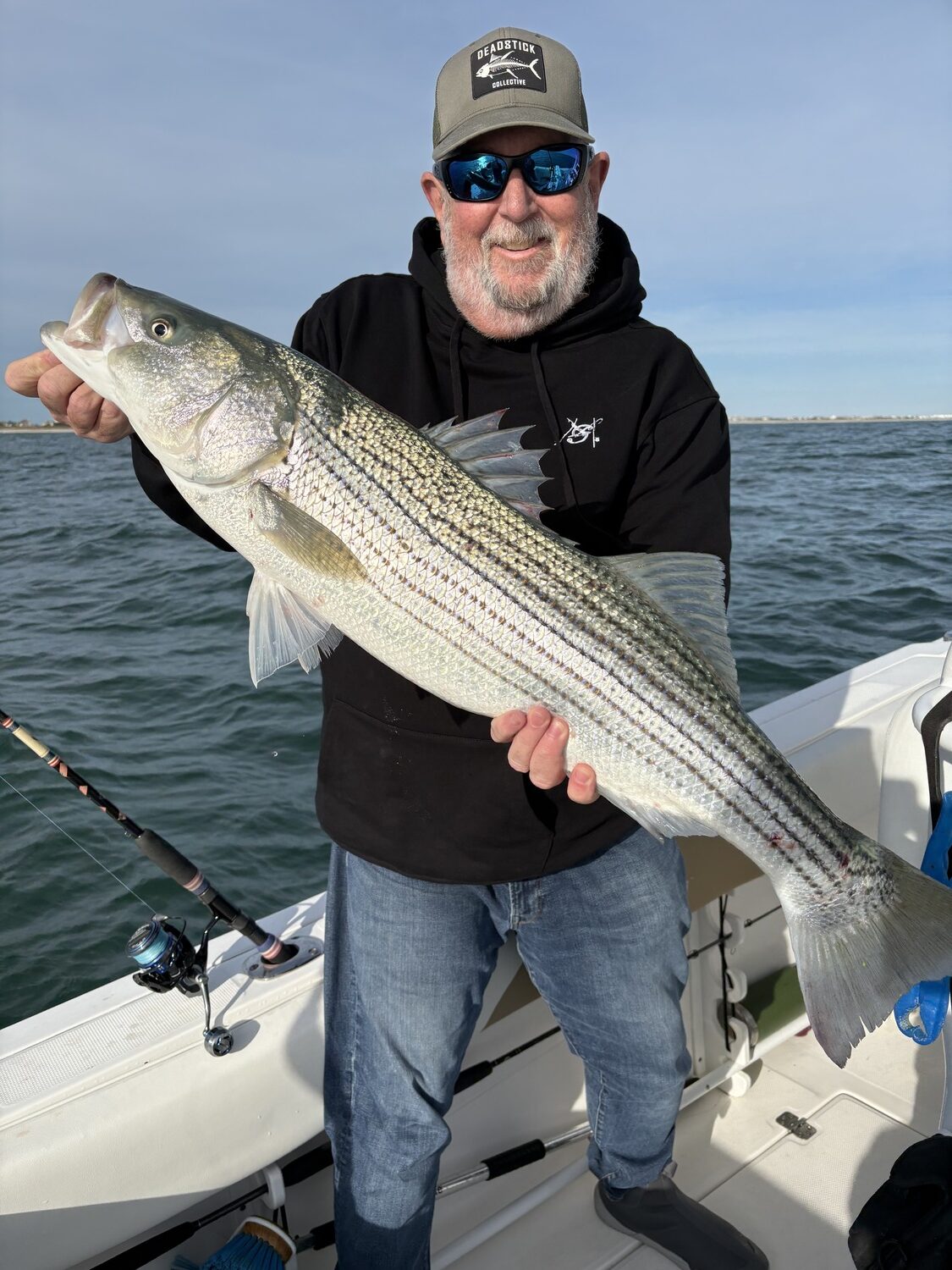
Mike Dean with a nice striped bass during the mid-October push of fish past our shores. The mass of striped bass that lives off our coast is steadily diminishing, with little coming down the pike to rebuild the stock, but fisheries managers declined to take steps to reduce the number of fish killed by fishermen next year. DON MEYER
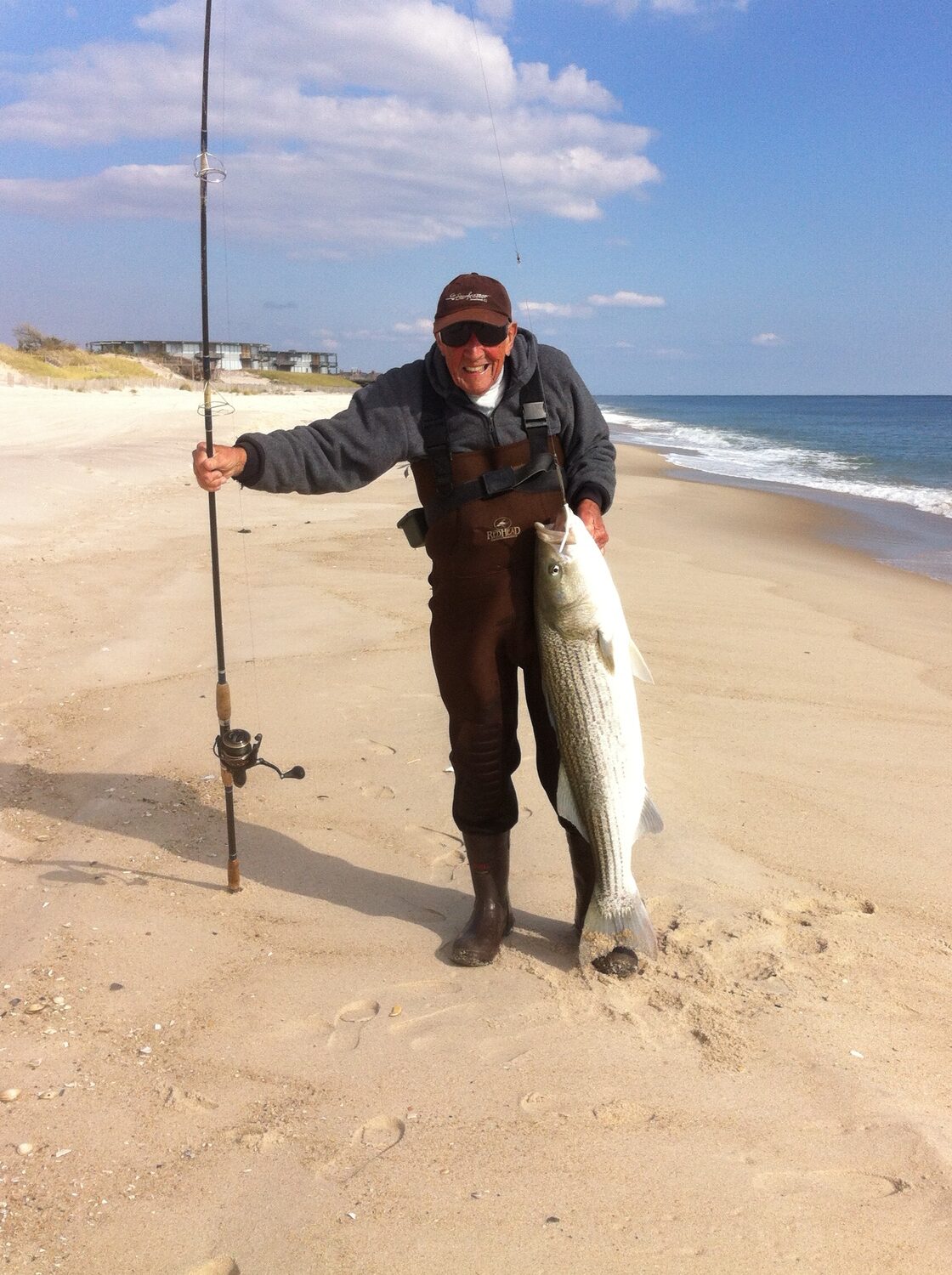
In honor of Veterans Day next week, and the memories of what striped bass fishing around here used to be like, here is a photo of Hampton Bays sharpie, World War II veteran and soon-to-be centenarian John Siebold with a jumbo surf striper he caught in 2014.

The last of the striped bass stock is pushing past us right now. There are a handful of schools of mostly under-slot fish on the move in the ocean off Amagansett and Southampton, and some even smaller up on the North Fork still.
But that is pretty much it in terms of large numbers of fish, it seems. Most of the southern Massachusetts and eastern Rhode Island surfcasting crowd hung up their wet-suits and surf bags this week.
If we are lucky and this week’s gales don’t drive them all out of the area, we may get another week with a reasonable chance at catching fish, and then maybe another week of long-shot scratching for one or two here and there.
But for the most part, it’s going to be another year of the striped bass “run” being over for us here on the East End before Veterans Day. The idea of striper fishing on Thanksgiving weekend, which used to be the peak of the migration, is a thing of the past.
And, yet, the federal fisheries managers in charge of managing striped bass decided last week that nothing needs to be done next year to stanch the decline in striped bass numbers.
We will keep killing striped bass in nets, on the decks of charter and party boats, and on beaches with treble hooks down their gullets.
We will keep killing them nearly year round, especially in November and December, when literally almost the entire stock of fish is crammed into the waters off the single most densely populated area of the entire country.
We will keep killing the adult stripers that we have now, steadily whittling them down, even though we know for a fact that there are hardly any new young ones being added into the population each spring.
We will keep killing them even though it’s been 15 years since the scientists who have spent their careers studying the striped bass stock told the political appointees who set the rules — which in those days allowed every angler to kill two fish per day — that fishing mortality needed to be dialed back. That was in 2011, and they did nothing. They did nothing in 2012 and 2013, 2014, and so on, until 2020.
But the fisheries listened to the cries of fishermen who refuse to admit that fish are in decline. The Atlantic States Marine Fisheries Council voted this past week to leave the striped bass rules status quo.
Yes, the options that the scientists and statisticians gave the ASMFC board were complicated and controversial and offered almost no good choices.
There was the option of harvest closures that would have prevented the keeping of striped bass during certain periods of the year (like November and December, when so many bass are killed by anglers off the Rockaways and New Jersey).
There was the option of “targeting” closures, meaning you wouldn’t even have been allowed to fish for stripers — which all involved agreed would be almost impossible to enforce and would have been crippling to those who serve the surfcasting and light-tackle bass fishing communities.
Basically, there was a rule to piss off almost everyone. So the ASMFC chose to do nothing.
Well, not absolutely nothing. They are going to form a task force to start studying the years-long stretch of spawning failures in the Chesapeake Bay. Certainly, after six straight failed spawns, this is a laudable step to take, were it not something one might say they should have been doing for quite a while already.
But, also, that is a long, long, long-term thing. Studying that kind of phenomenon will take years, identifying some “reason” for the failures will take years more, and reacting to it will likely take years more — if there even is something that can be done (since it seems that the real problem is the lack of cold winters over the last decade, which isn’t something anyone can really do anything about in a time frame of less than several decades).
All I can say about the do-nothing choice of the ASMFC is that it’s disappointing, and the only people I know or have encountered who don’t think something drastic has to be done soon to help striped bass are people who make money off being allowed to kill as many striped bass as possible.
There are tens of thousands of surfcasters and light-tackle striper fishermen who would fish straight through a complete harvest closure without even a second thought of skipping a single day. Many of us wouldn’t know the difference, frankly. And there are hundreds of fishing guides whose businesses would thrive amid a complete year-round harvest closure — but whose livelihoods face a truly dire threat if the striper stock dwindles any further.
Next year was a ripe opportunity. The 2017 and 2018 year classes are reaching sexual maturity in the next couple of years, but that means they are also growing into the slot and will suffer the brunt of the harvests on the ocean side. (The Chesapeake Bay area’s disgusting small-fish harvest allowances take a big chunk out of every year’s stock long before they ever have a chance to help replace themselves.)
Starting to lessen that damage would have been a big boost to a population of fish that currently has a large cohort of very big, very old fish that are steadily dwindling and are only going to be doing so faster and faster with each passing season.
There are still a lot of striped bass out there — at least compared to the darkest days of the overfishing disaster in the 1980s (again, money completely blinded everyone to common sense). It is not too late to at least stabilize the patient and buy some time and see if the fish can’t get back on their feet … er, fins.
But we have to do SOMETHING.
Catch ’em up. See you out there.
More Posts from Michael Wright


