


 3 Photos
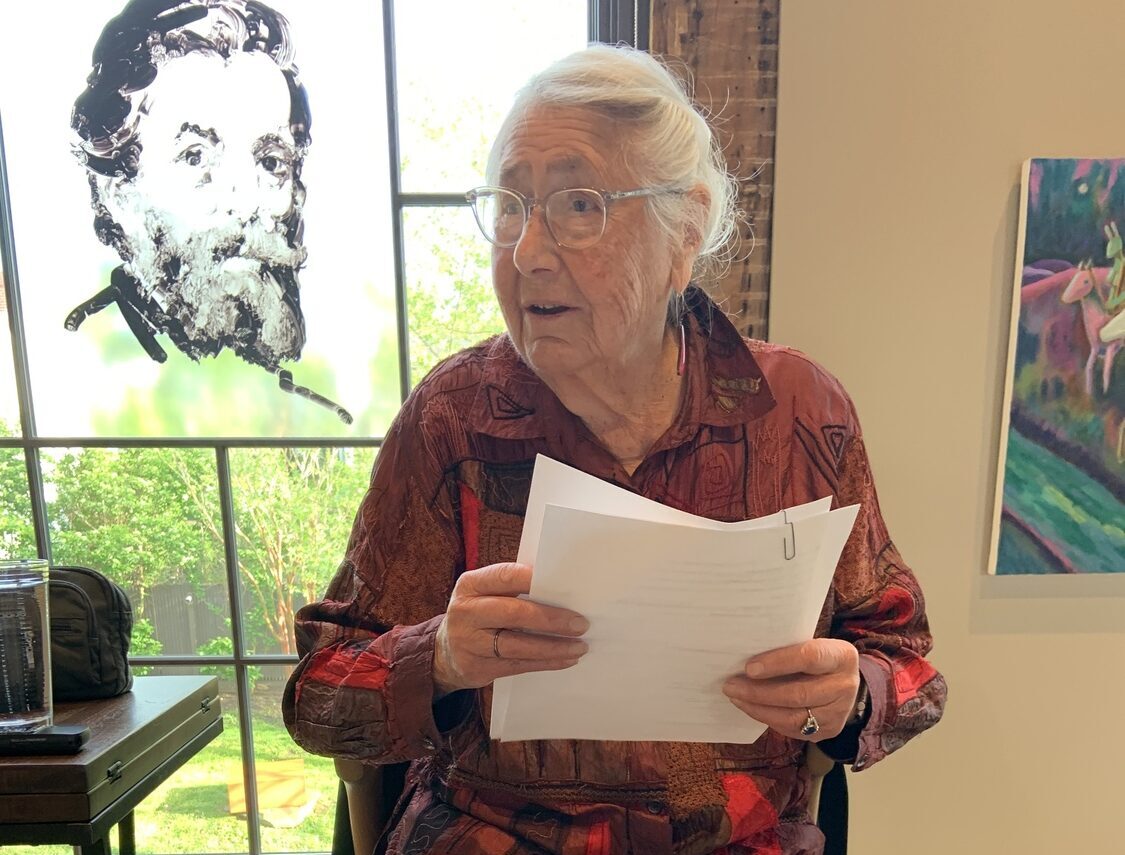
Nada Barry offered highlights of her life's story at the "Knowledge Friday" event at The Church on May 2. STEPHEN J. KOTZ
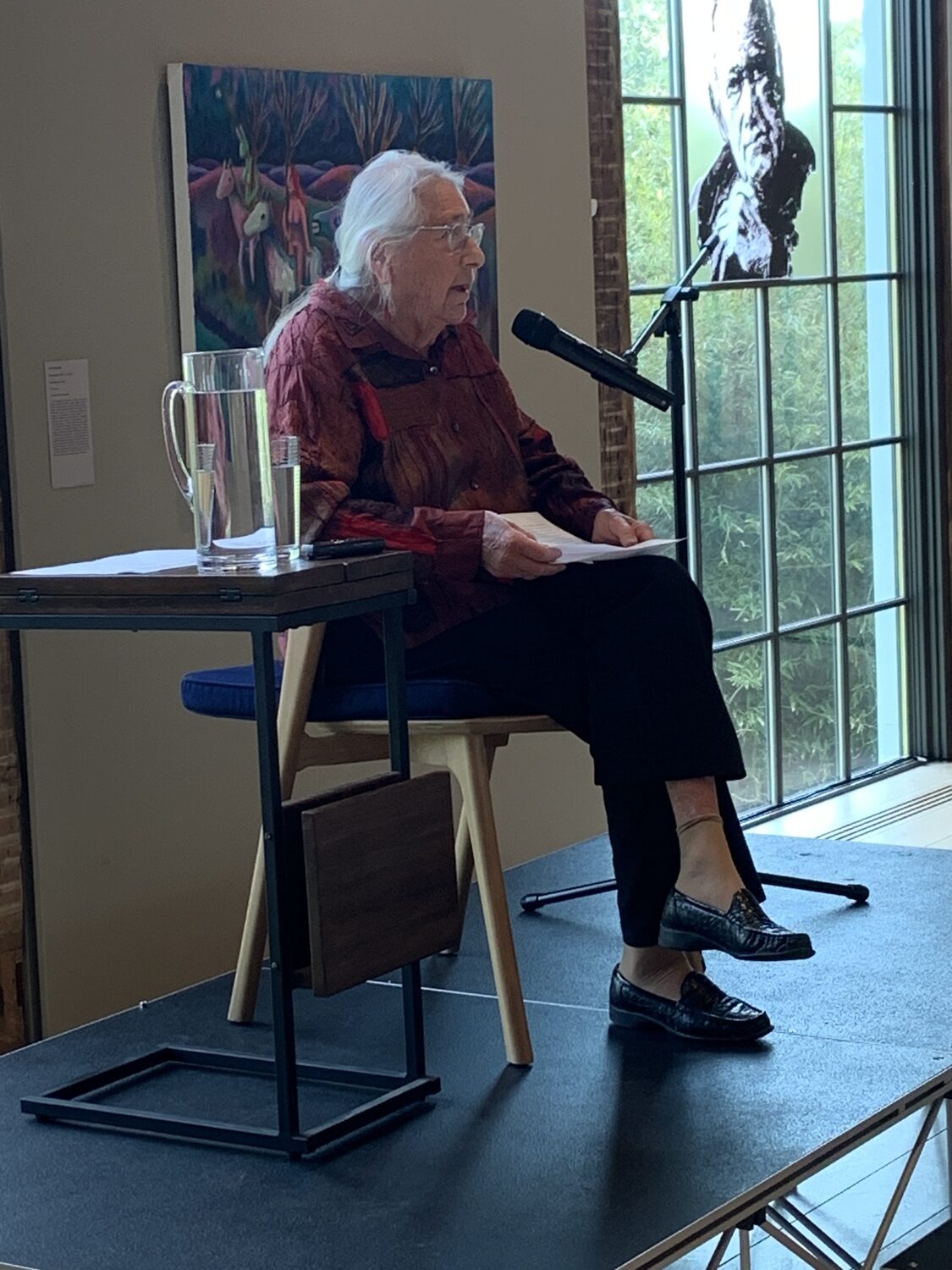
Nada Barry offered highlights of her life's story at the "Knowledge Friday" event at The Church on May 2. STEPHEN J. KOTZ
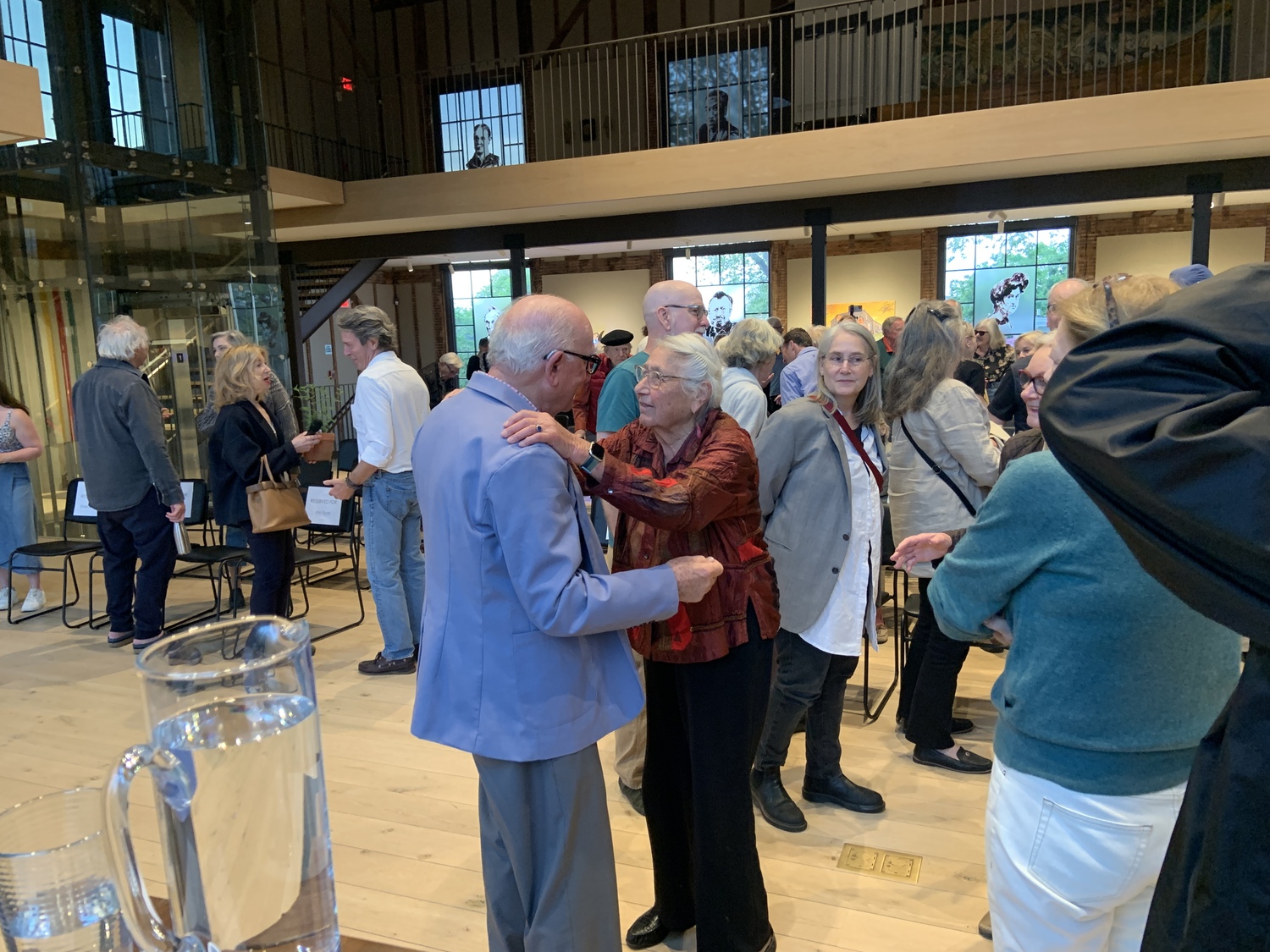
Nada Barry greeted well-wishers, including Jack Tagliasacchi, the owner of Il Capuccino restaurant in Sag Harbor, after her talk at The Church. STEPHEN J. KOTZ
After Nada Barry had wowed the audience at last week’s “Knowledge Friday” talk at The Church in Sag Harbor, one attendee could be heard exclaiming, “What a life!” as he left the building.
What a life, indeed.
Moments after being introduced by The Church’s co-founder April Gornik, the 94-year-old Barry recounted her life’s story by launching into an hourlong soliloquy, in which she drew on memories large and small, from her early childhood in England, to her move to the United States on the eve of World War II, and, finally, to her arrival in Sag Harbor.
Barry, of course, is well-known in the village, where she runs the Wharf Shop gift shop with her daughter, Gwen Waddington; is a regular attendee at village meetings; and has played a major role in both the business community and in organizing the Sag Harbor Youth Committee.
She told a capacity audience of familiar faces from within and near the village that when she was born on December 12, 1930, her father, a journalist who later served with the Labor Party in the House of Commons, “was so inebriated” when he went to register her birth that he forgot the “i” in her first name. “That’s how I became Nada instead of Nadia,” she explained.
Barry described her mother, from a German Jewish family that had settled in the United States, as “a complete renegade,” who was a pacifist and met her father “at the feet of George Bernard Shaw” at a meeting of the socialist Fabian Society in London during the 1920s.
Barry described a happy childhood that included being taken outside to watch the last time lamplighters would turn on the gas streetlights in her neighborhood before they would be replaced with electric lights, and riding horses at her family’s country home.
Things changed in the late 1930s with the rise of Adolf Hitler and the threat of war. “We were fitted for gas masks,” she said. “At that point, my American grandfather insisted that we come to America.”
In New York, Barry said she was fortunate to live in MacDougal Sullivan Gardens, a historic district in Greenwich Village, where the block’s houses open up on a community garden. “This was the most marvelous place for a child in New York City to have grown up,” she said.
She attended the progressive Little Red Schoolhouse for three years before transferring to a public school on Hudson Street, where she was introduced to a seedier side of New York, including the presence of organized crime in her neighborhood.
Barry’s mother was the head of the War Resister League during World War II, and Barry said the family’s phone was tapped, although she said the government’s eavesdroppers most likely had to settle for listening in on the conversations of her older brother and his girlfriend.
During the war years, Barry said she either attended summer camps or worked at them, including Anita Zahn’s School of Art in East Hampton, the Shaker Village camp in New Lebanon, New York, and Camp Blue Bay in Bear Mountain, New York, where her mother was a psychiatric social worker.
After the war, Barry enrolled at Mills College in California because it had “the best child development department in the country, something I was interested in,” but later she transferred to Barnard College.
After graduating, Barry took advantage of inexpensive fares on the Vollendam, a steamship that took her to Europe, so she could visit her father, who was serving in Parliament at the time. He asked her to wait for him outside, and after what seemed like an eternity, she was startled to find herself face to face with Winston Churchill, who was in between terms as prime minister.
On her return trip, Barry met her future husband, Jacob Ebeling-Koning, whom she married at Sag Harbor’s Old Whalers’ Church in 1952.
The couple later moved to Aruba, which Barry described as barely developed at that time. Barry, who described herself as a good athlete, won an islandwide tennis tournament and was then asked to enter a similar tournament on Curacao, where she won as well.
After divorcing her husband, Barry moved to the Sag Harbor area permanently in 1962. She met Bob Barry, an owner of the Baron’s Cove motel, restaurant and marina, who knocked on her door to ask her if she would like to go to the car races in Bridgehampton. Even though she had no interest, she accepted his invitation — and later married him, and joined him in the workplace.
Barry recounted a story of how her oldest daughter, Natasha, went out fishing with friends one day and got lost in a heavy fog. Thinking they were following the Montauk Lighthouse’s foghorn, the group was actually following a Polish freighter that ran aground in Long Island Sound.
The crew of the freighter hoisted the fishing boat on deck. It took hours to find them, and while Barry waited at home sick with worry, she said her daughter and her friends “were being wined and dined” on the ship.
The novelist John Steinbeck was good friends with Bob Barry. She remembered how during an early Whalers’ Festival, a young woman talked her way onto the boat he was on at the dock and asked him, “Mr. Hemingway, can you sign this?” Steinbeck agreed, later telling Barry that he had signed the woman’s autograph as requested: “Ernest Hemingway.”
She also recounted how she baked Steinbeck a birthday cake on what would be his last birthday.
In the 1960s, Barry, along with other parents who were dissatisfied with the offerings of local public schools, founded the Hampton Day School in Bridgehampton. After opening her store in 1968, she joined several other business owners to form the Merchants Association of Sag Harbor, the village’s first chamber of commerce.
While married to Bob Barry, she recalled that the couple took many adventurous trips during the off-season, including a ski trip to Vermont in a small plane owned by their friend, Denny Holder and his wife. Because Holder did not have a pilot’s license, Bob Barry flew the plane, but when the group was preparing to return home, the plane’s wing hit a snowbank. They took off anyway and had the wing repaired after they returned to East Hampton.
Barry also recalled sailing in the Caribbean on a boat owned by friends, which was struck by a rogue wave. Barry said she clung to the mast for dear life, but fortunately the boat did not capsize.
Barry continues to travel and said she recently sailed to the Caribbean aboard the Queen Mary and has been to China, Cambodia, and Vietnam, among other countries.
Barry, who stays in shape by swimming, said she enjoys keeping active in the community.
She said she is a member of both the League of Women Voters and the Chamber of Commerce and had lived through a dozen mayors during her time in the village.
Asked her favorite accomplishments, she cited the youth committee, which, she said, had been formed to seek more meaningful activities for Sag Harbor youth. The committee was so successful, it was disbanded about five years ago, she said.
Barry also said she was proud of the number of young people who got their introduction to the workforce by working part-time jobs at her store.
“We trained almost 100 students for their first job at the Wharf Shop,” she said. “We have had so many come back to thank us and bring their children in.”
Besides her daughters Natasha and Gwen, Barry has two sons, Derek and Trebor, whose name — Robert spelled backward — delighted Steinbeck.
She said she also has five grandchildren and one 2-year-old great-grandchild who is teaching her “a refresher course in child development.”


 Stephen J. Kotz on May 7, 2025