


 2 Photos
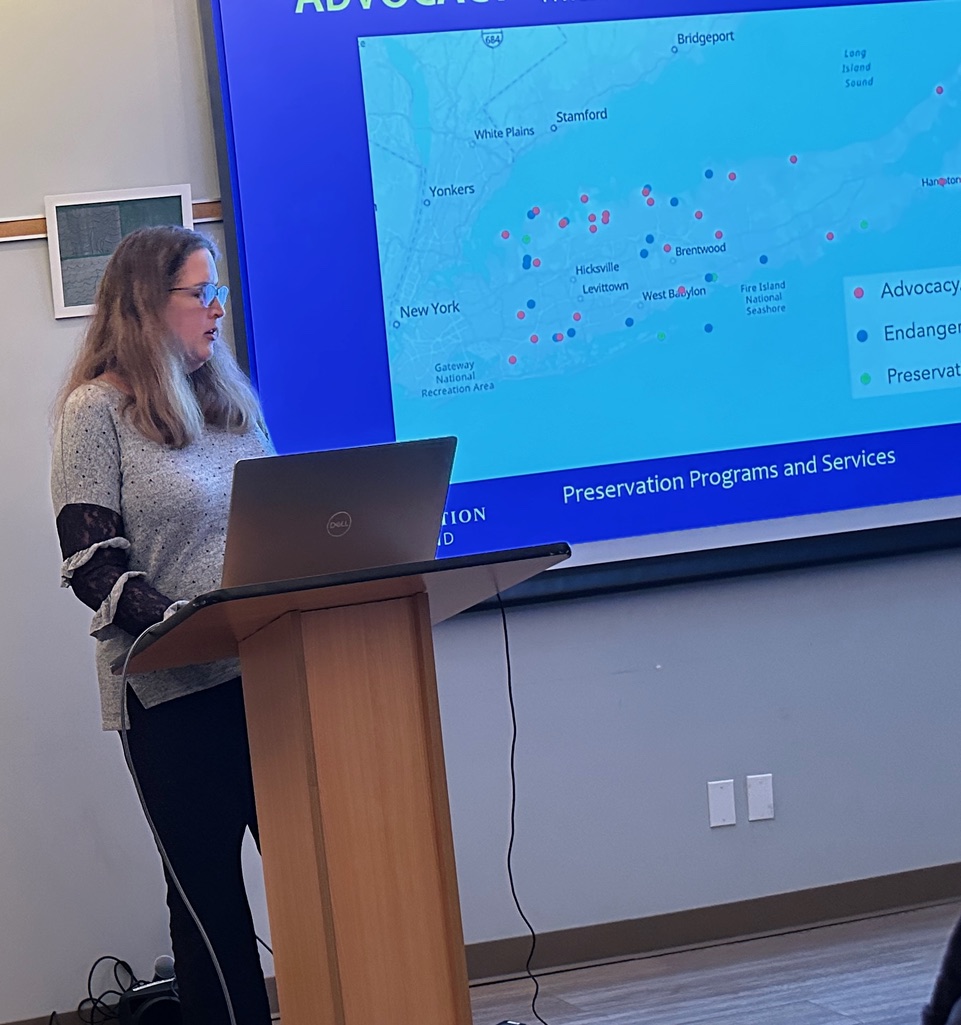
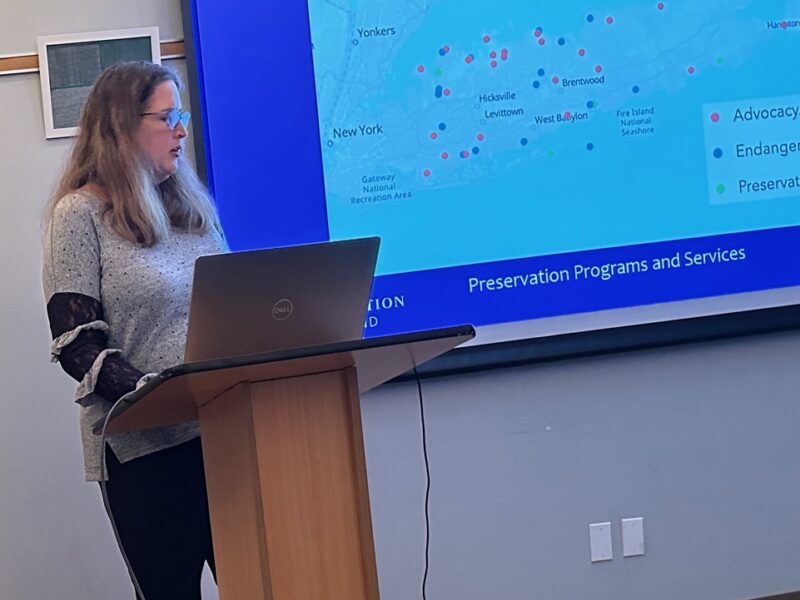
Tara Cubie, director of design at Preservation Long Island in Cold Spring Harbor, speaks on historic preservation myths and truths. MARK MACNISH
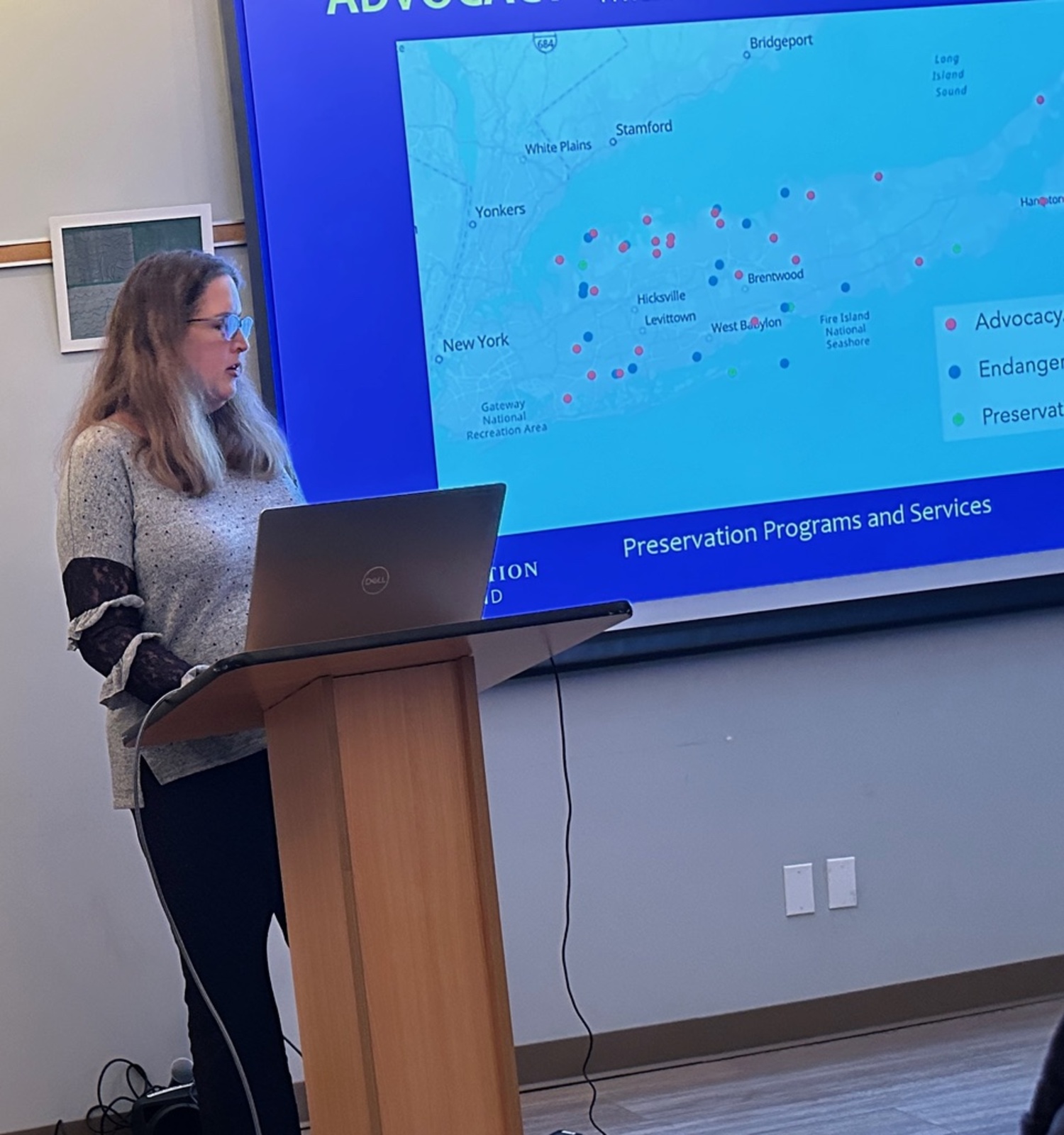
Tara Cubie, director of design at Preservation Long Island in Cold Spring Harbor, speaks on historic preservation myths and truths. MARK MACNISH

With a history dating back to the 1640s, the East End still harbors vestiges of its past — in the form of buildings from that era, and later, that remain in use today. There is an awareness of the history of this place, due in no small part to the existing architecture covering every conceivable style over the last 370 years.
But despite this legacy, there is often distrust about historic preservation, or misinformation that makes people wary about supporting it.
Tara Cubie, who works as the preservation director at Preservation Long Island, a not-for-profit in Cold Spring Harbor, spoke to a small but engaged audience about historic preservation myths and truths at Cutchogue New Suffolk Library.
She has over 20 years of experience in the field, as well as in urban planning, and provides advisory support for technical services at the organization, which owns and maintains three landmarked properties: the Customs House in Sag Harbor, the Old Methodist Church in Cold Spring Harbor and the 1767 Joseph Lloyd Manor in Huntington.
Every year, Preservation Long Island, which is also engaged in advocacy and advisory services, publishes a list of endangered places and gives awards for noteworthy preservation and restoration projects. Last month, Cubie shared her own expertise on the subject, helping to bust myths that perhaps hold some projects back.
Myth #1: Historic buildings
can’t be altered or demolished.
False. Just because a building is designated historic doesn’t mean that it can’t be demolished.
In Southampton alone, how many times have we seen middle-of-the-night demolitions and fines that simply amount to the cost of doing business? However, with a strong local code, historic properties can be protected against unlawful demolitions. Just 39 municipalities on Long Island have landmark ordinances, while 71 do not. Shelter Island, for example, has no landmarks law despite having one of the most significant National Register historic districts in New York State with the former Methodist colony of Shelter Island Heights.
When a municipality becomes a Certified Local Government — an initiative run by the National Park Service that directly links a community’s historic preservation goals to state and federal preservation programs — property owners can apply for grants, technical help and funding for historic buildings. Both the Southampton Village and Sag Harbor historic districts have CLG designation. In CLG districts, building surveys can be conducted and the districts are required to have a preservation commission.
Myth #2: A preservation commission designation is solely for exteriors unless the interiors are landmarked.
The Model Preservation Law serves as a guide for best practices. It must have clear guidelines so there is no unfair burden on the property owners. Only a commission can allow for changes, not other entities. Regulations may differ between districts. For example, in Southold, the preservation commission only has jurisdiction on what can be seen from the street. In Greenport, however, the commission still has jurisdiction even when the building can’t be seen from the street.
As a resource for homeowners and commissions, the Secretary of the Interior’s Standards for the Treatment of Historic Properties provides guidelines for renovations, restorations and additions. In fact, additions should differentiate themselves from the original structure, but still be compatible with it.
Myth #3: Property values
will be lower in a historic district.
Just the opposite is true. Being in a historic district offers security for investment in a house. In a historic district, a building can appreciate anywhere between 5 and 35 percent per decade and attract more visitors. Median values of landmarked properties are more valuable than those that aren’t.
Myth #4: With a National Register Historic District, there’s either plenty of free money available, or no money for historic preservation.
According to Cubie, if an individual house or district is in the census tract, then monies for preservation work would be available. Most of the North Fork falls in the census tract. Businesses there can receive both state and local tax credits for preservation work.
On a separate note, barns built prior to 1946 are also eligible for preservation tax credits.
Myth #5: Historic buildings
can’t be energy efficient.
Well, that’s a real whopper. Of course they can be retrofitted to meet current-day energy codes, especially after an energy audit. In many instances, they can significantly outperform minimum code requirements.
Preservation addresses climate change, Cubie explained. The idea of renovating versus building anew saves valuable resources, the expense of demolition labor and the cost of dumping debris in a landfill. It really is a forward-thinking movement, she said.
More Posts from Anne Surchin


