



 1 Video & 18 Photos
Local Matters: Southampton Village | Express Sessions

The panel at the October 9 Express Sessions.

Audience member Lynn Arthur. DANA SHAW

Panelist Janice Scherer, Government Advisor, Lake Agawam Conservancy, at the "Local Matters: Southampton Village" Session on October 9. DANA SHAW

Panelist Jay Diesing of the Southampton Association. DANA SHAW

Panelist Southampton Village Police Chief Sue Hurteau. DANA SHAW
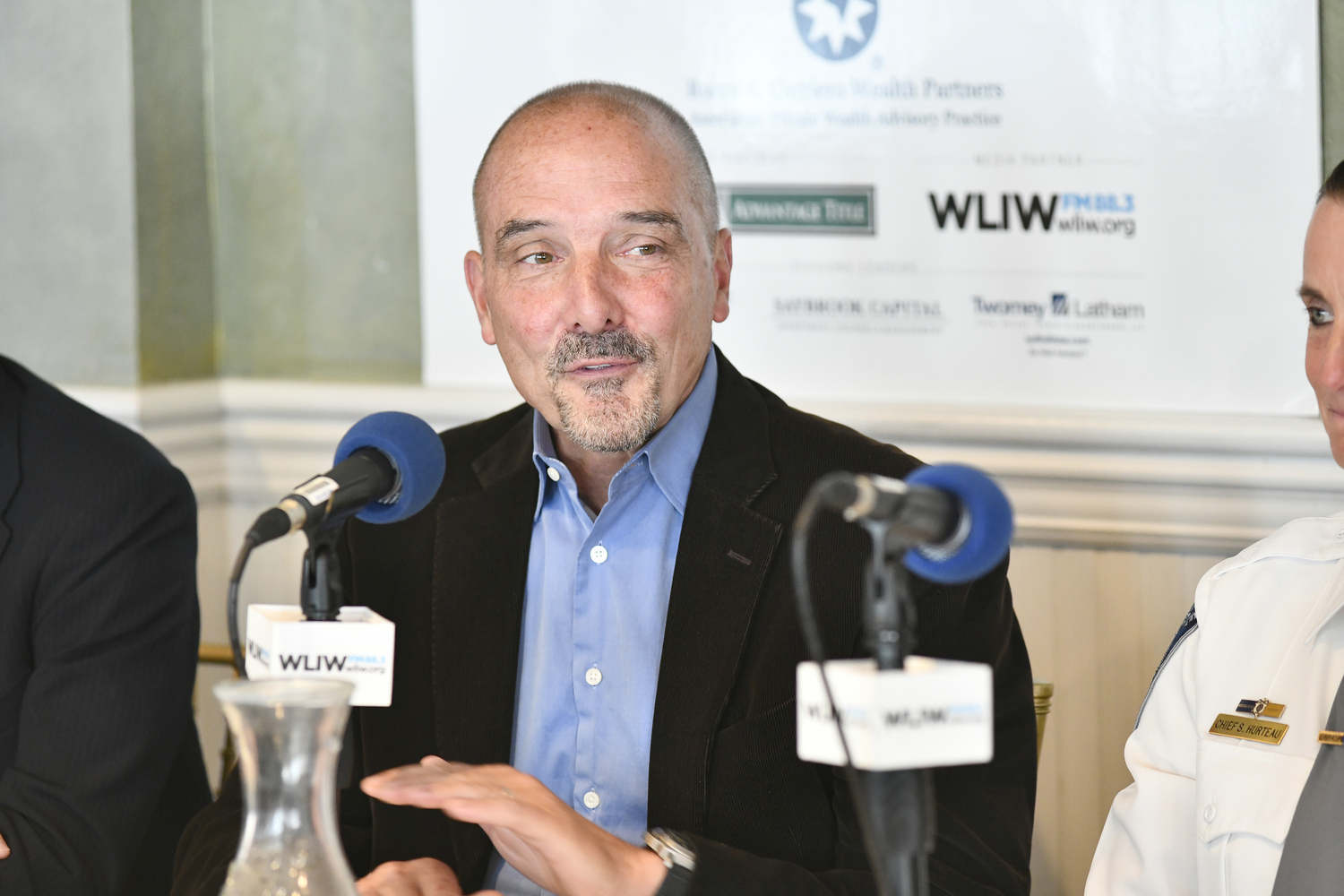
Panelist and Southampton Village Trustee Rob Coburn. DANA SHAW
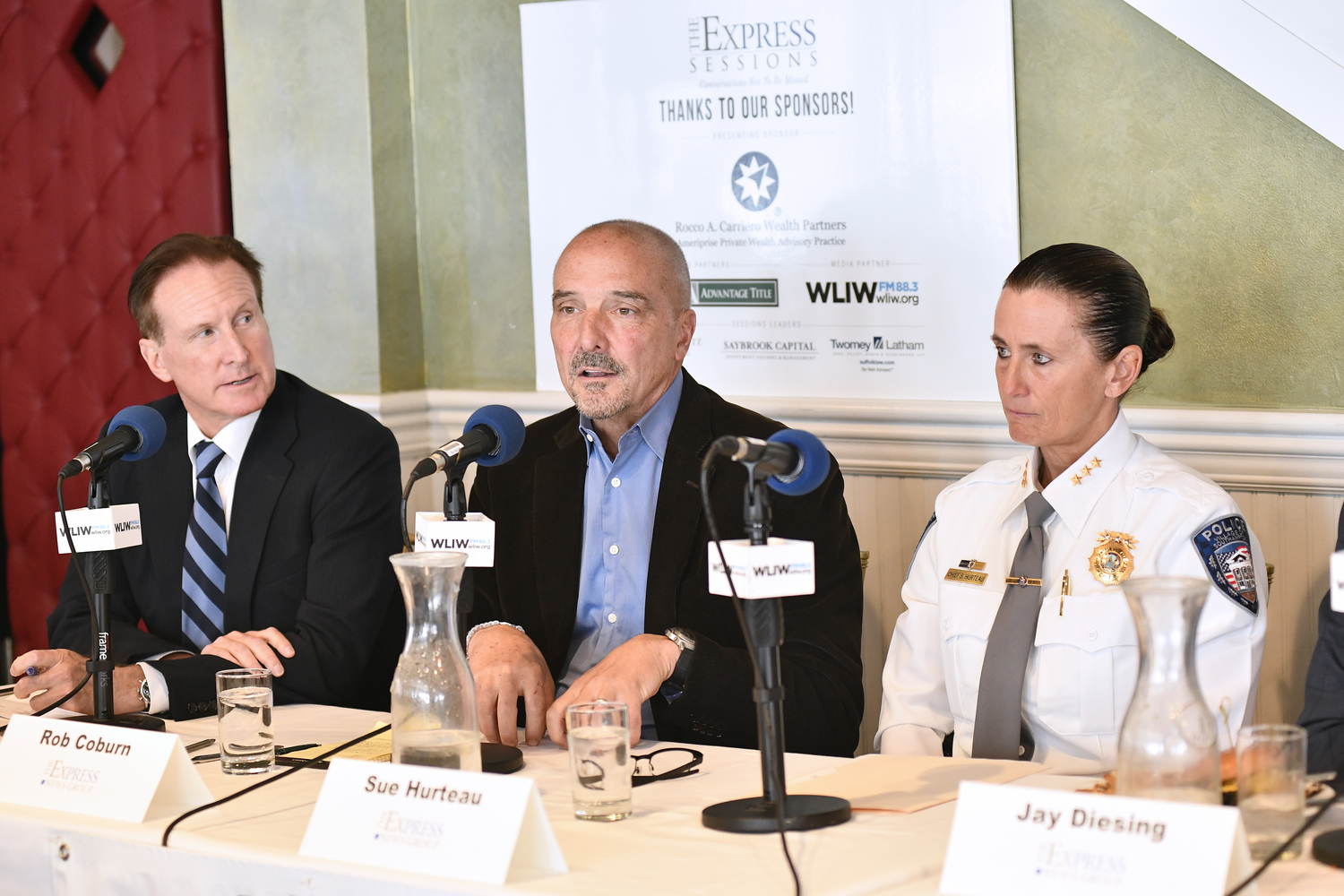
Panelists Southampton Village Mayor Bill Manger, Southampton Village Trustee Rob Coburn and Southampton Village Police Chief Sue Hurteau. DANA SHAW

Panelist Southampton Village Mayor Bill manger. DANA SHAW

Panelist Southampton Village Police Chief Sue Hurteau. DANA SHAW
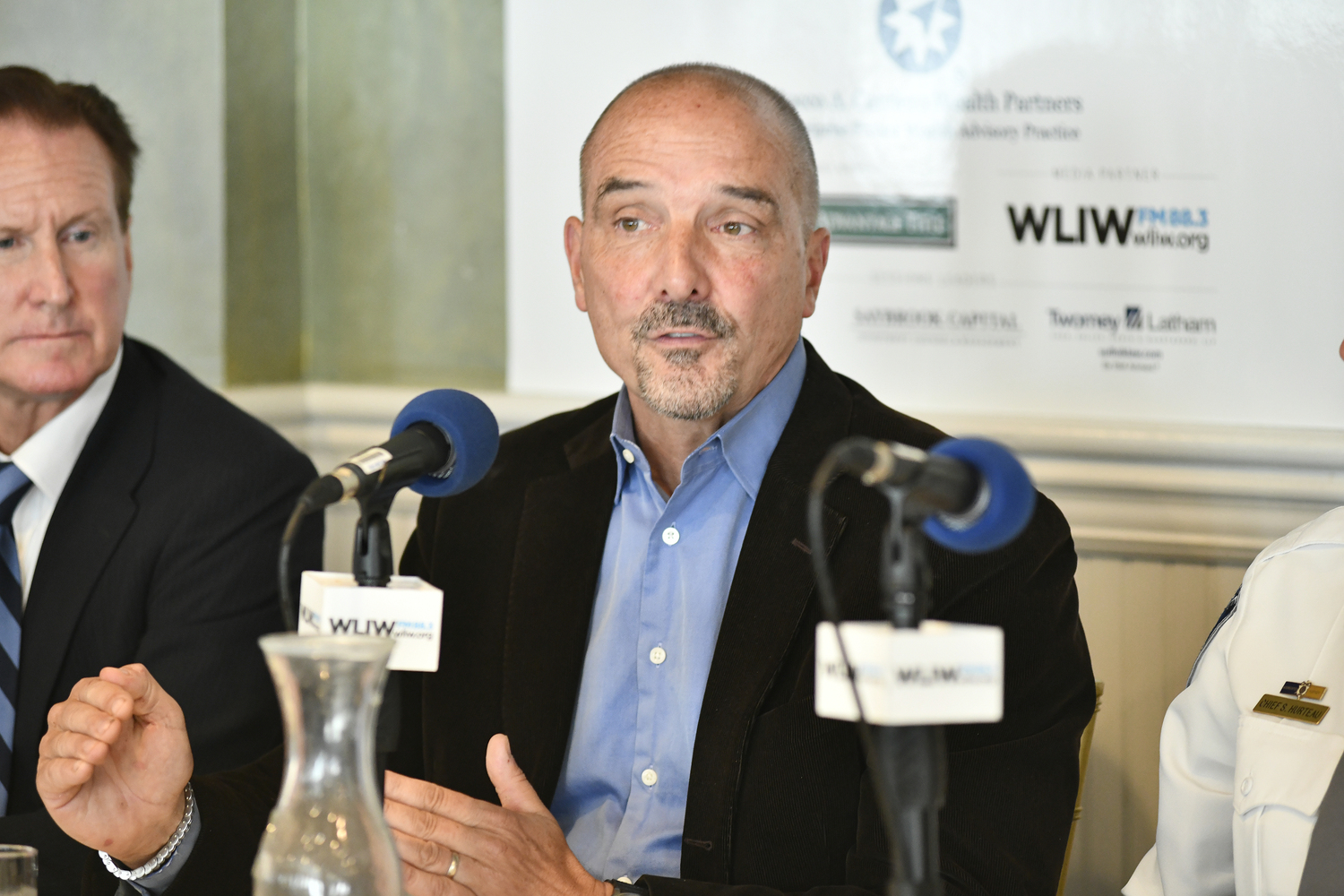
Panelist Southampton Village Trustee Rob Coburn. DANA SHAW
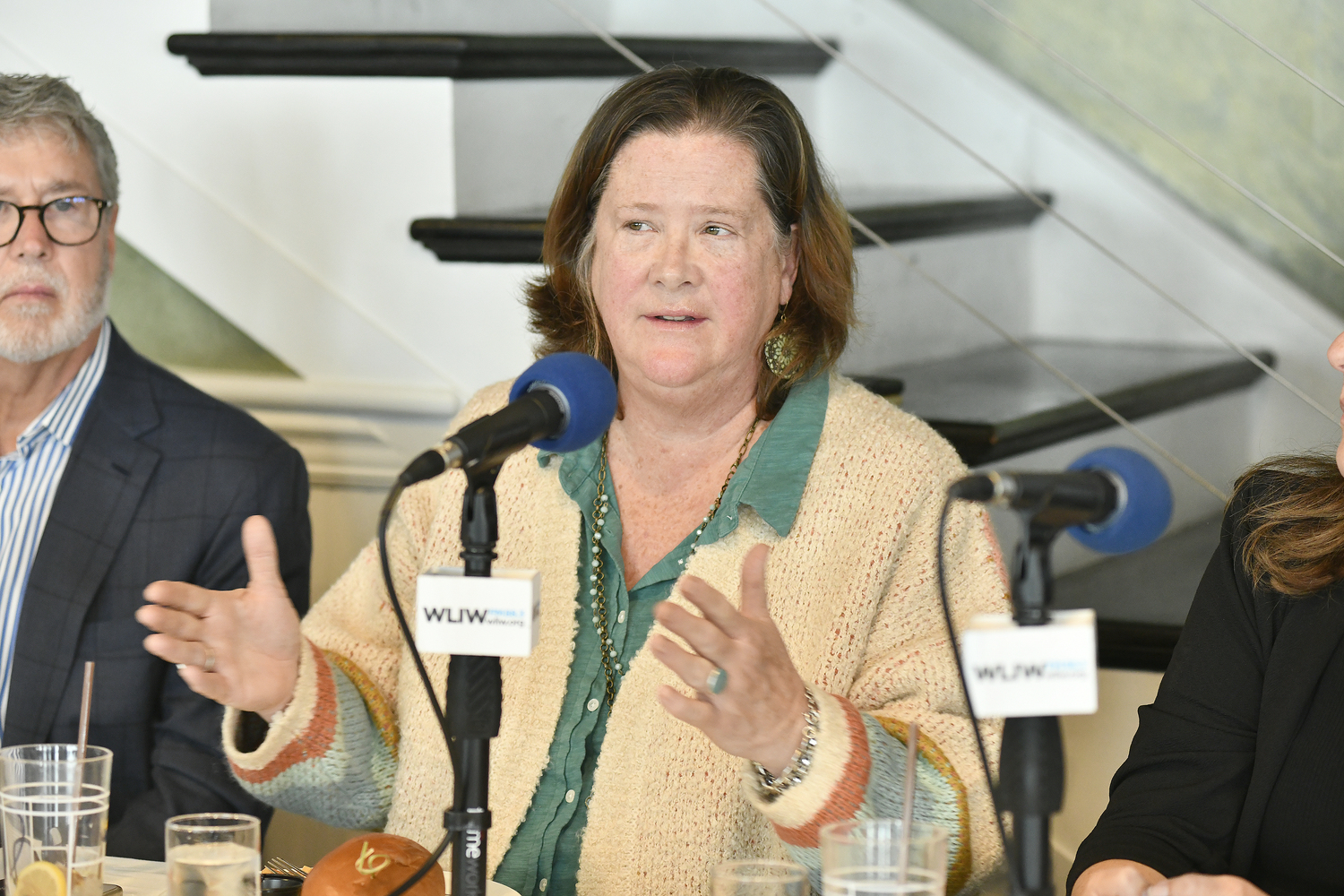
Panelist Erin Meaney, owner of Topiaire Flower Shop on Jobs Lane in Southampton Village. DANA SHAW
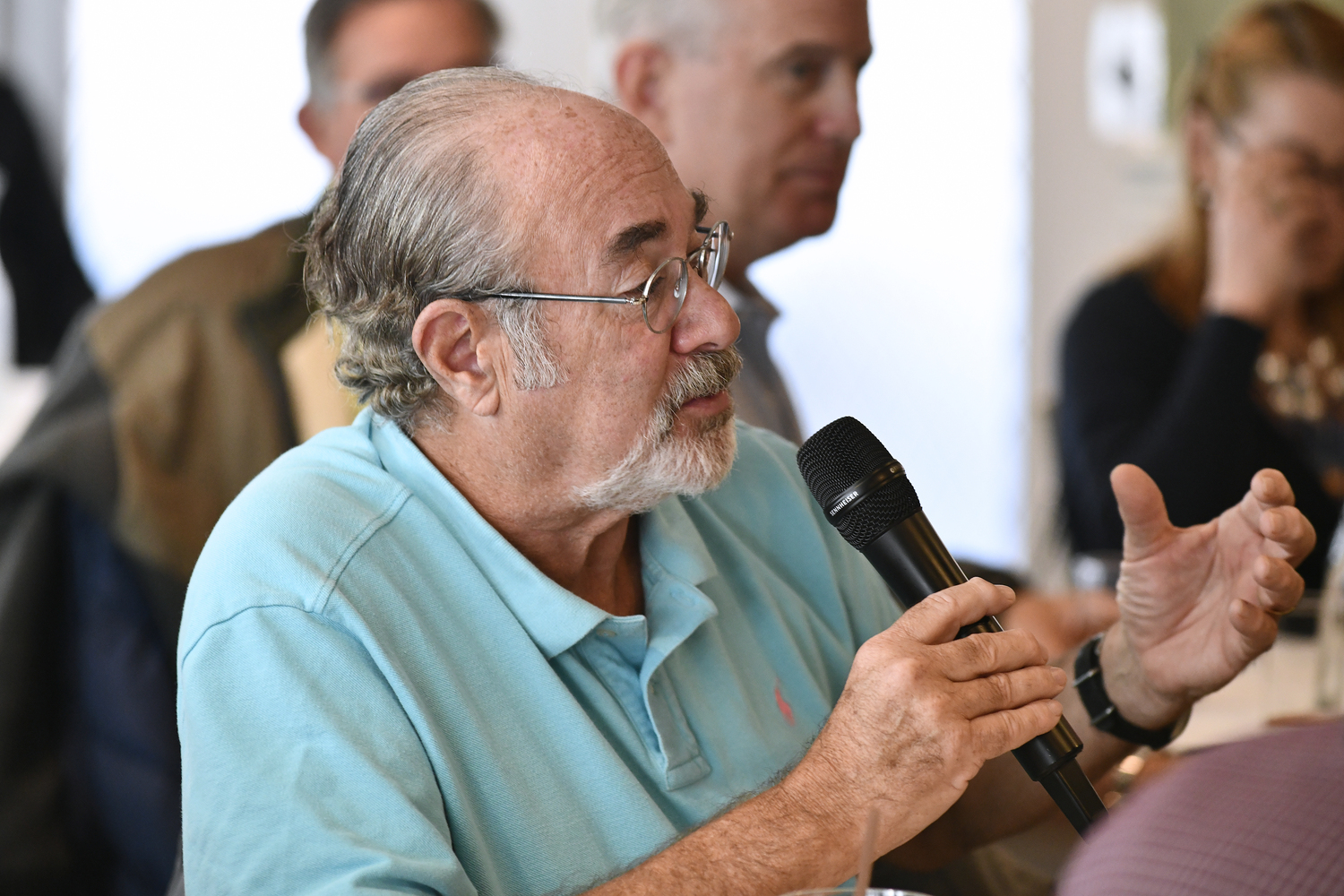
Audience member Michael Zinder asks a question.

Panelist Jay Diesing of the Southampton Association. DANA SHAW

Panelist Janice Scherer, Government Advisor, Lake Agawam Conservancy. DANA SHAW

Audience member Brian Tymann. DANA SHAW

Jesse Matsuoka
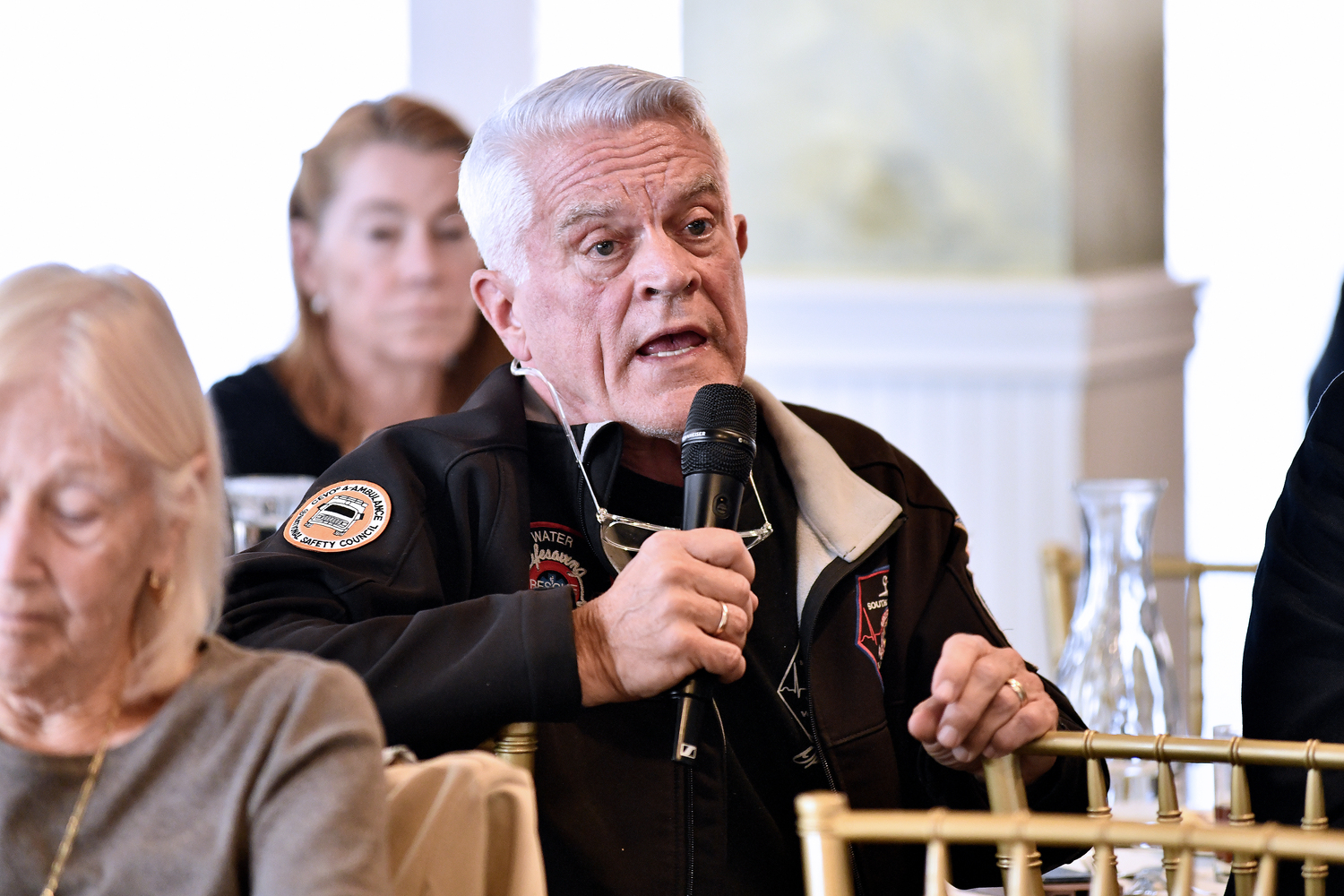
Jimmy Mack asks a question.
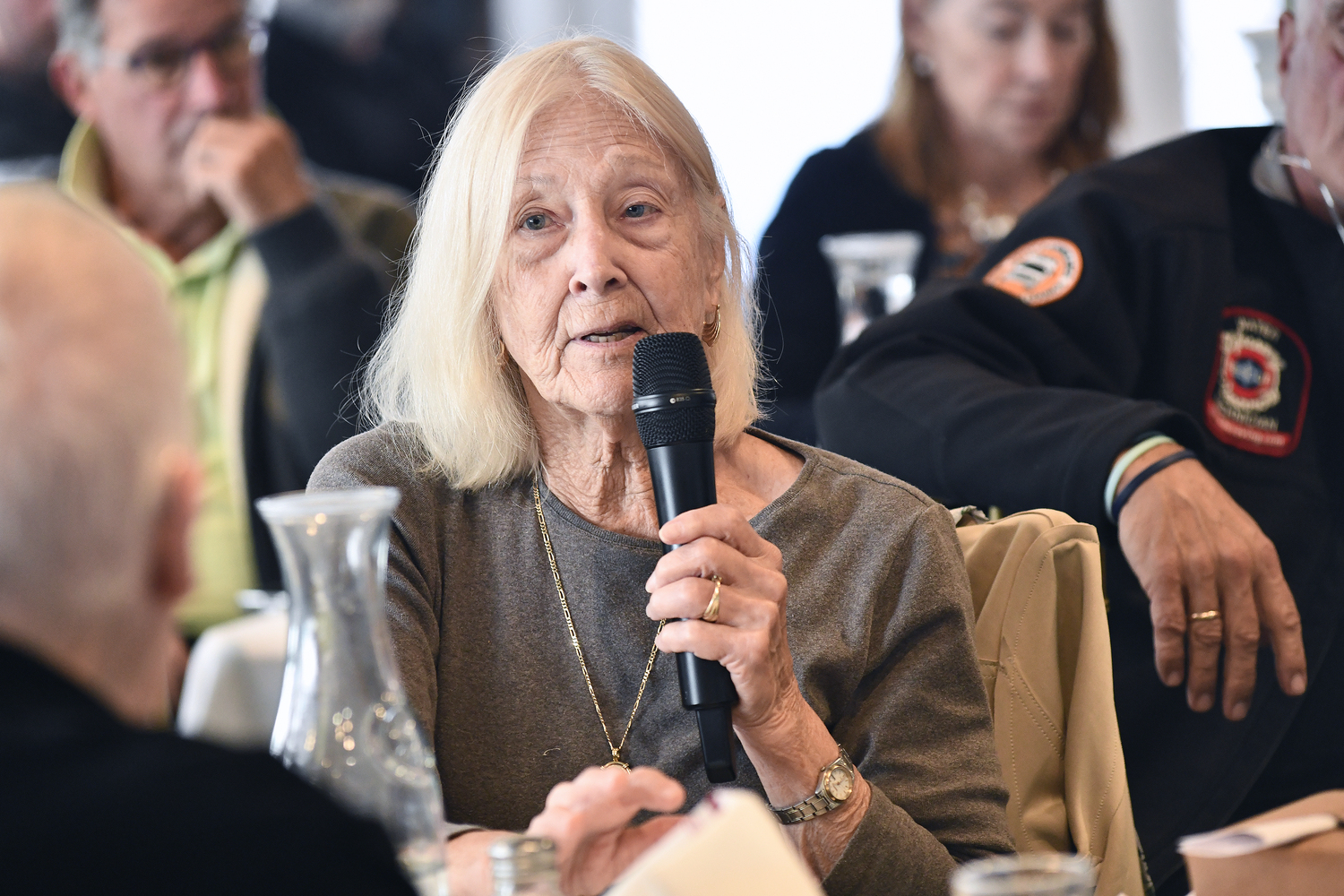
Barbara Fair DANA SHAW
On the surface, creating a sewer district, providing more affordable and workforce housing, and easing traffic congestion might seem like three distinct problems that require distinct, bespoke solutions from a community and its leaders.
Over the last few years in Southampton Village, it has become abundantly clear that those three problems are inextricably linked, and none of them can be solved until they’re all solved.
That dynamic was at the heart of the robust Express Sessions conversation at Union Burger Bar in Bowden Square on October 9.
It was the first of a series of five special Express Sessions events titled “Local Matters,” with Tuesday focusing on Southampton Village and the issues that are important to its residents. Sessions events with the same format will take place in Sag Harbor, Hampton Bays, Westhampton Beach and East Hampton over the next few months.
Last week’s panel included Southampton Village Mayor Bill Manger, Southampton Village Trustee Rob Coburn and Southampton Village Police Chief Suzanne Hurteau, along with Jay Diesing, head of the Southampton Association, Erin Meaney, a longtime Southampton Village resident and owner of Topiaire Flower Shop on Jobs Lane, and Janice Scherer, planning and development administrator for the Town of Southampton, but wearing her hat as government advisor for the Lake Agawam Conservancy.
The panelists have different perspectives, but all of them seemed to agree that the interrelated nature of the problems, and the fact that they did not pop up overnight, means they won’t be easy to solve, and that both patience and innovative approaches will be necessary.
“We failed to realize that the community was being gutted from the inside out,” Coburn said. “In 30-plus years, we’ve lost 20,000-plus people who used to live and work east of the canal. And most, if not all, of those jobs still exist. And we’ve done some job growth. So, that drives traffic, and it drives challenges for businesses in the offseason. So I’m glad we’re going at these issues as an integrated group.”
Manger spoke about the many different approaches the village has taken thus far under his leadership to try and alleviate what seems to be the main and most stubbornly persistent symptom of the overall problem for residents — traffic — from trying various pilot programs that attempt to encourage motorists to stay off residential streets, to lobbying the county to revive a pilot program on County Road 39 that was met with praise last spring. Bigger and loftier long-term solutions have been thrown out as well, such as the construction of a bypass highway for commuters, and relying more on mass transit, like the Long Island Rail Road.
But Diesing pointed out that simply adding another roadway won’t necessarily solve the problem, and could, in fact, exacerbate it.
“I think the basic problem is housing,” he said. “If we build a highway that can bring more people out here, guess what’s going to happen? More people are going to come, and we’re not going to have any additional housing.
“I think what we have to do is become a more sustainable community,” he continued. “Recognizing that sustainability includes the human resources, not just natural resources. I think that the housing component really is the critical symptom that we have to address.”
Just like the traffic woes, the housing situation is nuanced and not easy to address.
Many workforce housing projects are stymied by residents themselves, who, when they discover that a piece of land near their home or neighborhood has been chosen as a site for workforce or affordable housing, often react negatively, expressing that they don’t want it near where they live — in other words, NIMBY-ism (“not in my backyard”) — and then those projects die on the vine.
At the planning level, townwide, Scherer has been involved in the effort to address the issue in a new way, where residents are brought in on the planning stages earlier in the process, so they can feel they have more of a say when it comes to how workforce housing will play out in their towns and villages.
Scherer said the current process is “kind of broken.” She’s working on proposed code changes that would improve the process, but it’s not easy.
In the meantime, Scherer pointed out that Southampton Town’s Community Housing Opportunity Fund has been a big step in the right direction, because it not only helps individuals looking to afford a home but also developers, incentivizing them to create smaller units in more areas, spreading out the density, so to speak.
Creating more housing is the overall goal, but the number of units that need to be added to do more than just scratch the surface of need requires the creation of a sewer district, which has been a multi-year project in Southampton Village. Finding a suitable site for a sewage treatment plant has been an ongoing process for village officials, thus far not yielding any real results.
The village has been working on a proposed zoning change in the office district that could enable more workforce housing. Manger explained that because of the changes the pandemic created in terms of normalizing working from home, there’s more vacant office space than usual. Allowing for residential use in the office district is one answer to the housing issue, but without the creation of a sewer district, the village will continue to be limited by Suffolk County Health Department regulations when it comes to allowable density.
When Shippy’s Restaurant on Windmill Lane did a recent expansion, it actually was forced to give up two second-floor apartments because of those Health Department regulations on flow, a prime example of how the lack of a sewer district continually hampers the village’s ability to solve its most pressing issues.
Manger explained why the office district is an “ideal” area for workforce housing, saying that people who lived in that area would be in close proximity to the downtown. “For example, a teacher at the elementary school could literally walk down Hampton Road to their classroom,” he said.
Meaney pointed out that the creation of additional housing is only as good as regulations that would be put in place to make them affordable.
“The problem is that every time somebody builds something that seems like a great idea, it becomes $3,000 and $4,000 and $5,000 a month to rent an apartment,” she said.
During the course of the conversation, she told a personal story about how her own daughter has had to give up on the idea of buying a home in the area, because of the lack of affordability.
“You can go other places and rent a beautiful, two-bedroom apartment with all the amenities and a pool for $2,200 a month,” Meaney said. “That does not exist here.”
Manger said he and other village officials are dedicated to trying to solve that problem, working on ensuring that new housing will have caps on income and the price of rent, while still making investing in building new housing attractive for developers.
“I want people to be able to live and work in the downtown — like Erin’s daughter,” he said.
Business owners and employers desperately want and need that to happen, too. Hurteau pointed out that the lack of affordable and workforce housing has made recruitment for the police force a challenge, at a time when the Village Police department is strained to capacity, especially as it tries to deal with — what else? — traffic congestion.
The need for more and significant housing — which would lessen the number of cars in the daily commute — is crucial, she said, because the hard truth is that all the different programs the village has implemented and tasked the police with enforcing have not put much of a dent in the problem.
“Anything we improve in one spot just makes it worse somewhere else,” she said.
The panelists, and many in the audience who raised their hands to speak, seemed to agree that providing more housing should be the village’s top priority, for a number of reasons.
Jimmy Mack, a longtime member of the Southampton Volunteer Ambulance, spoke about how the lack of affordable housing impacts the volunteer services in the village, and he lamented the NIMBY-ism that often takes over when proposals come up. He pointed out that many of the volunteer ambulance members are at the age that they should be handing the reins over to the next generation.
“At the age of 70, I should be the one calling instead of showing up,” he said. “The overwhelming burden of volunteerism is falling on seniors, and that’s mainly because of two issues; traffic and workforce housing.”
While progress on creating a sewer district, finding appropriate locations for workforce and affordable housing, and alleviating traffic congestion has been frustratingly slow over the last few years, there was an overall tone of hope and collaboration at the Sessions event, that seemed to come from a collective realization that a kind of tipping point has been reached recently, and giving up is simply not an option.
“We should have housing for everybody, because our community should have everybody,” Diesing said. “We’ve become more of a commodity than a community. If we don’t start turning the ship around, we’re going to hit some pretty rough waters.”


 Cailin Riley on Oct 16, 2025