


 2 Photos
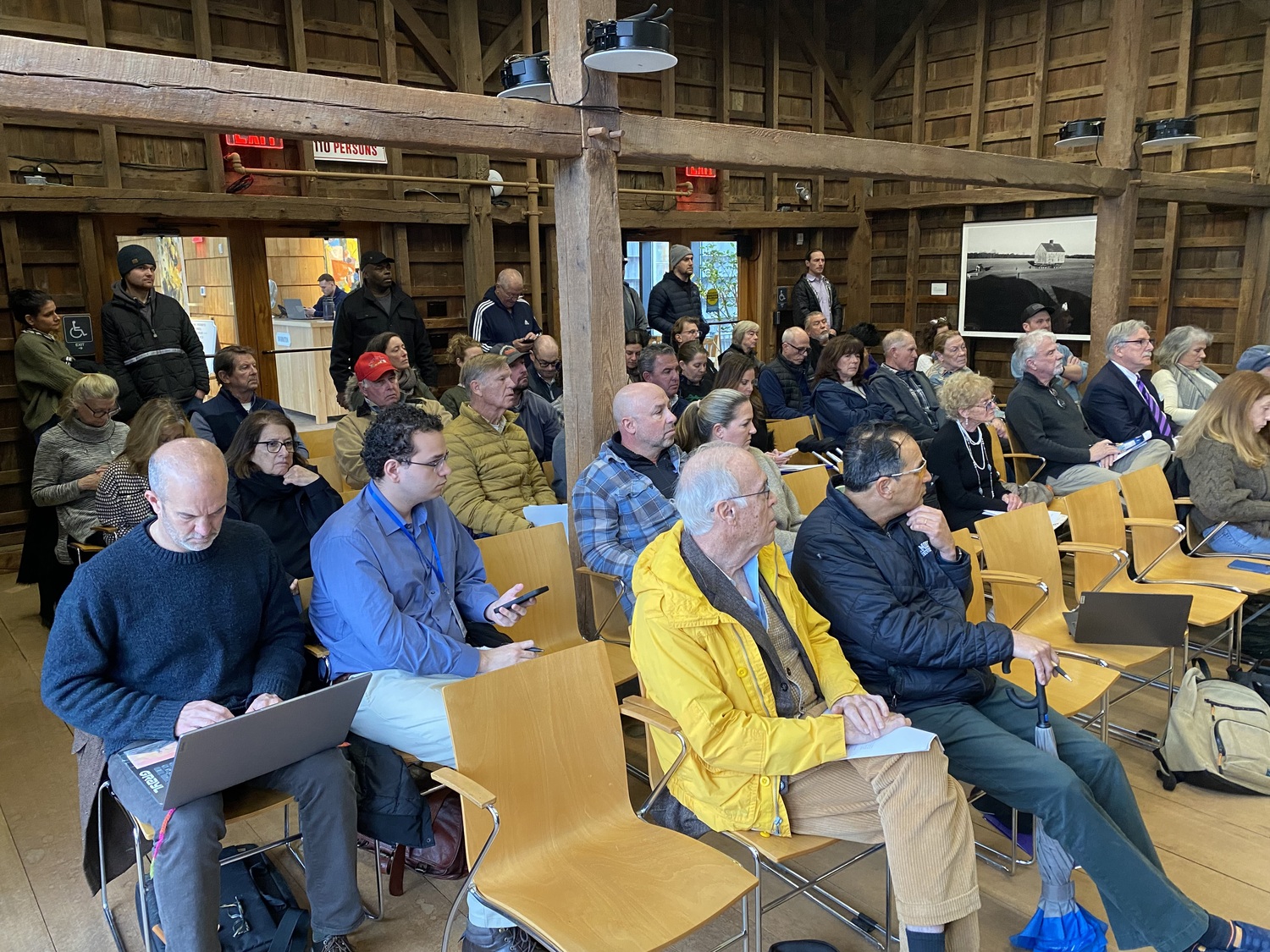
The petition's first, and seemingly only, public appearance drew a packed house at Town Hall on Tuesday. JACK MOTZ
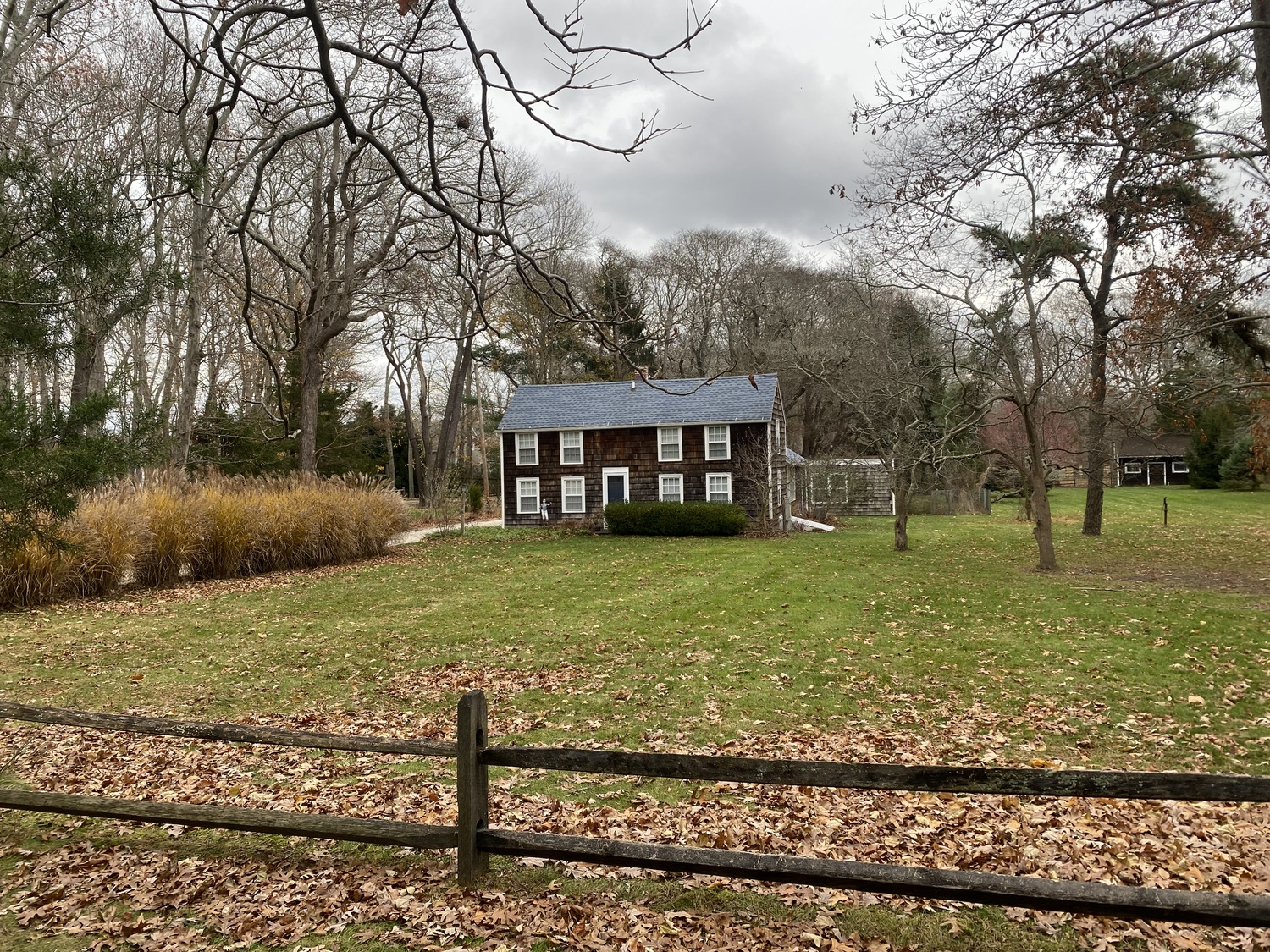
Kirby Marcantonio's plan to build 79 units of workforce housing on Three Mile Harbor Road has run into a roadblock at the town level. JACK MOTZ
Private developer Kirby Marcantonio has dropped plans to build workforce housing on a slice of land situated in a historic and agricultural neighborhood on Three Mile Harbor Road.
Marcantonio asked the East Hampton Town Board last week to allow affordable housing on two adjacent properties that he lined up to purchase for $5.5 million. Both are located just south of Round Swamp Farm and right in the center of the historic Freetown neighborhood, which was settled in the 19th century by free people of African American and Native American descent.
His plan was to use the employer-owned, condo-style model from his similar Pantigo Road project and build 79 units of workforce housing on two parcels on Three Mile Harbor Road, in the process overriding the town’s absolute cap of 60 units per each affordable housing development, no matter the lot size, by splitting the 79 condos between the two properties.
But this idea hit two major roadblocks — and ultimately died — when it was met with a platoon of speakers, almost all in opposition, and a reluctant Town Board, which had a lengthy discussion that centered on whether employer-owned housing could and should be a way to combat the local housing crisis.
The Town Board initially elected to table discussion for a week. But just two days after the project appeared on its agenda, the board announced that the 79-unit plan was dead in the water, and that Marcantonio would have to reapply, with a new plan, for workforce housing to be considered on the property.
So, given the setbacks, the question became how Marcantonio would elect to move forward and whether he would resubmit plans. It turns out that, after some discussion of next steps, he does not plan to pursue it further.
“We thought that we were in the right place at the right time, but it doesn’t seem to be that way, so we are going to not do that project, and we will simply see if there’s something else that we can do,” Marcantonio said.
Marcantonio said it would not involve the property on Three Mile Harbor Road, which is home to a historic house, saying he doesn’t have any use for the property now that the original plan has faltered.
“We came to the realization that there’s some things that can happen, and there’s some things that don’t seem to be happening, and we are realists and understand that when it comes to the process of that particular property, that there is not something for us to do,” he said.
As for the $5.5 million question, Marcantonio said the sale was still under contract, but that it was based on his plan for workforce housing succeeding.
This announcement came on the heels of the town-level roadblocks: Town officials let the 79-unit plan fall by the wayside after it failed to garner enough support to move forward, which would have required board consensus.
What the Town Board had to consider last week was twofold: Whether it would rezone the land for affordable housing, and whether it would tweak the code to specifically enumerate the standards for employer-owned housing. The two asks were tied to one another, which meant approval of one would have entailed approval of the other.
A cautious Town Board lined up, 3-2, in opposition to the original 79-unit package deal. After input from Assistant Town Attorney Brittany Toledano, the board elected to table the discussion for another week. But just two days later, town spokesman Patrick Derenze said the town attorney’s office discussed the matter and decided that consensus was necessary to move forward, and the project didn’t have it.
Supervisor Kathee Burke-Gonzalez then joined the chorus of voices in opposition, saying she does not support the plans for the workforce development, as it doesn’t fit the town’s definition of affordable housing, and the 79 units would run contrary to the character of the neighborhood.
Meanwhile, Councilman Tom Flight, who was one of the two Town Board members who appeared to be at least partially in favor of the move, reiterated to the Amagansett Citizens Advisory Committee that housing is one of the largest challenges facing the Town Board, and that he thinks workforce housing should be considered.
“Housing is our number one issue out here,” Flight said. “From my perspective, I think we need to be very open-minded.”
But in the short term, both sides — the developer and the Town Board — have torpedoed the plans for Three Mile Harbor Road, a chain of events that began at the end of the work session last week. The first step was to pause discussion for a week, but that didn’t last long, as Derenze said two days later, “There was no consensus on the Town Board to move forward with this petition. As a result, there is no further action or discussion planned.”
Asked why there was a sudden change in direction, from tabling discussion to axing the petition altogether, Derenze said the town attorney’s office ironed out the next steps after the meeting.
“After reviewing the matter with the town attorney’s office, it was confirmed that if the Town Board wished to move forward with the petition, the next step would be to adopt a resolution to schedule a public hearing,” he said. “As there is no consensus on the Town Board to move forward with the petition, there is no further action planned.”
Then came the call from Marcantonio, who said he would be abandoning the Three Mile Harbor Road development plans, and that he wants to maintain solid relationships in the community.
“We also want to make sure that we have harmonious relationships with the town itself — that is to say, this whole neighborhood group. I don’t mean the government, per se,” he said. “We want to make sure that we’re a positive influence here in East Hampton. We have other ideas that don’t have any specifics to them yet, but were a resource that we hope to be able to use at some other time. But this isn’t the time to do that.”


 Jack Motz on Dec 5, 2025