


 4 Photos
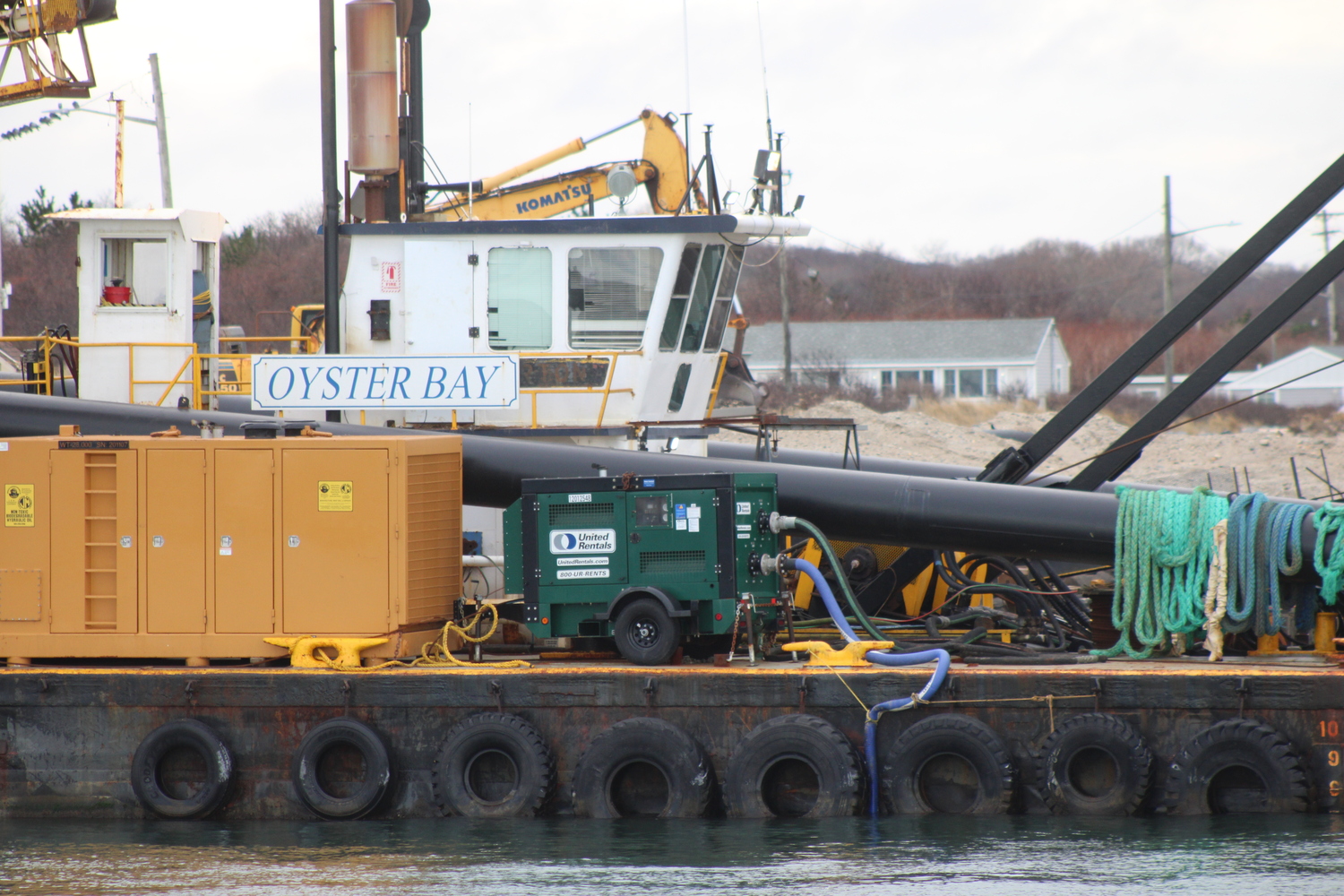
Dredge Oyster Bay has stopped work twice now after a pair of mechanical failures. As of Friday, it was not operational. JACK MOTZ
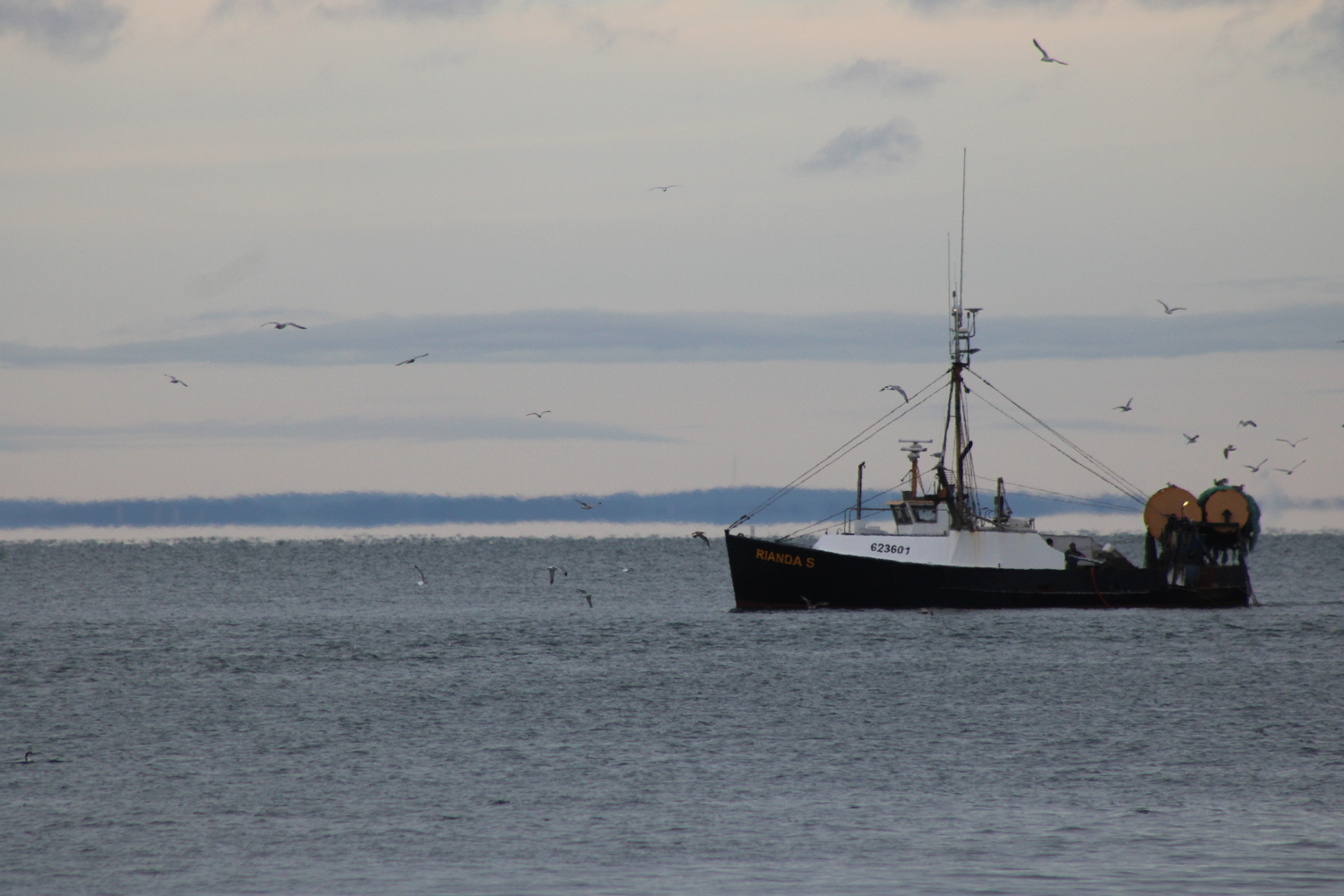
A boat arrives outside the inlet on Friday afternoon. JACK MOTZ
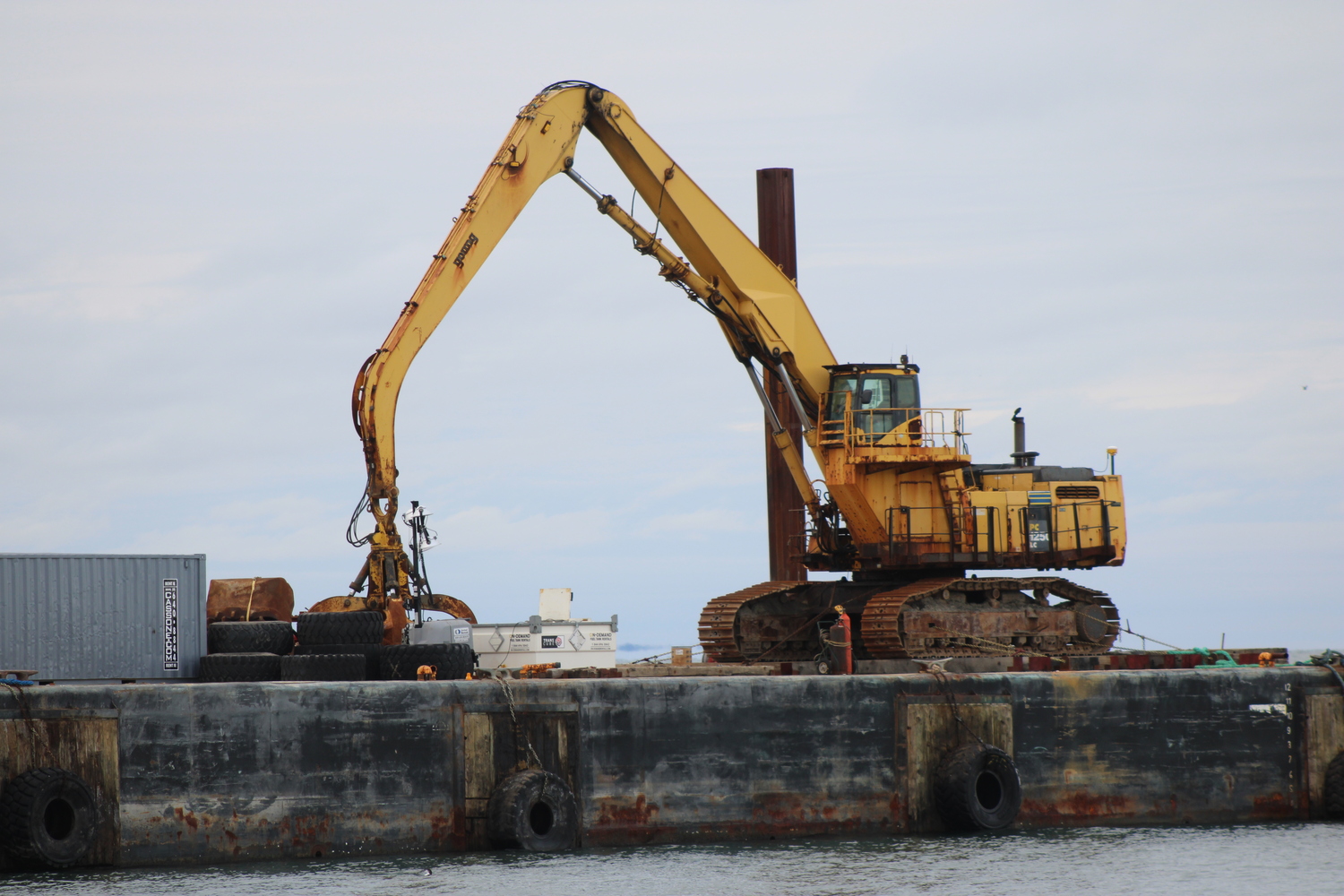
An excavator equipped with a "clamshell" is stationed on a large barge. Part of the project includes the removal of 16,000 cubic yards of sand, which the clamshell lifts from the floor of the inlet. JACK MOTZ
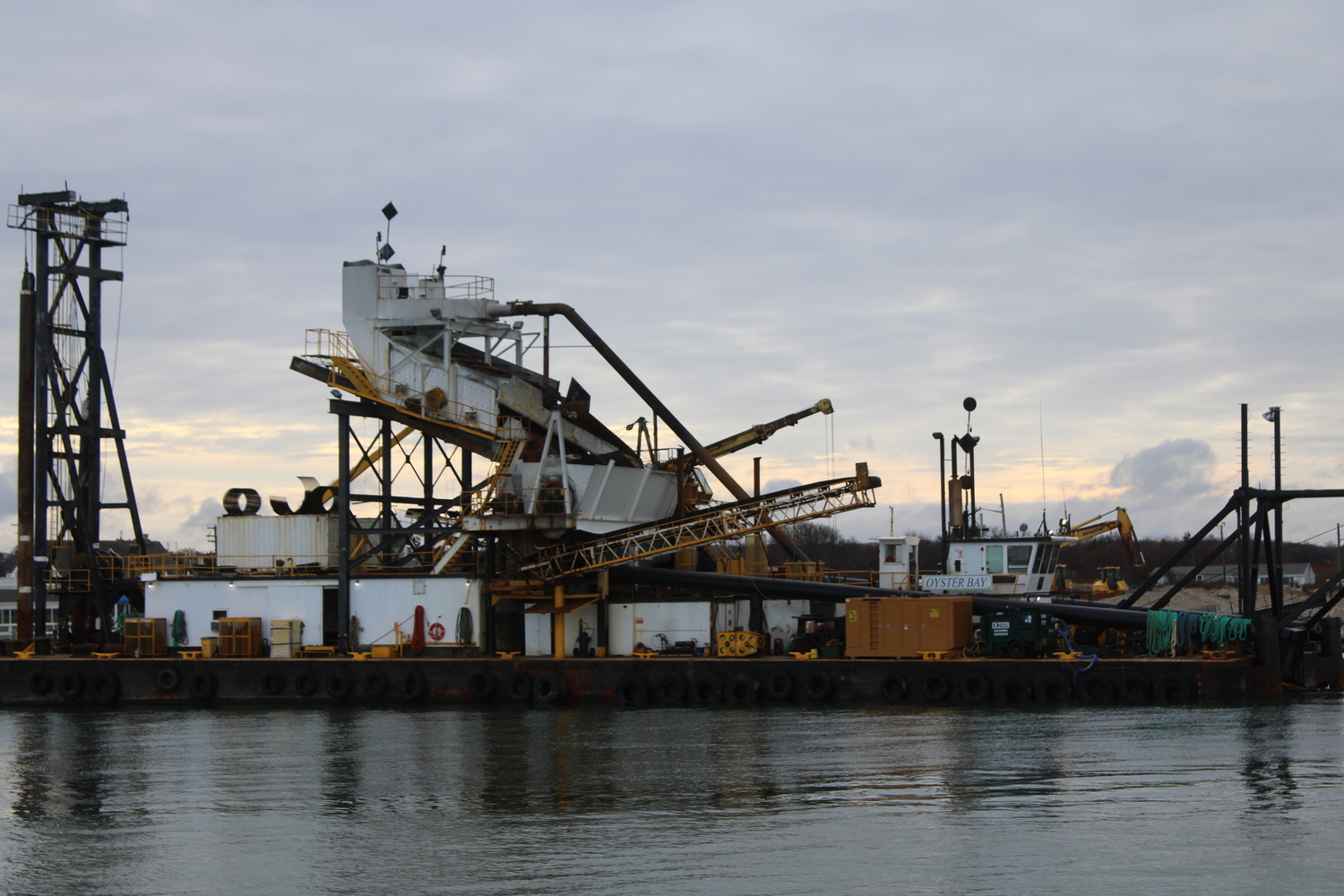
Dredge Oyster Bay JACK MOTZ
The dredge Oyster Bay has broken down twice in Lake Montauk Inlet, but officials expect that the Montauk inlet dredging project will nonetheless be completed within the winter dredge window.
Towering over Gosman’s Dock in Montauk for weeks has been Oyster Bay, which arrived last month under an $11.6 million partnership between the federal and local governments — the lion’s share of which the former will cover.
Built to protect oyster beds in the Chesapeake Bay, Oyster Bay is a 144-foot-long barge that, by the end of the current operation, will have pumped as much as 150,000 cubic yards of sand, clearing the way in the process for commercial fishing boats to get in-and-out of the inlet safely, whereas now they can be left stranded for hours at a time waiting for the tides to cooperate.
But the project has hit a roadblock in the form of a pair of mechanical failures that knocked Oyster Bay out of commission for a stretch of days in late November and early December.
“The dredge master ain’t a happy man,” East Hampton Town Councilman David Lys told the Montauk Citizens Advisory Committee on December 1.
First came a broken drive shaft, which knocked the dredge out for about a week starting on November 14 and was the result of the dredge hitting a large rock. Just as soon as it came back online, a hydraulic issue halted progress again. Officials hoped that it would return to full operation late in the first week of December, and by Tuesday of the following week, it was once again working.
Putting pressure on the situation is a shot clock: The safe window only remains open in the fall and winter, from October 1 to January 15, so too many delays could leave the 17-foot deepening operation incomplete by the end of the window.
What would happen if the completion date is pushed outside the dredging window is yet to be determined; Lys said those discussions will occur if there are additional delays, either due to the mechanics or the weather.
Before pumping sand, Oyster Bay had to remove 16,000 cubic yards of rock and hard sediment from the surface of the dredge site, which was shuttled through Mattituck Inlet to a location offsite.
The fact that the toughness of the material on the floor of the inlet sparked a mechanical breakdown on the massive boat signals to Lys just how necessary the work, which was 14 years in the making, had become over the years.
“It’s showing there’s a lot of material, hard rock material, that’s down at the bottom floor that traps sand, but also gets in the way of free navigation out there, safe navigation,” he said. “So, I think it shows that by doing a clean-out of the channel, not just with the 100,000 cubic yards of sand or more, but also the 16,000 cubic yards of rock, it’s super imperative to make sure that that channel is operating in a safe manner.”
Oyster Bay can pump a maximum of 10,000 cubic yards of sand per day once it gets going to its full potential, so the project is still on track for completion by the closure of the dredge window in mid-January.
“That’s a lot,” Lys said. “But again, tight profiling and tight conditions slow things down.”


 Jack Motz on Dec 5, 2025