


 7 Photos
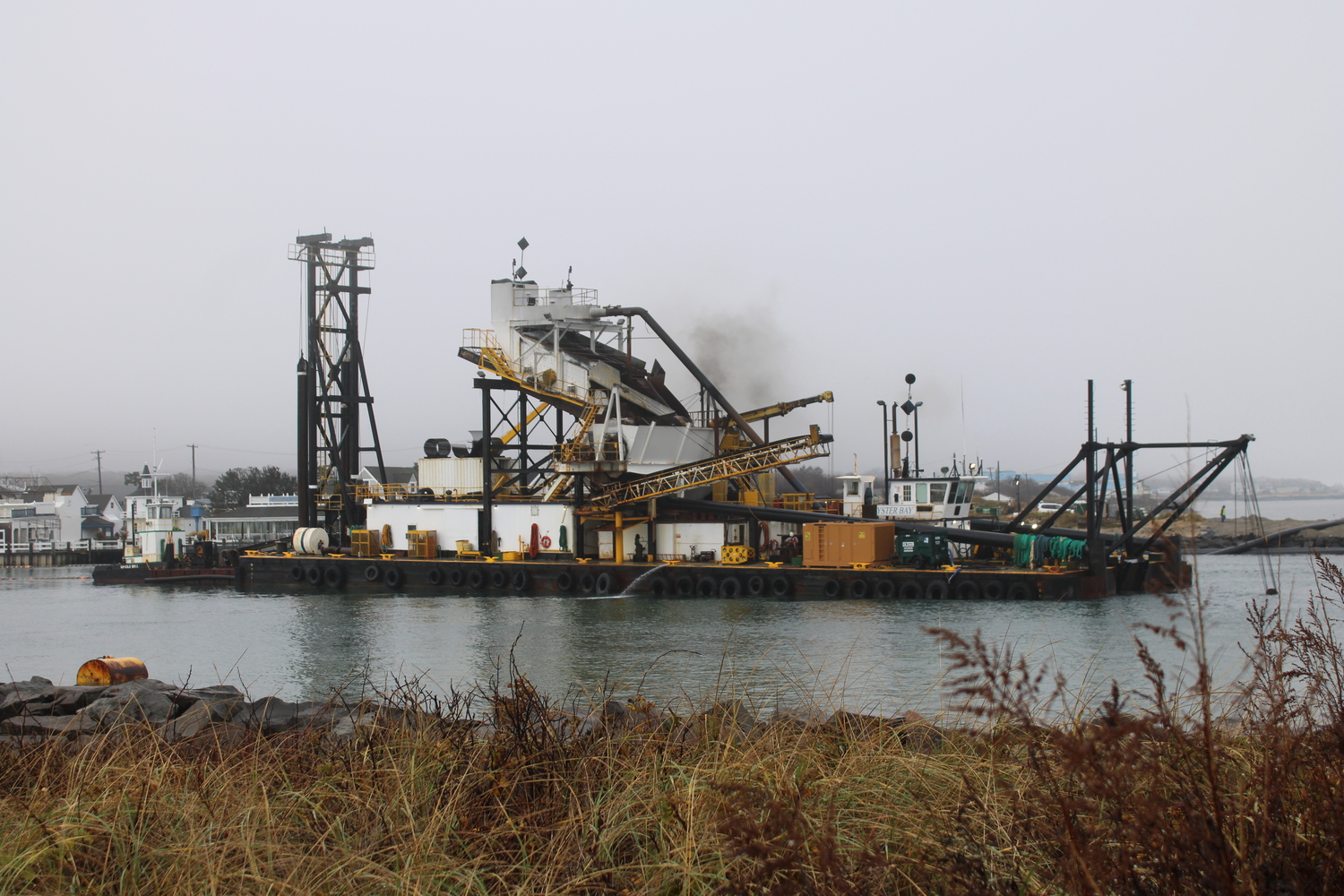
Dredge Oyster Bay in Lake Montauk Inlet on a rainy Monday morning. JACK MOTZ
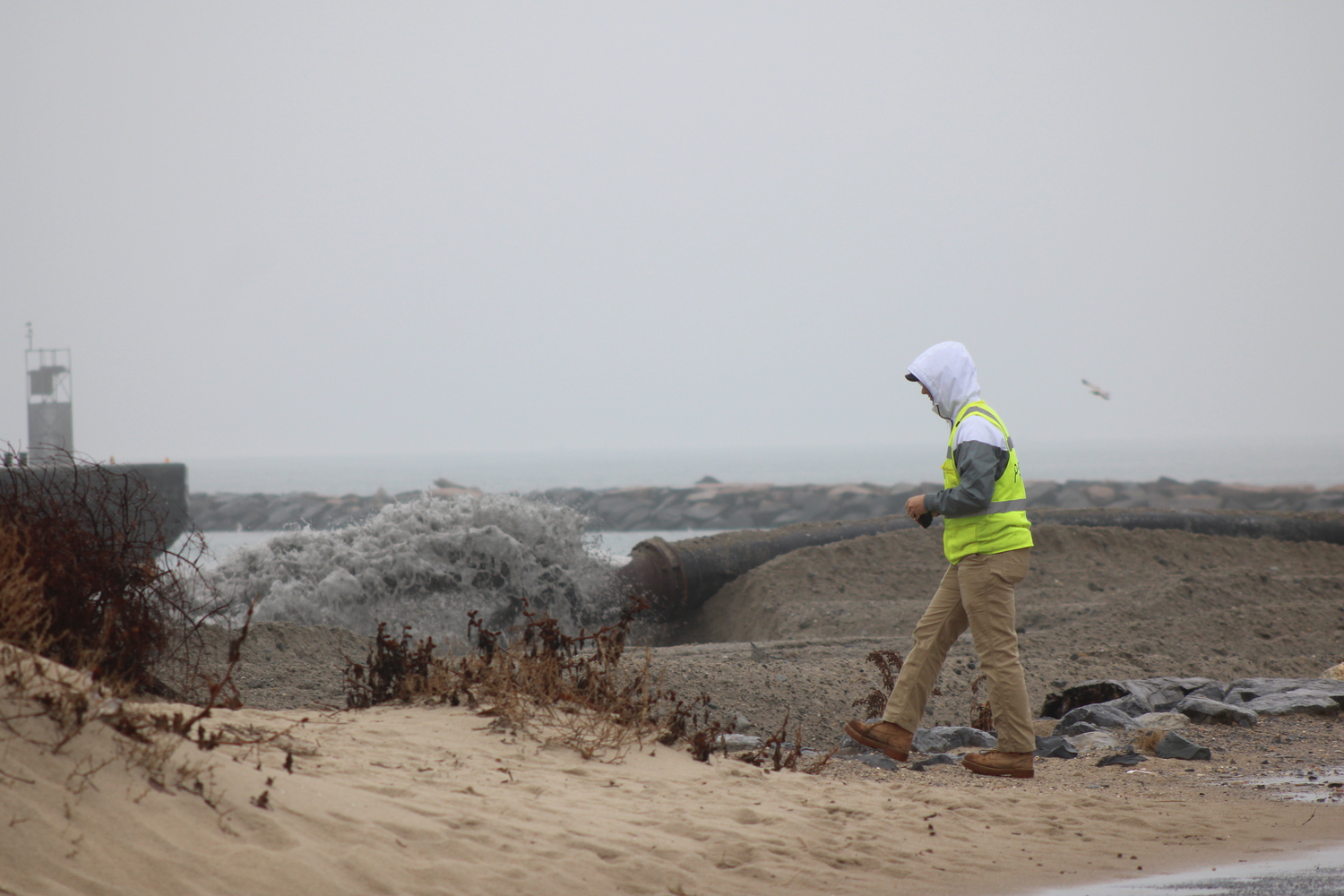
Dredging at Lake Montauk Inlet began late last week. Oyster Bay, the dredge, is pumping sand onto the beach on the west side of the inlet. Heavy machines then push and mold the sand onto the beach to fit a profile that the Army Corps of Engineers crafted. JACK MOTZ
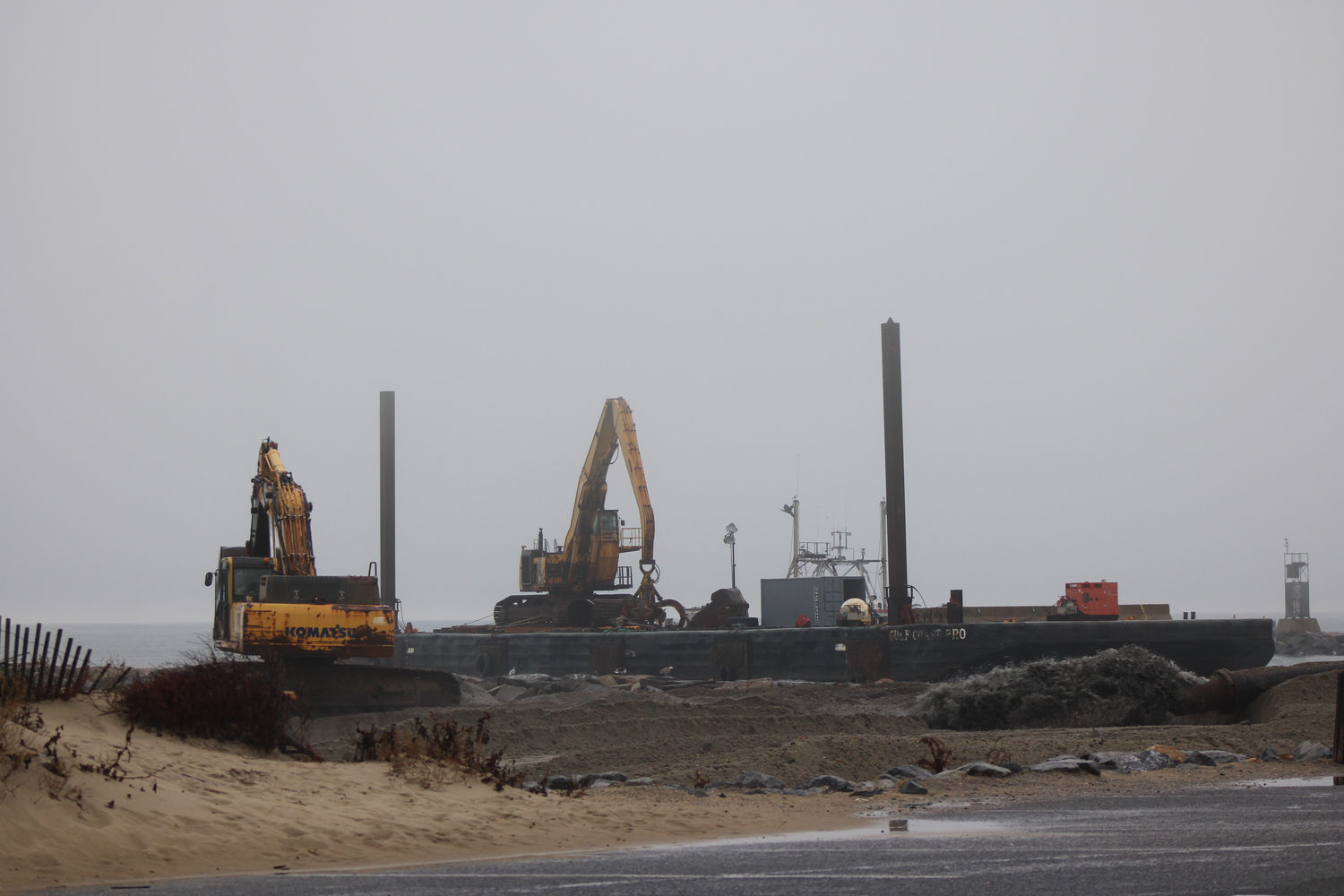
Dredging at Lake Montauk Inlet began late last week. Oyster Bay, the dredge, is pumping sand onto the beach on the west side of the inlet. Heavy machines then push and mold the sand onto the beach to fit a profile that the Army Corps of Engineers crafted. JACK MOTZ
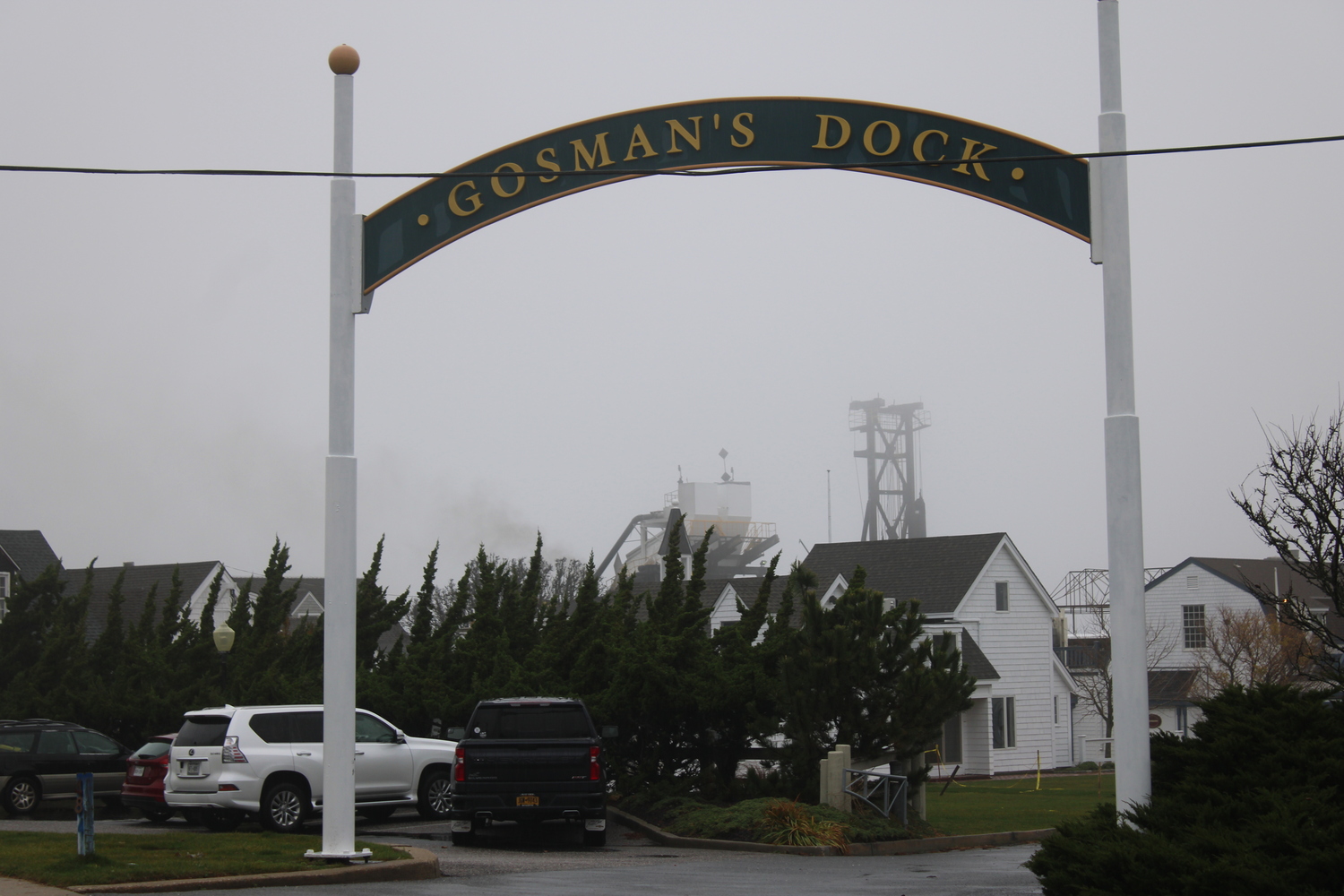
A Gosman's Dock for scale. JACK MOTZ
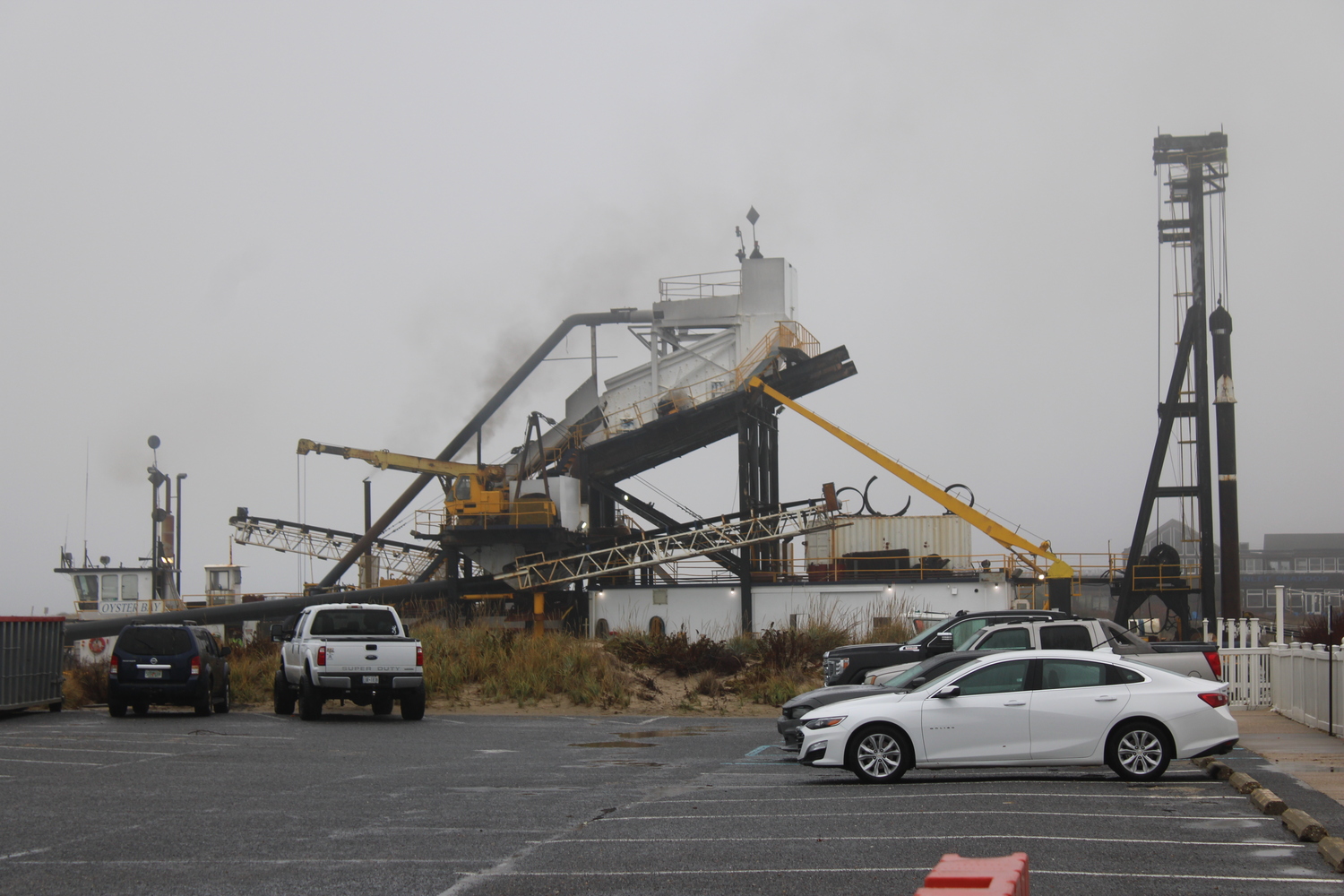
Dredge Oyster Bay as seen from the west side of the channel. The Army Corps of Engineers asked that the municipal parking lot be blocked off. JACK MOTZ
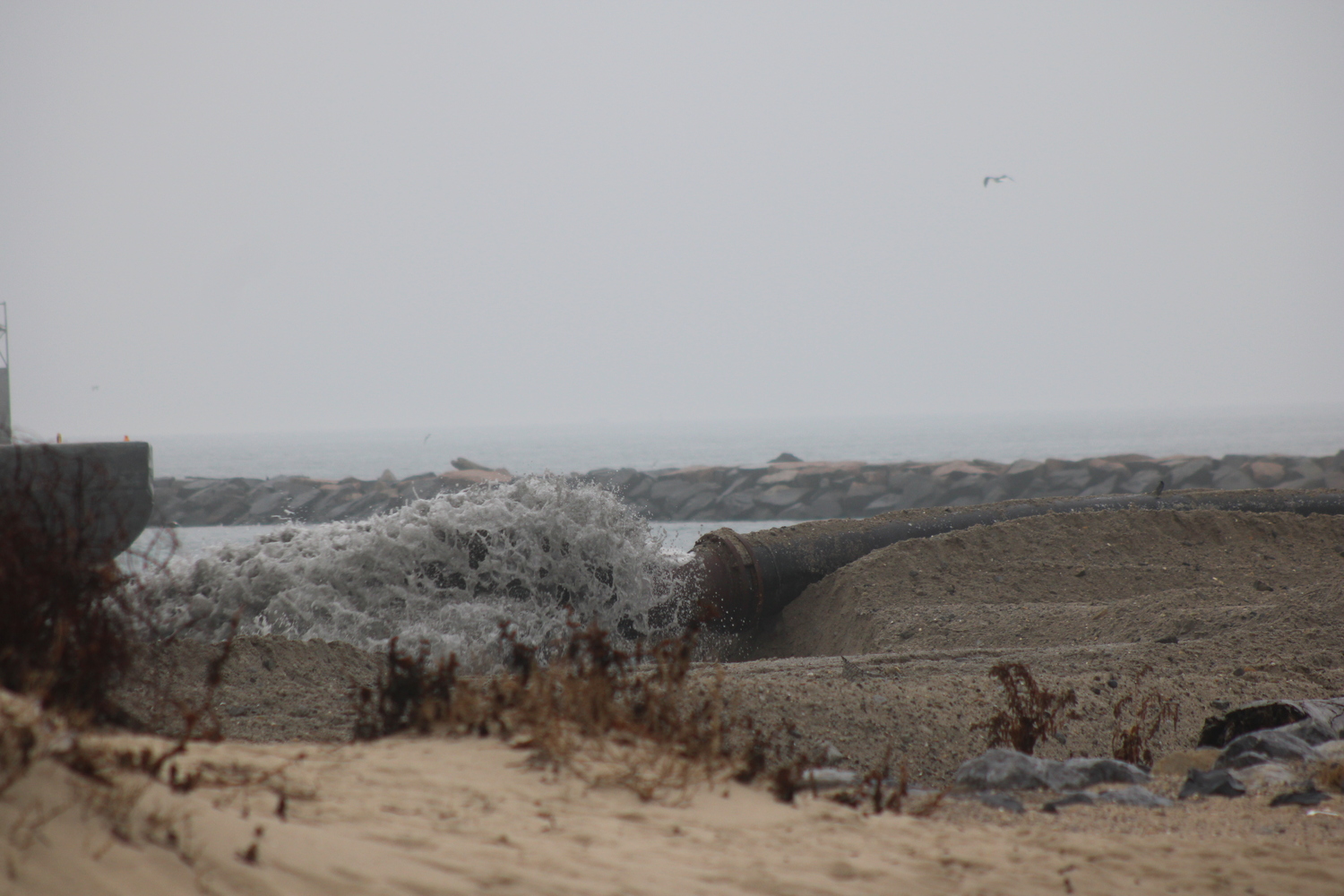
Dredging at Lake Montauk Inlet began late last week. Oyster Bay, the dredge, is pumping sand onto the beach on the west side of the inlet. Heavy machines then push and mold the sand onto the beach to fit a profile that the Army Corps of Engineers crafted. JACK MOTZ
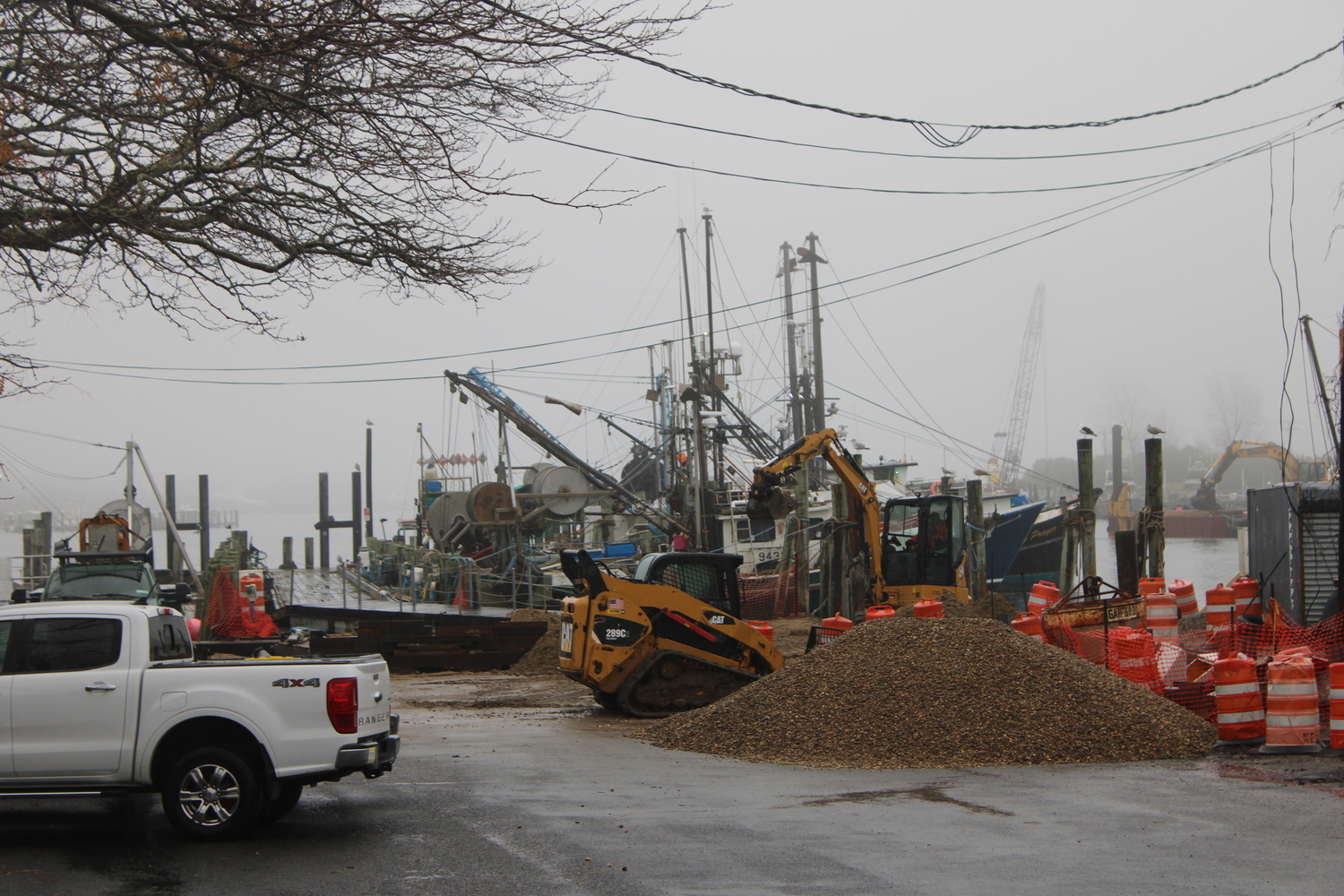
The Lake Montauk Inlet dredging isn't the only work going on down at the commercial docks in Montauk. East Hampton Town is repairing the town-owned fishing docks as part of a $2 million project. This has been ongoing for about a month. JACK MOTZ
For the past week or so, heavy machinery has dotted the west shoreline of Lake Montauk as several infrastructure projects get underway at once.
The smaller, more under-the-radar project is what East Hampton Town officials call the West Lake Dock Rehabilitation — a $2 million undertaking that seeks to repair the town’s commercial fishing infrastructure at one of its two docks.
Looming over that, literally and figuratively, is dredge Oyster Bay, which arrived last week under an $11.6 million partnership between the federal and local governments. Built to protect oyster beds in the Chesapeake Bay, Oyster Bay is a 144-foot-long barge that, by the end of the operation, will have pumped as much as 150,000 cubic yards of sand.
Lake Montauk shoals naturally, and over time this leaves commercial fishermen stranded at sea as they wait for favorable tides — frequently for hours at a time, and sometimes in poor conditions — that allow them to slip into the harbor safely.
A 12-foot emergency operation in February offered a temporary reprieve, but the conditions quickly returned: As the shoaling continued, fishing boats began running close to the bottom of the inlet, often too close for comfort.
The plan all along, 14 years in the making, was to have the emergency operation buy time until fall 2025, when another dredge — that is, Oyster Bay — would arrive to deepen the channel to 17 feet.
So when Oyster Bay arrived last week, it was welcome news for those who frequently navigate the inlet, as the dredge began by pumping a slurry of sediment and water onto the west side of the inlet.
“What you’re seeing right now is a slurry mix of water and sediment being pumped onto the beach,” said Town Councilman David Lys over the phone. “What the operators of the excavator and the dozer are doing is shaping material that’s been pumped onto the beach into the slope profile that’s been engineered by the Army Corps of Engineers.”
To do this, Oyster Bay is using a 7-foot cutter head — a spiked rotating cone that breaks up underwater materials, like sediment and sand, which a suction pump then sweeps up and removes from the water.
Oyster Bay began the process on the southern edge of the inlet, but throughout the project the dredge will move back and forth in the water.
As of Monday, Oyster Bay had pumped around 10,000 cubic yards of sand — a fraction of the 150,000 cubic yards planned during the course of what will be a weeks-long operation.
But 10,000 cubic yards of sand over three or four days does not come close to Oyster Bay’s maximum capacity. As the machine hits its stride, it will pump around 10,000 cubic yards of sand per day.
Accompanying Oyster Bay is a barge equipped with a “clamshell” excavator — similar to the machine that built the Montauk Lighthouse stone revetment a few years back — that will lift about 16,000 cubic yards of large boulder material from the channel. Another large barge will shuttle those materials to another location.
“The primary focus in the beginning right now is to open some water so mariners can get in and out again,” Lys said.
What this means is the dredgers began work in the channel — the operation will ultimately go south into the harbor, down near the U.S. Coast Guard station — to ensure safe passage for fishermen in the spot that shoals most aggressively.
To rotate, the dredge drops a large, cylindrical piece of metal down to the bed of the channel, which it uses as a fulcrum. All day long, then, the dredge swings left and right as it sucks sand out of the inlet.
Down the street, on the other side of Gosman’s Dock, another set of yellow heavy machinery has been working for the past month or so on repairing the commercial fishing docks on West Lake Drive.
As part of the $2 million project, town officials plan to first fix the dock’s bulkhead, before moving down to the wear plating and the utility lines down on the end of the dock. These repairs will continue for three or four months, until early spring.
This builds on similar repairs that took place at the town’s other commercial dock, located on Star Island, which the town completed around two years ago.
According to Lys, the West Lake Drive dock is past its useful life, and as a result, has suffered from wear-and-tear. Factor in, then, the intensity of the dock’s use and environmental factors, like tides: “The place takes a beating.”
“It’s the Town Board’s commitment to our commercial fishing industries, our mariners,” Lys said of the developments in Montauk. “We’re happy to work with the industry and the U.S. Coast Guard station in Montauk to keep our mariners safe. This project is a long time coming, and I’m very happy to be part of seeing this project get toward completion.”
And both these operations preview yet another Montauk infrastructure project, which will see East Hampton Town reconstruct the dune at Ditch Plains. Staging was set to begin on Tuesday for that operation.


 Jack Motz on Nov 11, 2025