


 8 Photos
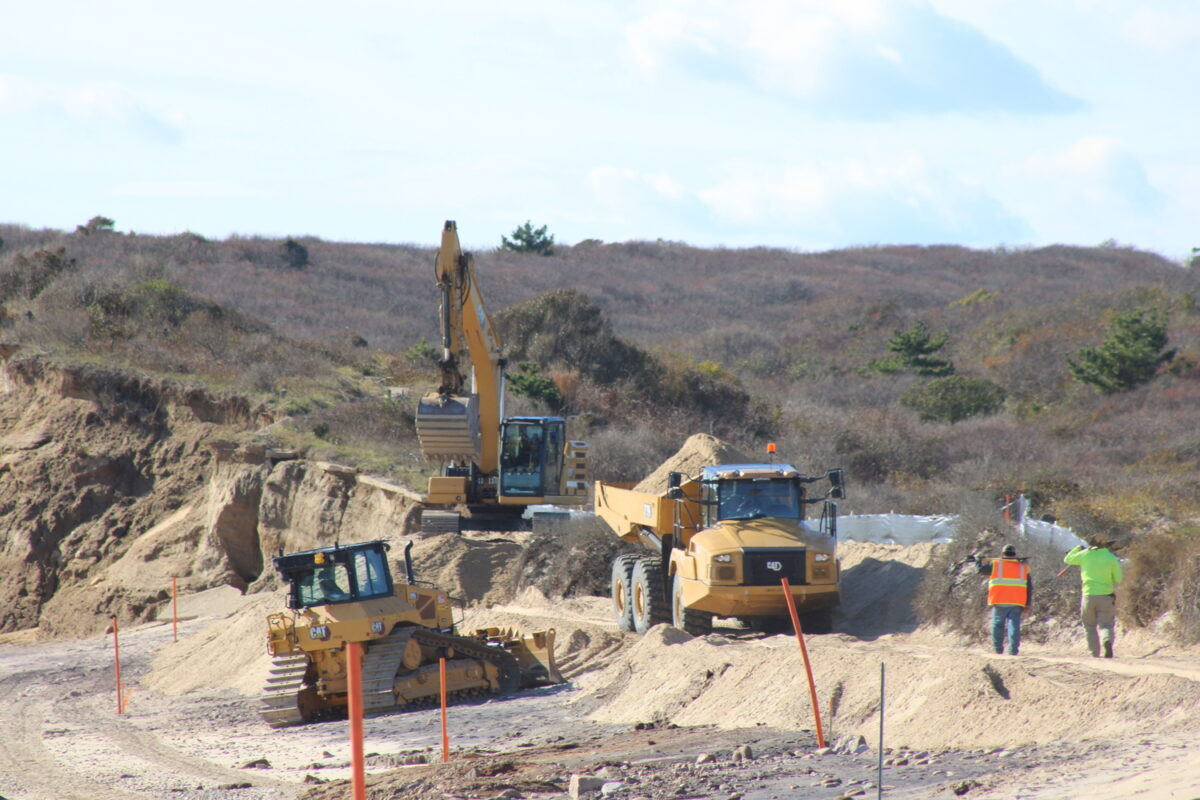
The excavators, left, mold the transported sand into the shape of the engineered dune. JACK MOTZ
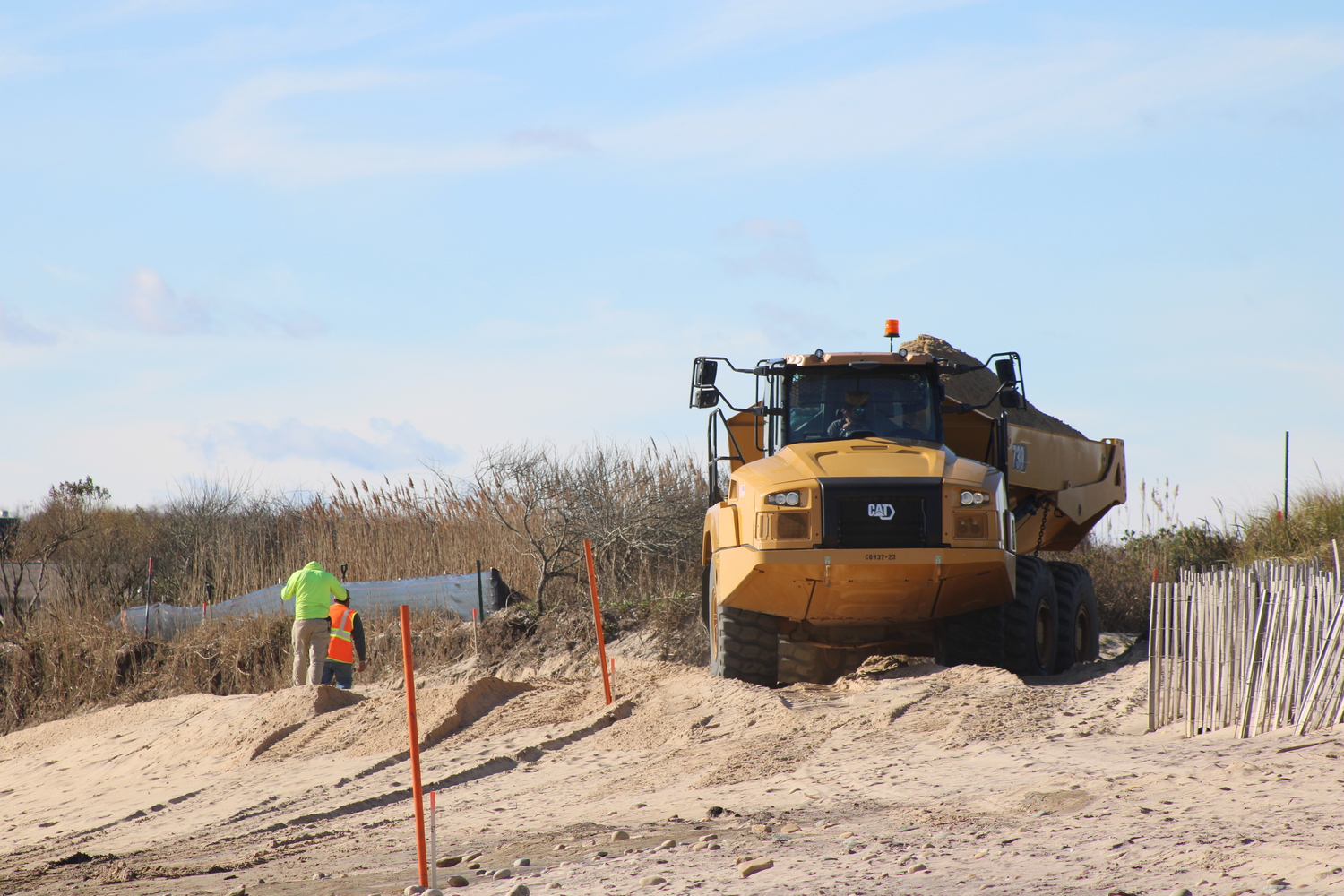
The Ditch Plains dune reconstruction project got underway in Montauk last week. This is the second of a two phase project intended to fortify the area against storms and climate change. JACK MOTZ
Trucks lined the beach as the Ditch Plains dune reconstruction project got underway in Montauk last week. JACK MOTZ
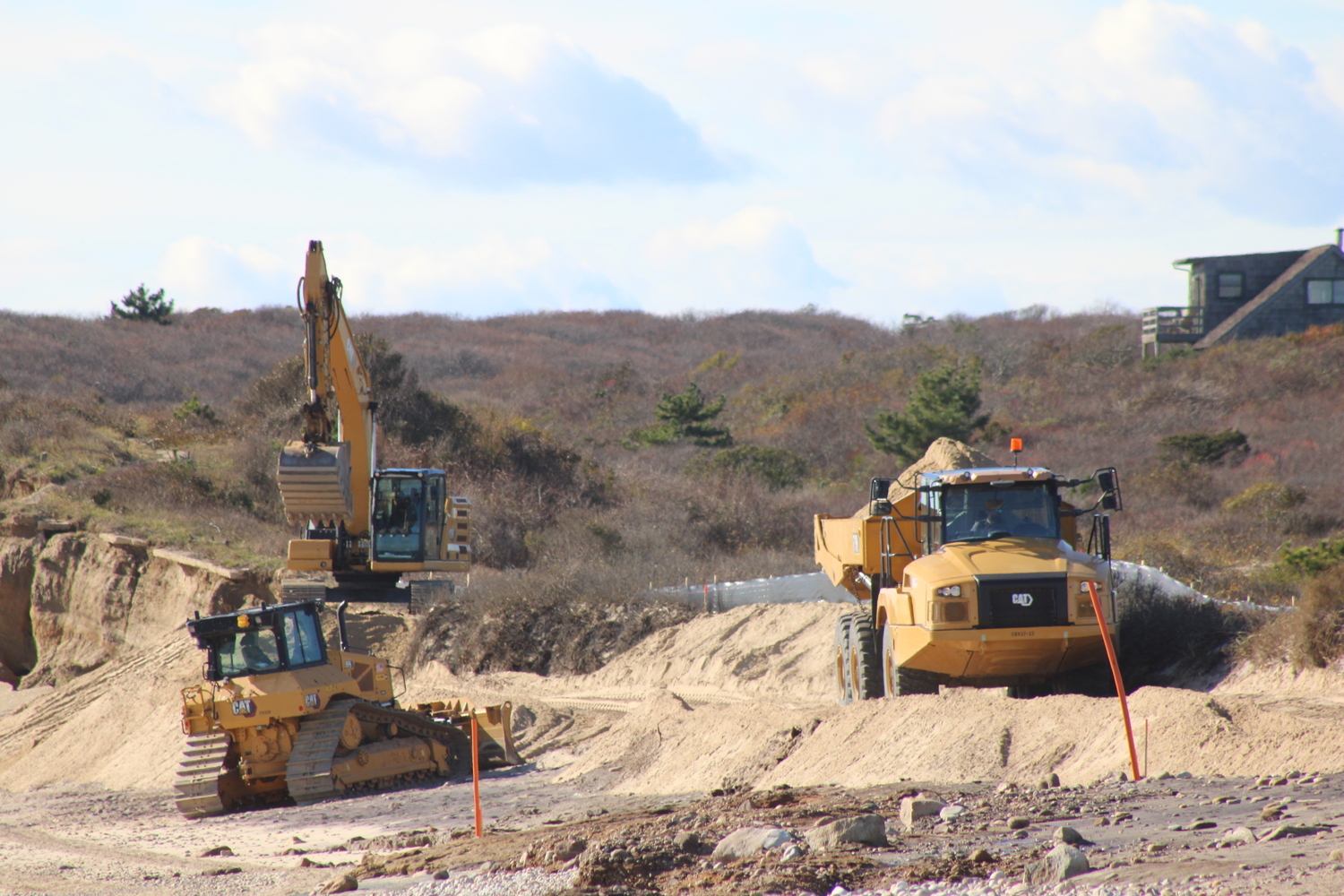
The excavators, left, mold the transported sand into the shape of the engineered dune. JACK MOTZ
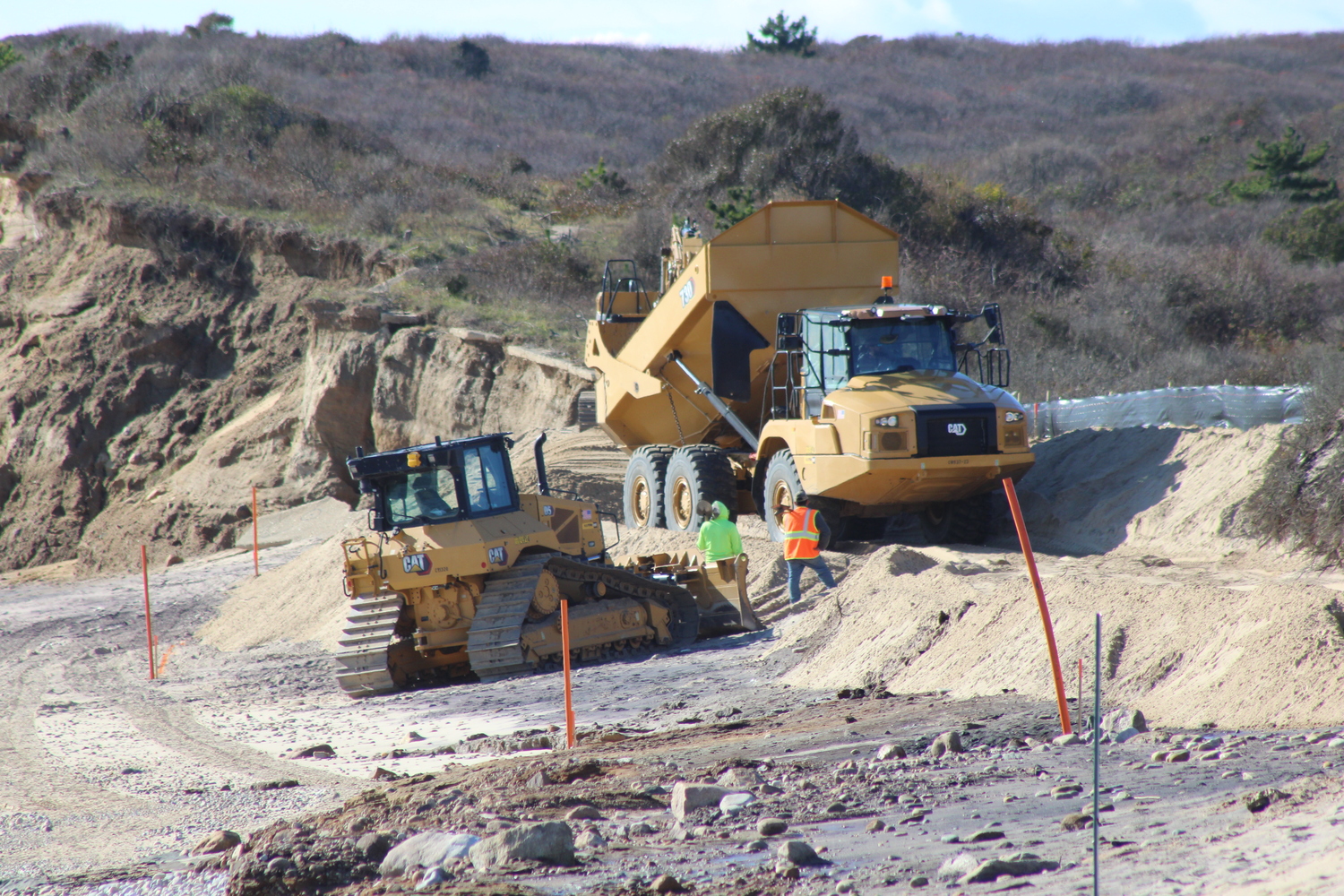
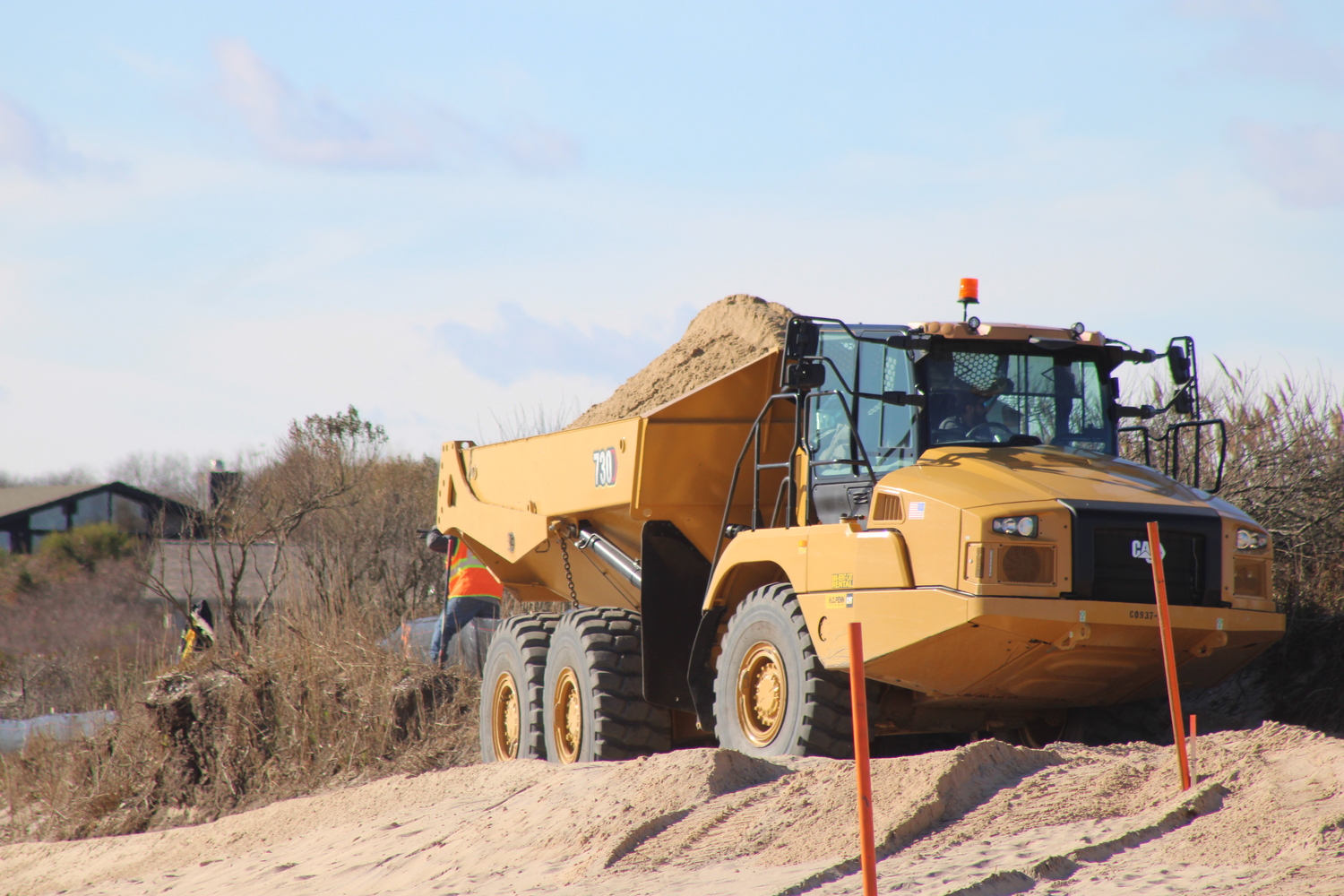
A truck lifts up its bed to deposit the sand that it had just transported from the parking lot. JACK MOTZ
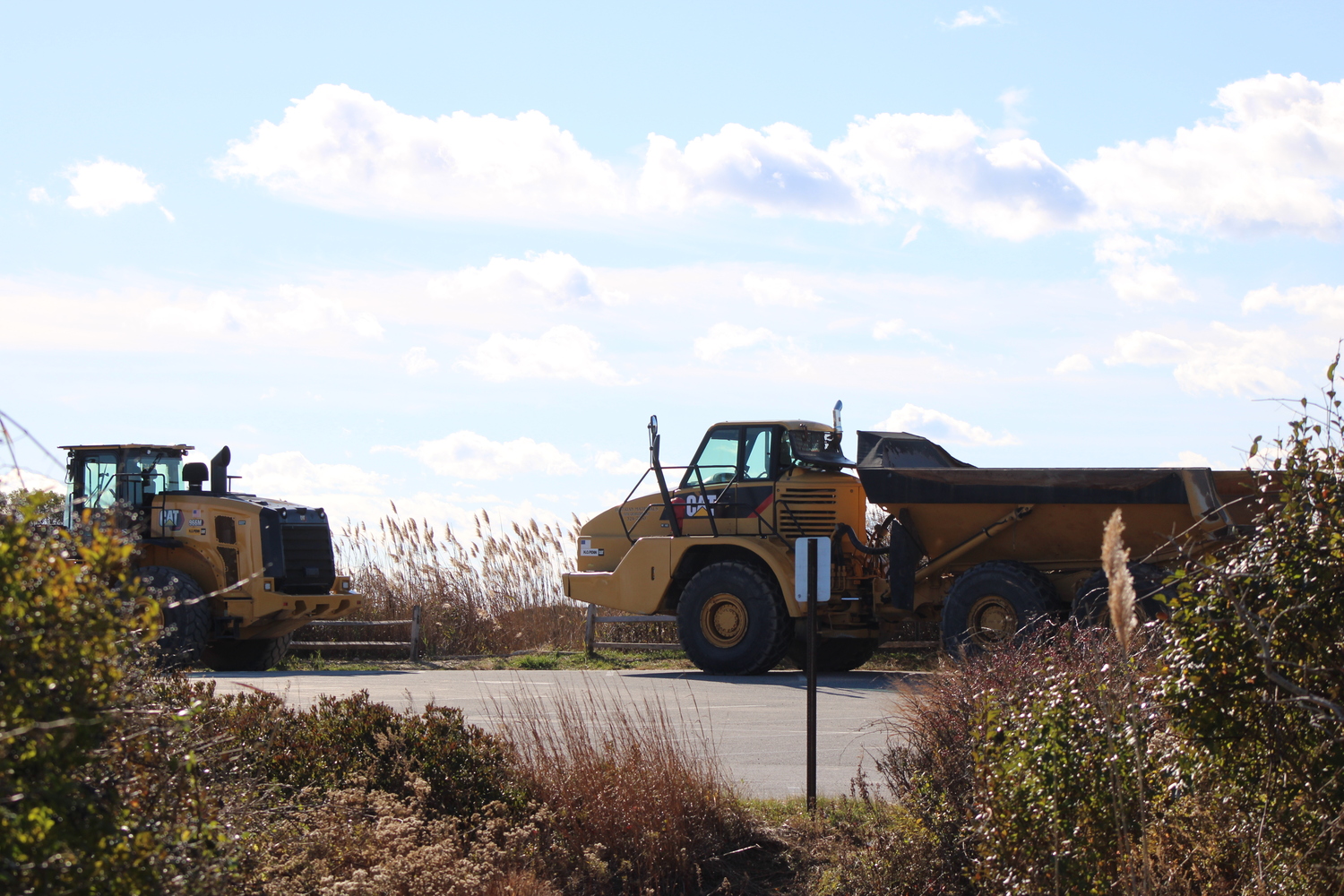
A truck sits in the parking lot, where the sand for the dune reconstruction awaited transport. JACK MOTZ
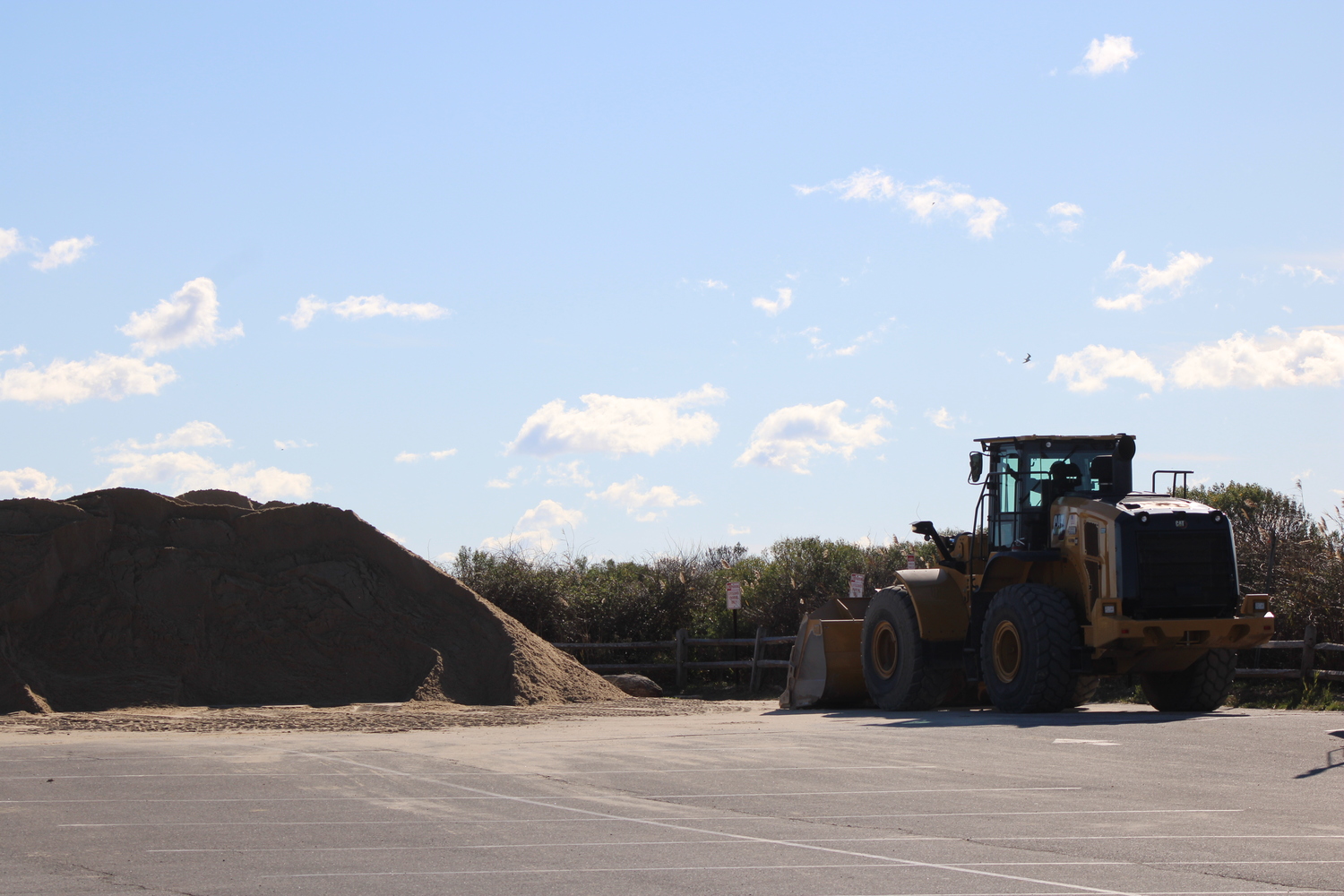
A truck, pictured, would load the piled sand into the bed of another truck, which would then bring the sand onto the beach. JACK MOTZ
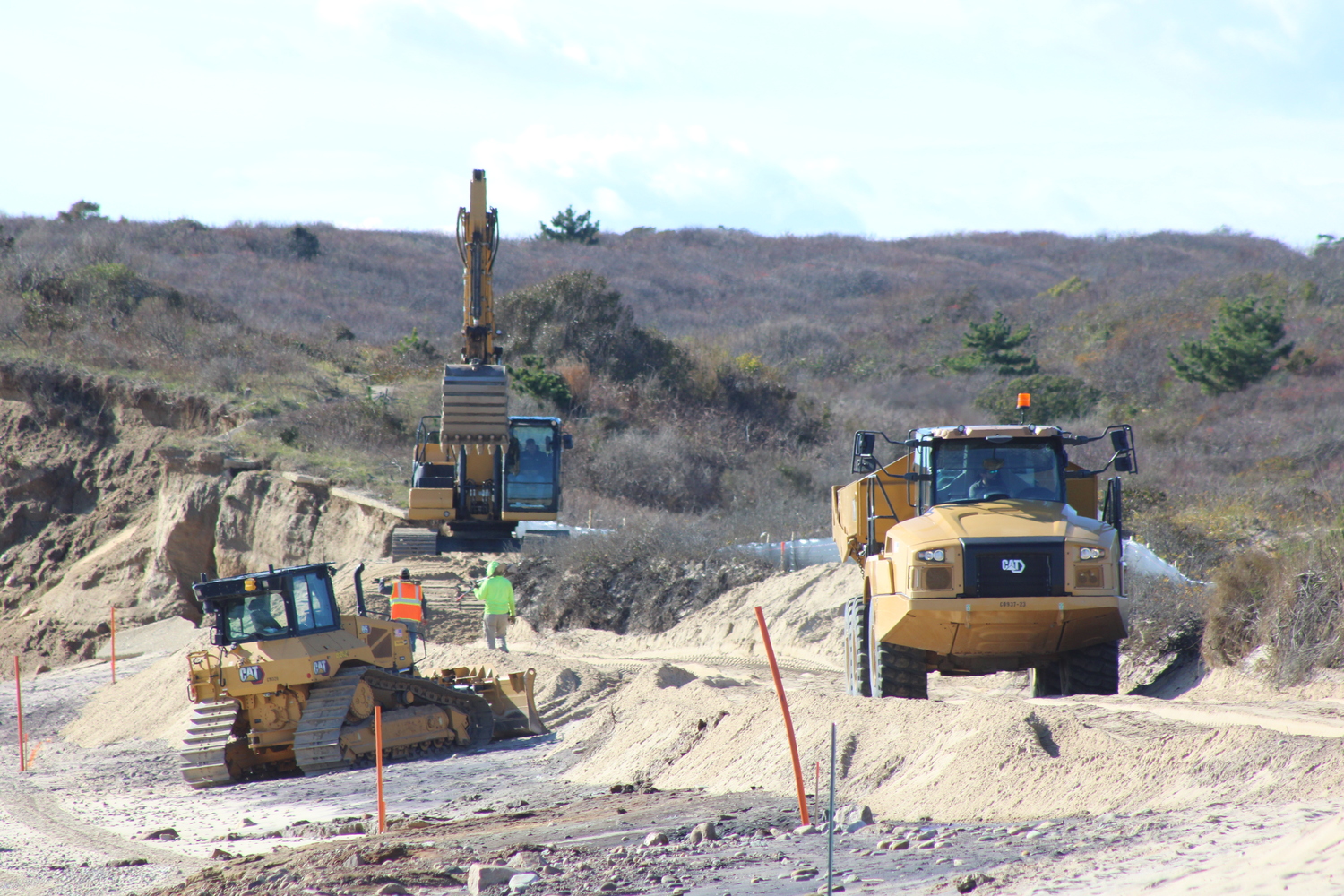
The transport truck drives on a sandy road back to the parking lot, where it would grab more sand, which it would then bring out onto the beach. JACK MOTZ
Trucks filled with sand lined the beach in Montauk on Friday as the second phase of the Ditch Plains dune restoration project got underway.
A highly anticipated project, the dune restoration is the second of a two-phase undertaking intended to rebuild the area’s dune after chronic erosion and storms dwindled the beach and the dune to the point of near-nonexistence.
The first phase, completed over the summer, saw the placement of 5,800 cubic yards of Department of Environmental Conservation-approved white sand intended to provide a safe recreational beach for the summer.
This second phase will address the dunes, which protect the surrounding neighborhood from breaches, flooding and damages to infrastructure, and it will entail the placement of up to 20,000 cubic yards of sand along approximately 2,200 feet of shoreline. Bistrian Materials will undertake the work, having come in with the lowest bid, $1.21 million, in October.
“The Town Board is committed to protecting the residents and making the coast more resilient to the greater strength of storms that we’ve been recently been seeing over the last decade,” East Hampton Town Councilman David Lys said.
Going back decades, Lys said, Montauk has been home to many buildings that were grandfathered into the current zoning laws — meaning town officials have to think long term about coastal planning in that area.
And with erosion here to stay, the ocean will continue to chew through both the new beach and the new dune, which will likely leave the area vulnerable once again down the line.
With that in mind, Lys wondered aloud: “How are residents, business owners, going to work with the town for future planning for wholesale events like that?”
Lys cited the town’s other initiatives as examples of long-term planning: a downtown Montauk resiliency plan, which Councilwoman Cate Rogers is currently working on, and the Coastal Assessment Resiliency Plan — or CARP — which began outlining the town’s steps, such as revising setback requirements and undertaking beach nourishment projects, to fortify against climate change, a few years back.
“That planning has happened and has continued to happen in advance of anything that might be catastrophic,” Lys said.
What people will see at Ditch Plains right now is a pile of sand in the parking lot, which one truck loads into the back of another for transport onto the beach. Once there, the trucks sculpt the sand into the mold of the engineered dune.
The contractors are currently working at a clip of about 1,000 cubic yards of sand per day, and Lys said it will take about a month before it is complete.
“It is a long-time-coming project, and we’re excited to see it happen,” said Lys, who serves as the Town Board’s liaison to the Montauk Citizens Advisory Committee.
The dune restoration project is not part of the Fire Island to Montauk Point beach reformulation — or FIMP — which saw a hopper dredge pump 475,000 cubic yards of sand onto the beach in downtown Montauk in early 2024.
But Ditch Plains cast its shadow last month as the East Hampton Town Board approved its share — 15 percent, or $27.6 million — of a 30-year, $184 million partnership with the state and federal governments that would go toward future FIMP beach nourishment projects: Town officials laid the groundwork for the U.S. Army Corps of Engineers to potentially add Ditch Plains to the docket when they come back to downtown Montauk with the dredge.
What this would do practically is save on the mobilization costs for another beach nourishment, since the Army Corps would have a dredge nearby completing the Montauk project.
“In the end, the funding for it would be cheaper if it was part of a larger project than a stand-alone project because of mobilization costs for large dredges,” Lys said.


 Jack Motz on Nov 17, 2025